

A four-kilometer "spider" in Australia was photographed from space
The Landsat 9 satellite captured an image of an ancient crater in Western Australia that resembles a giant spider. Its "spider"-shaped central part stretches for nearly four kilometers. This appearance was formed as a result of a meteorite impact and subsequent hundreds of millions of years of erosion.
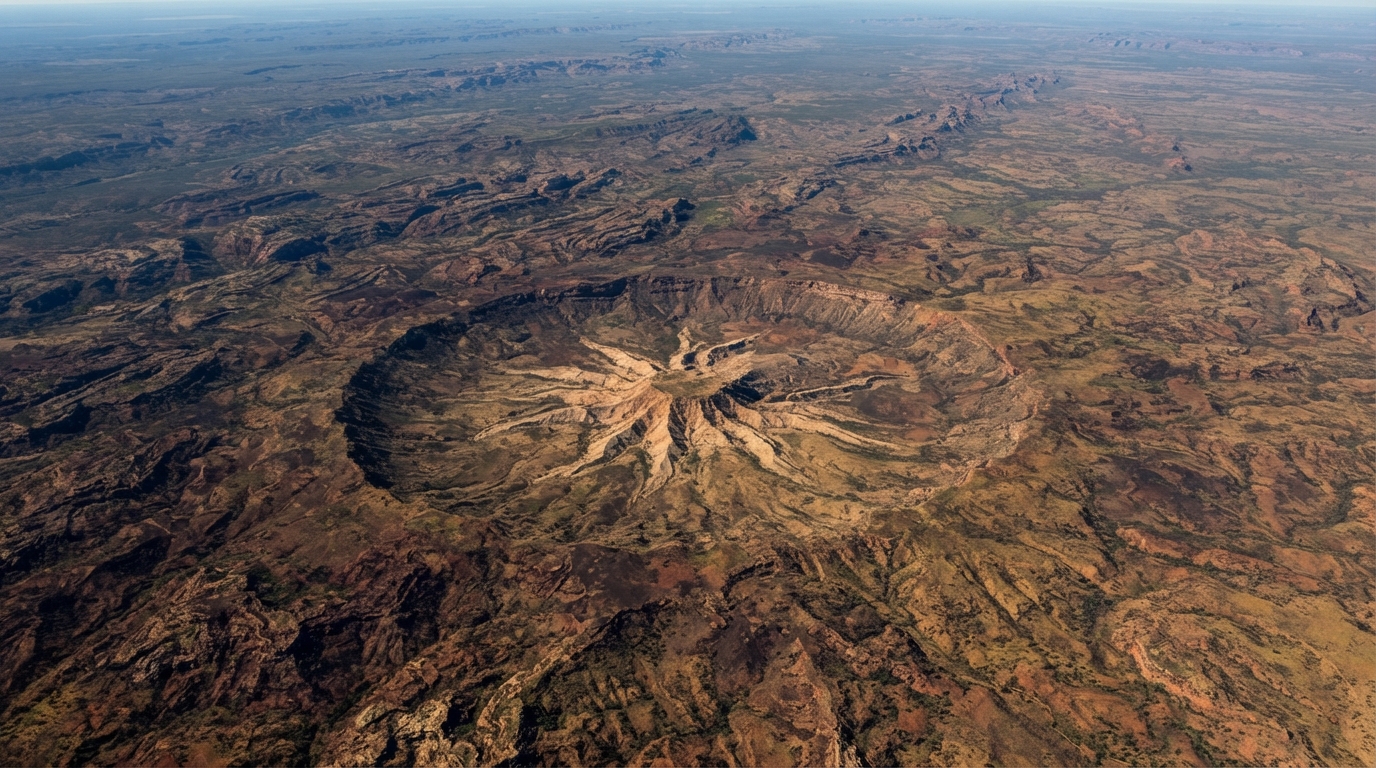
Four-kilometer "spider" in Australia captured from space
According to NASA, the image was taken on September 20, 2026, using the OLI instrument on Landsat 9. Jointly operated by NASA and the US Geological Survey, this satellite monitors the Earth's surface.
"Spider Crater" is located in Australia's Kimberley region. The entire impact structure is oval in shape, measuring approximately 13 kilometers in length and 11 kilometers in width.
Geologists believe the spider-like central part was formed as a result of the crater floor rebounding after the impact. Its light-colored "legs" are sandstone ridges. Other surrounding rock layers have eroded away, while these ridges remained preserved.
Scientists had previously put forward various hypotheses regarding the origin of this structure. In particular, some attributed it to volcanic activity. Later field studies revealed shatter cones—fan-fractured conical structures formed under the influence of intense shock waves. These features indicate an ancient meteorite impact.
Researchers also studied quartz and zircon crystals in the shocked sandstone under laboratory conditions. This data could help determine the angle at which the meteorite struck the Earth.
The exact age of the crater remains unknown. Estimates based on the age of the rocks in the area suggest it formed approximately 600–900 million years ago, during the late Precambrian era.