

A 2.4-kilometer micromobility lane was tested in Tashkent
A 2.4-kilometer micromobility lane was tested in Tashkent
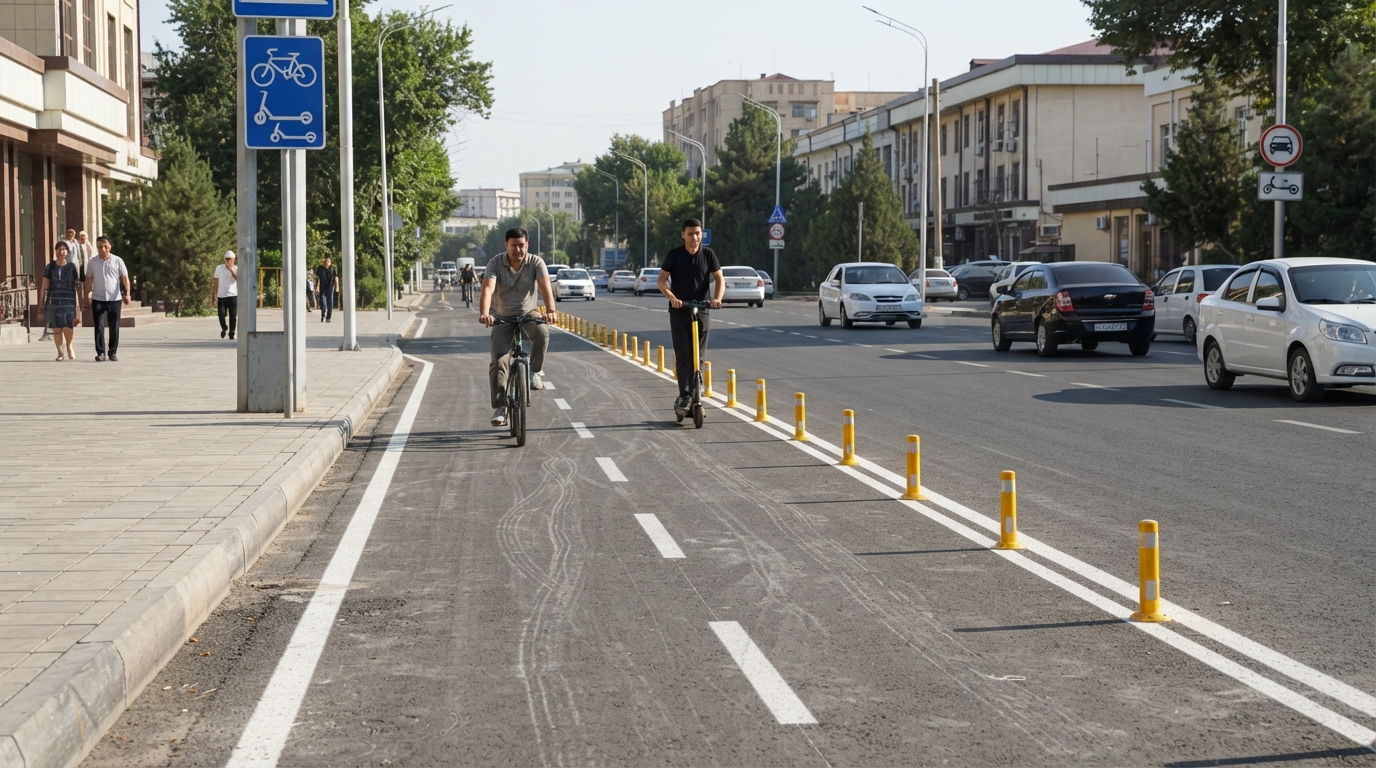
A separate lane for bicycles, electric scooters, electric mopeds, and other micromobility vehicles was established and tested on a 2.4-kilometer section of Lutfiy Street in the city of Tashkent. The Traffic Management Center (YHTEM) is studying the possibilities of applying this experiment to other streets of the capital.
The main goal of the project is to separate the flows of micromobility vehicles, cars, and pedestrians. In areas without dedicated infrastructure, bicycle and scooter users are forced to share space with cars on the roadway or with pedestrians on the sidewalk.
The pilot lane on Lutfiy Street is designed for bicycles, electric scooters, electric mopeds, and other micromobility vehicles. According to the Traffic Management Center, during the testing process, it was observed that the new solution is convenient and understandable for users, and it also helped to practically assess the possibilities of creating dedicated infrastructure for micromobility in the city.
In future projects, it is planned to physically separate such lanes from car traffic using delineators, dividers, and other protective elements. This is aimed at increasing the safety of micromobility vehicle users and reducing the risk of collisions with cars.
The Center noted that the goal is to form a clear and separate movement space for cars, pedestrians, and micromobility vehicles. Based on the test results on Lutfiy Street, other streets and areas of the capital where such a solution can be implemented are also being studied.
At the end of August, the launch of the "Green Wave" on Amir Temur Square was announced. All 5 traffic lights in the area have been synchronized with each other and are operating based on a single "green wave" algorithm. In early September, the system was also launched on Maxtumquli Street.