

70 grants awarded to citizens of Kazakhstan, Kyrgyzstan, Tajikistan and Mongolia at universities in Uzbekistan
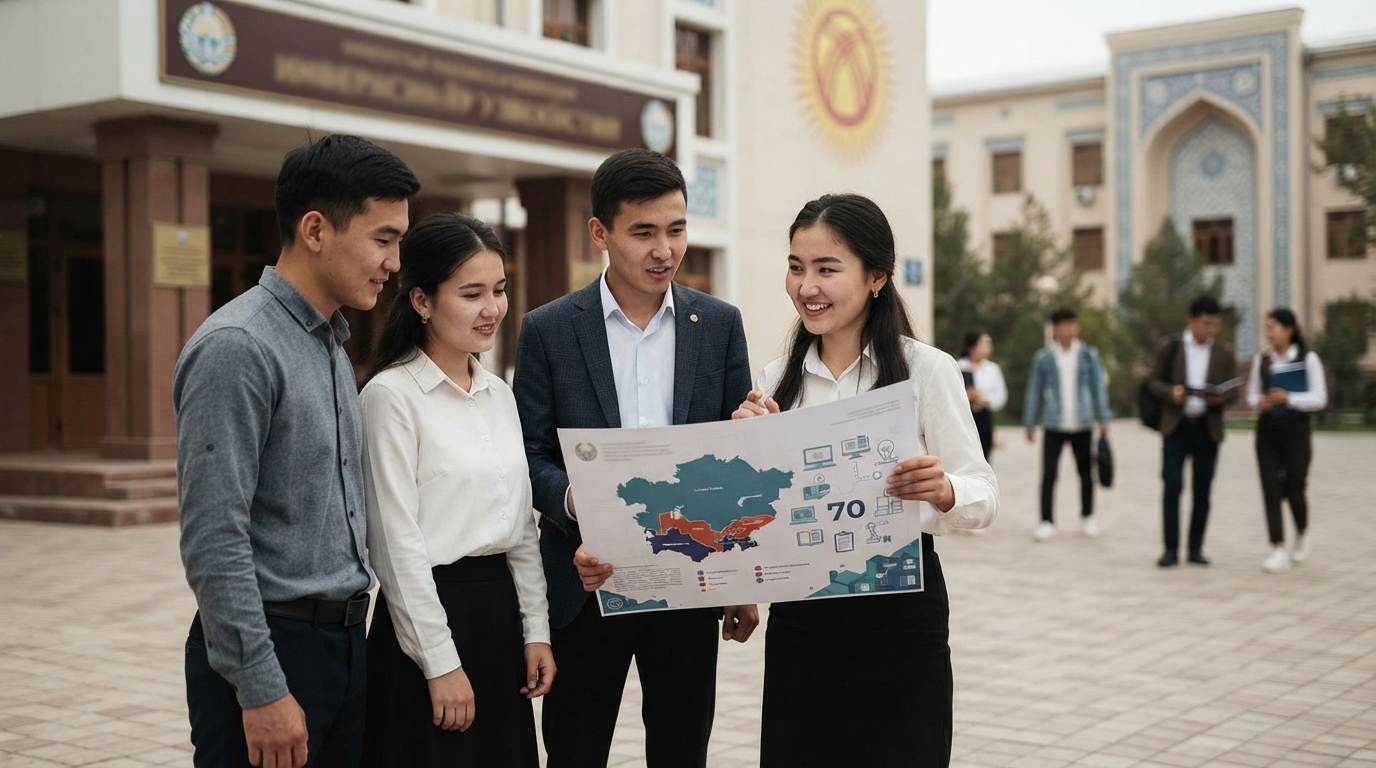
A total of 70 grants have been allocated to citizens of Kazakhstan, Kyrgyzstan, Tajikistan and Mongolia in higher education institutions of Uzbekistan.
According to the Ministry of Higher Education, Science and Innovation, in the 2026/27 academic year, grant places for citizens of these countries are distributed as follows:
* Kazakhstan - 20;
* Kyrgyzstan - 20;
* Tajikistan - 20;
* Mongolia - 10.
In particular, applicants from Kyrgyzstan can study in the following bachelor's programs:
* Preschool education - 4 places;
* Computer engineering - 4 places;
* Agronomy - 4 places;
* Water management and land reclamation - 2 places;
* Ecology and Environmental Protection - 2 places;
* Civil Engineering - 4 places.
According to the publication "Kabar", the selection of candidates for the allocated places will be carried out by Osh State University. Education in higher education institutions of Uzbekistan is conducted in Uzbek and Russian. Since teaching in Uzbek is based on Latin graphics, the knowledge of the Latin alphabet of candidates is also taken into account. Candidates must demonstrate knowledge of the chosen language of instruction and pass tests in two specialized subjects. Exams are evaluated on a five-point system.
Documents will be accepted until August 22, 2026. Entrance exams will be held on August 24 at 08:00 in the main academic building of Osh State University. To participate in the competition, you must submit a questionnaire, a copy of a diploma or certificate of general secondary or secondary specialized, vocational education, a copy of a passport, a medical certificate in the prescribed form in Russian, and a photo.
The annual allocation of grants in priority areas for young people from Kyrgyzstan to study at leading higher education institutions in Uzbekistan began in 2021.
Admission quotas for higher education institutions in Uzbekistan for the 2026/27 academic year were approved in July, and one of the most important innovations was the increase in state grant quotas for information technologies and artificial intelligence by 35%.