

32 percent of those earning more than 30 million soums intend to spend money on travel - Central Bank
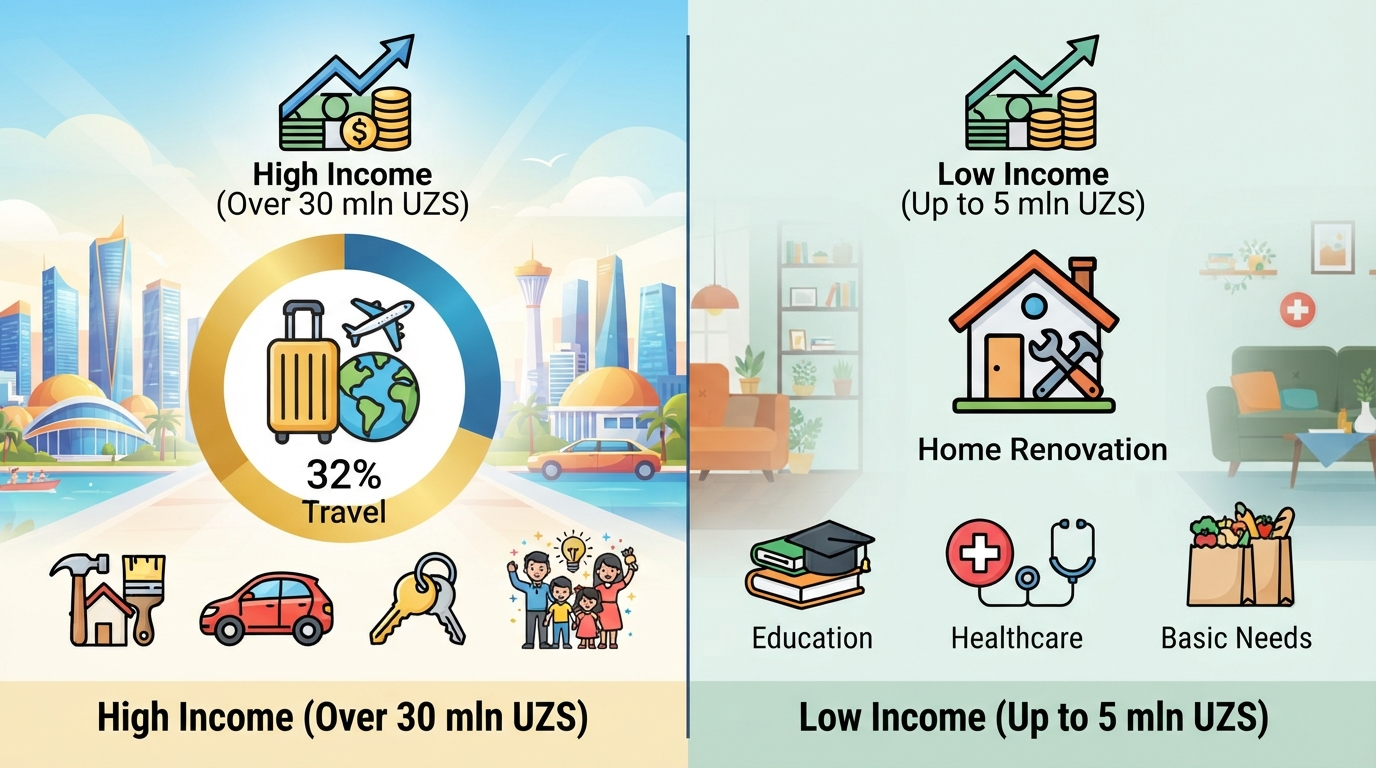
In Uzbekistan, the consumer sentiment of the population remained positive in the second quarter of 2026. People's future spending plans vary significantly depending on their income level: while the high-income population plans to allocate more funds for travel, car, and housing purchases, home renovation, education, and medical treatment remain the main expenses for the lower-income segments.
32 percent of those earning over 30 million soums plan to spend money on travel — Central Bank
In July, the Central Bank conducted a survey involving nearly 4.1 thousand respondents to determine the consumer sentiment of the population.
It studied the population's income, expenses, credit needs, savings opportunities, and economic expectations.
### The main plan of the population with an income above 30 million soums is travel
One of the most notable aspects of the review is that as income increases, the structure of the population's expenses also changes.
18 percent of respondents earning 20–30 million soums planned to spend money on travel, 16 percent on a car, and 15 percent on purchasing housing.
Among those with an income above 30 million soums, travel comes first: 32 percent of them planned to allocate funds for travel, 30 percent for housing renovation, 19 percent for a car, 17 percent for purchasing housing, and 15 percent for family celebrations.
In other words, the expenses of the high-income population are directed more towards major purchases and services rather than daily needs.
The Central Bank explained this by the fact that as income increases, the population's ability to allocate funds for major expenses such as travel, cars, and housing expands.
### For the low-income population, renovation, education, and medical treatment are priorities
A different picture is observed in the future expenses of the population with an income of up to 5 million soums.
The main expenses in this group are: housing renovation; education; medical treatment; daily and other necessary needs.
Interest in major expenses such as purchasing a car, travel, or housing is relatively low. The Central Bank explains this by the priority of necessary and daily needs among the low-income population.