

29.2 kilometers over the sea: The construction of a giant railway bridge in China has reached an important milestone
On the 29.2-kilometer high-speed railway bridge under construction in China's Hangzhou Bay, the steel structure of the southern navigation span has been connected. This became the first structure among the three navigation spans in the project to complete this stage.
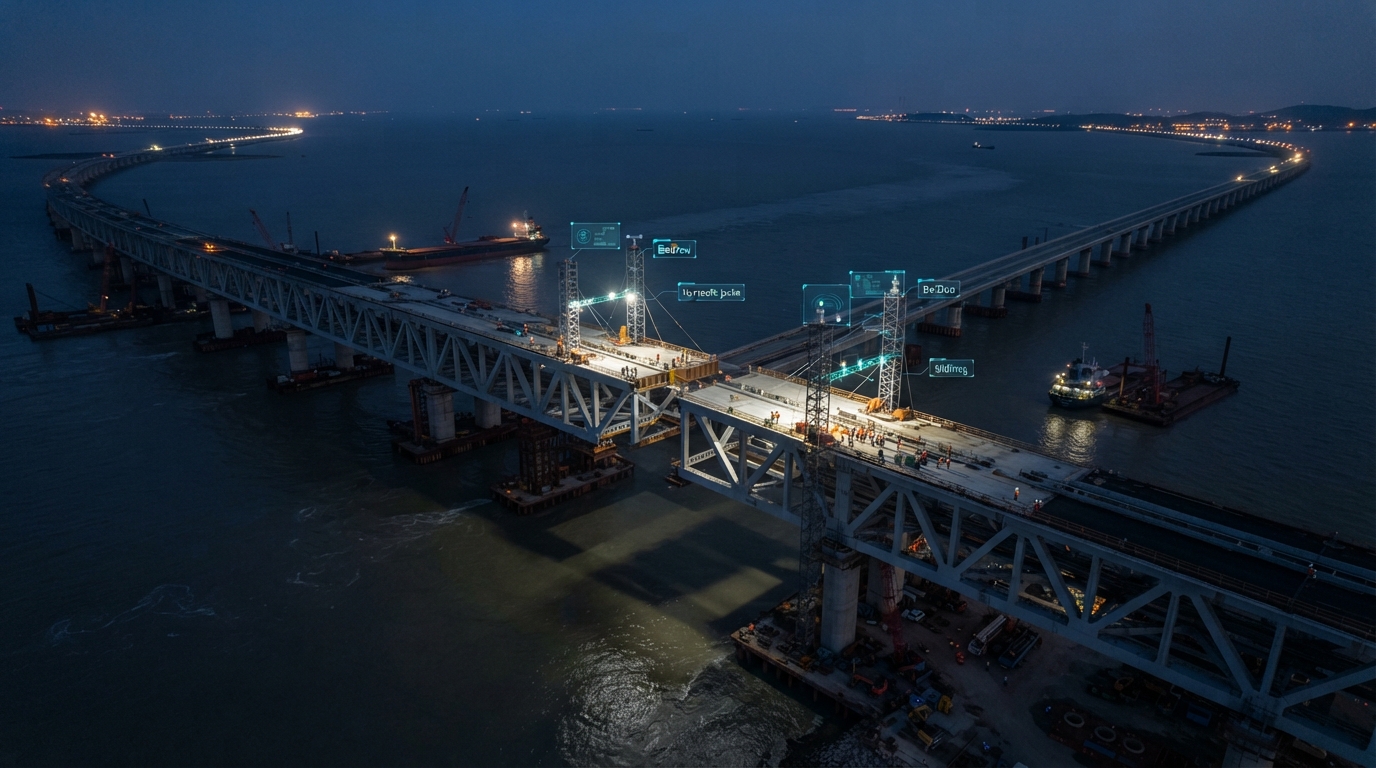
29.2 kilometers over the sea: Construction of a giant railway bridge in China has reached an important milestone
According to Global Times, the work was carried out on one of the main sections of the Nantong-Ningbo high-speed railway. The complex crossing Hangzhou Bay is planned to become the world's longest sea-crossing high-speed railway bridge.
The project includes three bridges built over the northern, central, and southern navigable channels, as well as connecting sections in open water and shallows.
The total length of the southern bridge, whose steel span has been connected, is 814.5 meters, with a main span of 364 meters. Vessels with a deadweight — total weight of cargo, fuel, and other stores — of up to 3,000 tons will be able to pass beneath it.
Construction is being carried out under complex natural conditions. The tidal range in Hangzhou Bay reaches nearly nine meters. Due to strong currents and winds, the favorable time for working at sea is limited.
High humidity, a salty environment, and the constantly changing sea floor topography due to scouring and sediment accumulation also pose additional challenges for engineers.
To join the span, a technology of pushing steel structures toward each other from both sides was used. BeiDou satellite navigation and digital monitoring tools were utilized for the precise joining of the elements.
Sensors installed on piers, steel structures, and temporary support parts transmitted data on metal stress, stay cable tension, and element displacement every few milliseconds. Special limiters and devices helped reduce wind impact and correct the position of structures during the work process.
The connection work was deliberately performed at night. Since the temperature was relatively stable at this time, the expansion or contraction of metal under thermal effects caused less interference.
The builders also created an early warning system for dangerous weather and water conditions. The work schedule was adjusted according to the current situation.
Now, work will be carried out to gradually adjust the tension in the stay cables, concrete the joint sections, install and tension the remaining stay cables, and assemble the permanent support parts. After that, the bridge structure will be transferred to its permanent operating scheme.