

110 million tons of uranium ore discovered in Saudi Arabia
The deposit was identified as part of the geological exploration work at the Jabal Said project. In addition to uranium, the ore is said to contain high concentrations of rare earth elements, especially heavy elements.
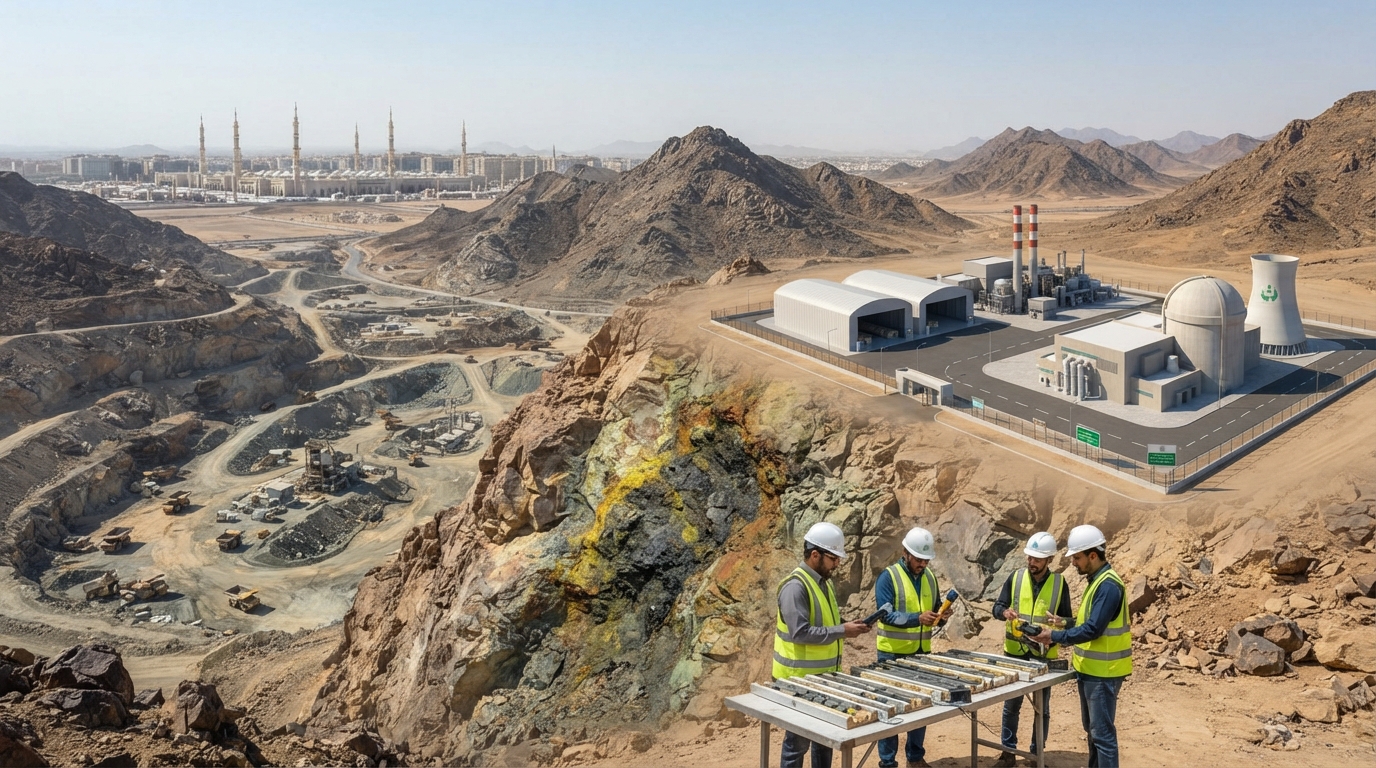
110 million tons of uranium-bearing ore discovered in Saudi Arabia
In the Medina region of Saudi Arabia, nearly 110 million tons of ore with promising uranium concentrations have been discovered. This was announced by the Kingdom's Minister of Energy, Prince Abdulaziz bin Salman, at the IAEA General Conference in Vienna, as reported by The National News.
The deposit was identified during geological exploration work within the Jabal Sayid project. In addition to uranium, the ore is said to contain high levels of rare earth elements, particularly heavy elements.
The minister stated that the discovered deposit could become one of the most significant in the world for the development of rare earth resources. However, this refers to the total volume of ore — neither the exact amount of uranium nor the volume of economically extractable resources has been disclosed yet.
This discovery comes at a time of expanding cooperation in the peaceful atom sector between Saudi Arabia and the United States. In July, the two countries signed a civil nuclear cooperation agreement envisaging long-term cooperation in nuclear energy.
Saudi Arabia is also developing its own nuclear fuel production chain and exploring opportunities for uranium mining and processing as part of its national nuclear program.
In July, US President Donald Trump's administration had preliminarily agreed to allow Saudi Arabia to engage in uranium enrichment without the implementation of international safeguards aimed at preventing the production of nuclear weapons.
Experts interviewed by CNN say that if strict safeguards are not implemented, this agreement could pave the way for Saudi Arabia to acquire nuclear weapons. At the same time, the country's Crown Prince Mohammed bin Salman had previously threatened to create a nuclear weapon if Iran developed its own bomb.
Saudi Arabia has been a full participant in the Treaty on the Non-Proliferation of Nuclear Weapons since 1988, as well as a member of the International Atomic Energy Agency (IAEA). The country purchases nuclear fuel from abroad, while also independently developing its nuclear infrastructure. Its strategy is focused on large pressurized water reactors, small modular reactors (SMRs), and the development of a full nuclear fuel cycle to utilize domestic uranium reserves.