

105-year-old investigated for crimes at Nazi PoW camp in Germany
The suspect is alleged to have been an accessory to murder at the Stalag 326 camp, where tens of thousands of Soviet PoWs died.
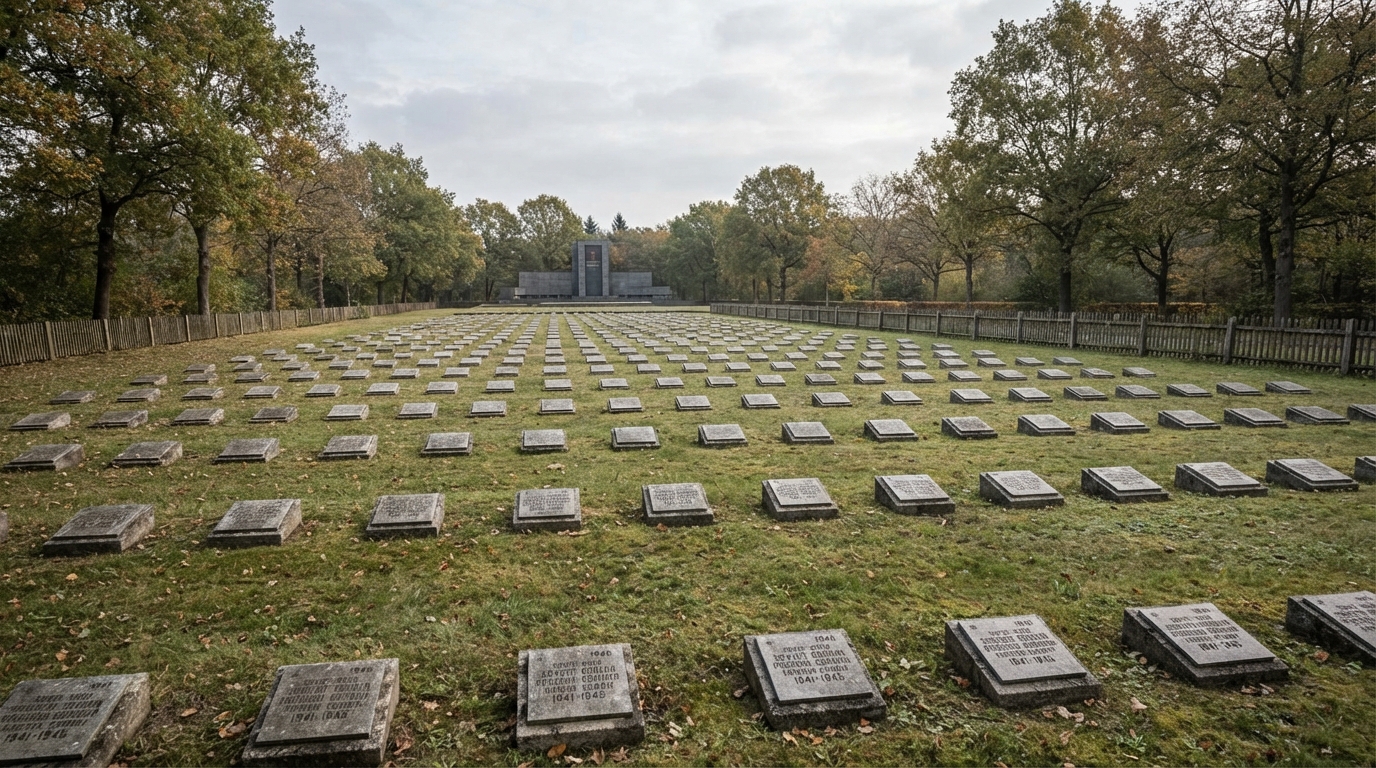
105-year-old investigated over crimes at Nazi PoW camp in Germany
Thirty thousand Russian prisoners of war are buried at Stalag 326 in Senne
German prosecutors are investigating a 105-year-old man over claims that he was an accessory to multiple counts of murder at a Nazi prisoner of war camp during World War Two.
He is alleged to have served as a camp guard at Stalag 326 VI K in Senne, in northwestern Germany.
Dortmund public prosecutor Sonja Frodermann said in a statement that a similar case had also been under way involving a second former camp guard at Senne.
She said that suspect died a few months ago at the age of 99.
No additional details about the two former guards have been released, but the cases underline the challenges prosecutors face as they continue to investigate Nazi-era crimes, with most of the remaining suspects already dead.
More than 5.3 million soldiers from the Soviet Red Army were held captive in Germany during World War Two, and half are believed to have died. Many of those who survived were treated as traitors when they returned home.
The PoW camp, or Stalag, at Senne was among the largest.
According to the memorial site, one in three Soviet PoWs who entered Nazi Germany between 1941 and 1945 passed through the Senne complex, and they often went on to perform forced labour in the wider region.
Conditions at Stalag were horrific, and prisoners suffered appalling mistreatment and malnutrition.
Of the 180,000-200,000 Soviet prisoners of war registered there, many died and tens of thousands are buried there. PoWs from France, Poland, Serbia and Belgium were also held at Senne.
More than 9,000 Russian prisoners of war were alive in the camp when it was liberated in 1945.
The prosecutor said the investigation into the 105-year-old was still ongoing and that the allegations of being an accessory to multiple murders concerned his activities at Stalag 36.
Germany has had no statute of limitations for murder or accessory to murder since 1979, allowing Nazi-era crimes to be prosecuted.
Another centenarian camp guard from the Hemer Stalag VI A camp is also said to be under investigation.
Still, bringing perpetrators to justice more than 80 years after the war has become extremely difficult.
Four years ago, a 101-year-old concentration camp guard received a five-year prison sentence for complicity in murder at Sachsenhausen. Josef Schütz was the oldest Nazi criminal ever brought to justice.
He never served time in prison and died in 2023 while appealing his sentence.
A former Nazi concentration camp secretary was convicted in 2022 of abetting murder and given a suspended jail term. She died last year at the age of 99.
Although prosecution of Nazi crimes is handled by public prosecutors in the western city of Dortmund, cases are first taken up by the central office for Nazi crime investigations in Ludwigsburg in the south-west.