

Uzbekistan's perceived inflation falls to 10.2%, record low in June
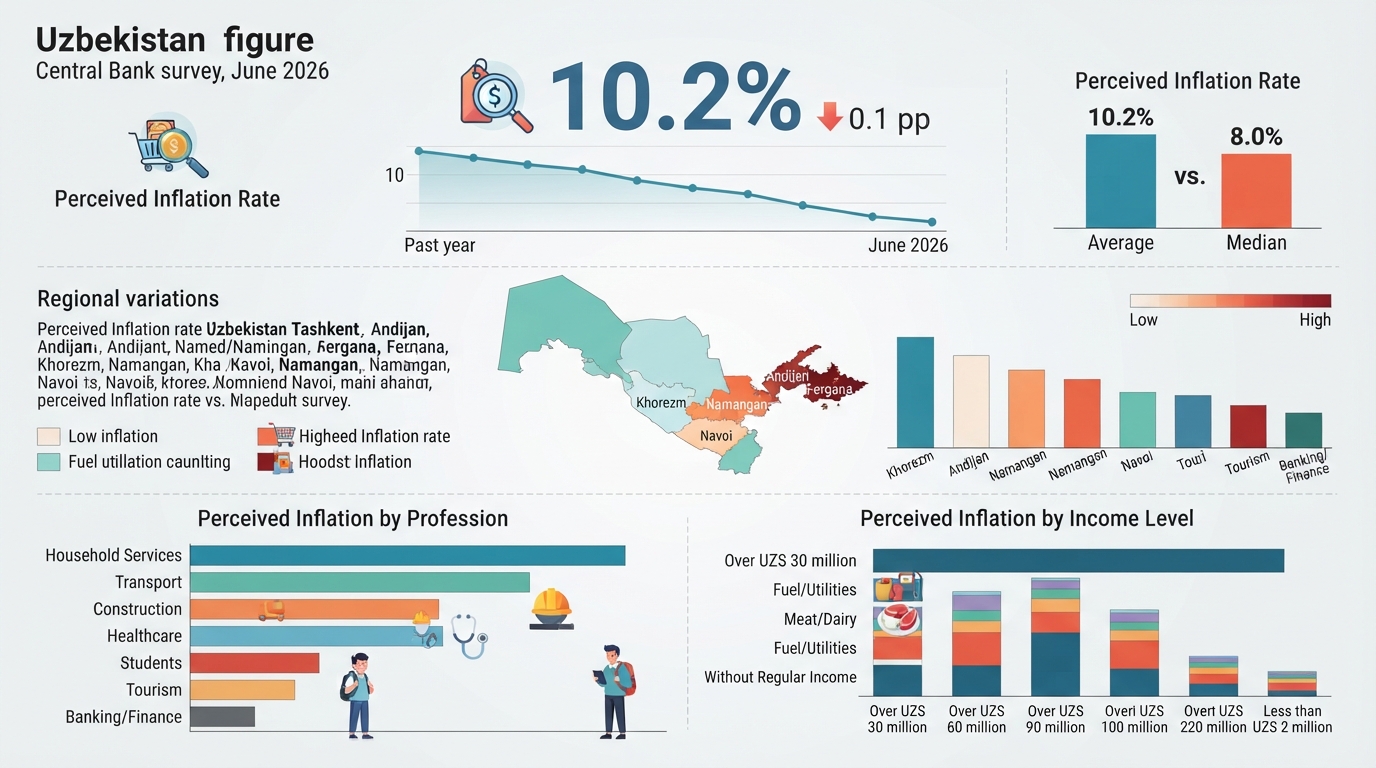
Uzbekistan's perceived inflation reached a historic low of 10.2% in June 2026, as indicated by a survey from the Central Bank, which gauged respondents' views on average price increases over the past year. The survey included 3,785 participants and revealed a decrease of 0.1 percentage points in the average perceived inflation rate compared to May, while the median estimate fell by one percentage point to 8%, the lowest since tracking began.
Among the regions, Tashkent reported the highest perceived inflation at 12.3%, followed closely by Andijan at 12.2% and Fergana at 11.1%. In contrast, the lowest perceived inflation rates were found in Khorezm at 8.5%, Namangan at 9%, and Navoi at 9.1%.
By profession, those in household services and transport reported the highest perceived inflation at 11.6%, with construction workers at 11.5% and healthcare professionals at 11.4%. Students noted the lowest perceived inflation at 8.8%, followed by tourism workers at 9.3% and banking and financial sector employees at 9.6%.
Respondents earning over UZS 30 million ($2,500) per month reported the highest perceived inflation at 13.5%. In contrast, those making less than UZS 2 million ($167) indicated the lowest perceived inflation at 8%, while individuals without a regular income estimated inflation at 9.3%.
As in previous months, meat and dairy products were the most frequently mentioned categories for significant price increases, cited by 52% of respondents. Additionally, more participants reported rising prices for fuel, electricity, and natural gas, while fewer noted increases in fruit and vegetable prices. There was also a notable rise in mentions of price increases for sugar and rice compared to May.
Earlier, Uzbekistan's annual inflation climbed to 6.4% in June from 5.5% in May, with monthly consumer prices increasing by 0.6%, primarily due to higher utility tariffs and transport costs, despite seasonal drops in fruit and vegetable prices.