

Uzbekistan to create energy passports for mahallas
Energy passports for mahallas will combine data on electricity and gas consumption, infrastructure, losses, and modernization needs.
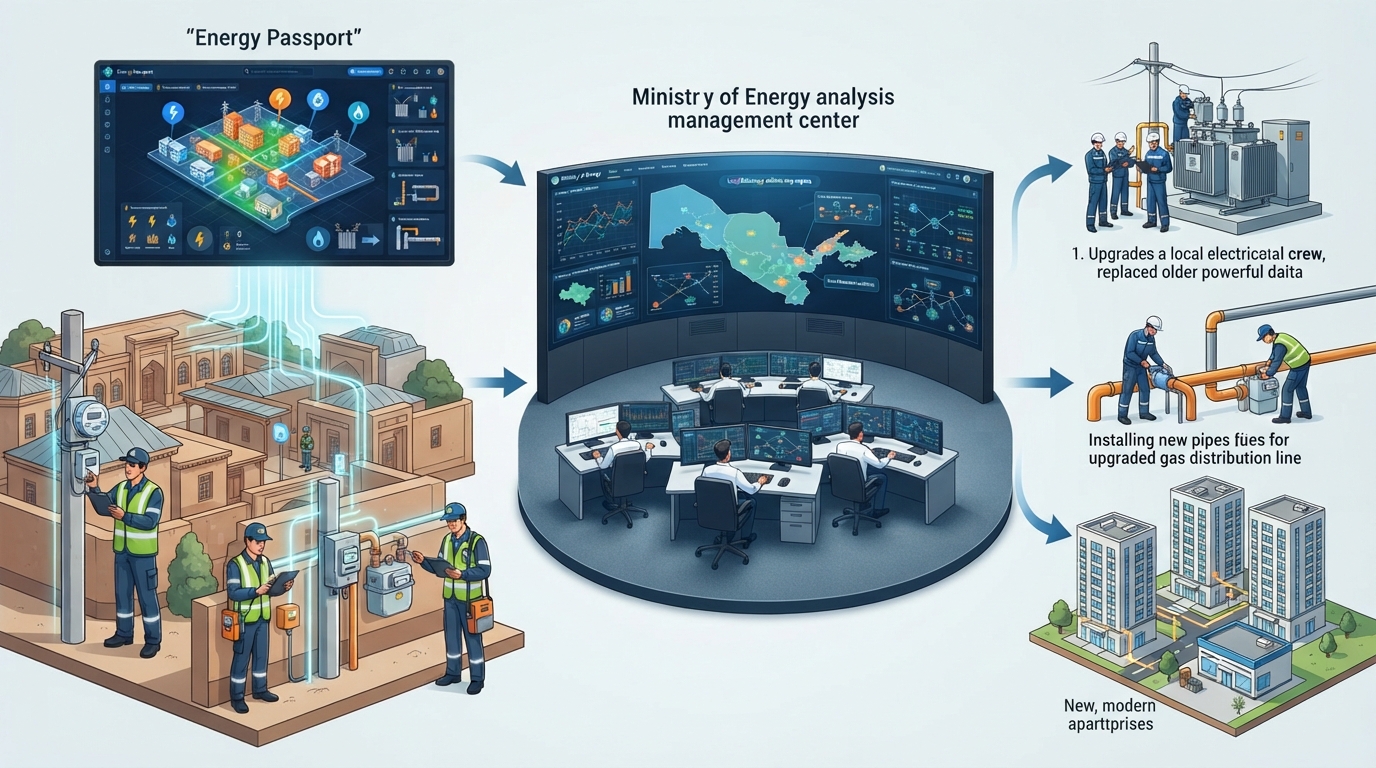
Uzbekistan plans to create energy passports for each mahalla, which will contain key information about electricity and gas supply.
According to the Ministry of Energy of Uzbekistan, this tool will enable the assessment of the state of energy infrastructure, analyze resource consumption, and make informed decisions on network development.
The energy passport will include data on the number and composition of consumers, consumption volumes, available capacity, the composition and technical condition of the electricity and gas infrastructure, the potential for connecting new subscribers, and modernization needs.
The collected data will enable the analysis of energy distribution and consumption in each mahalla. Specifically, it is expected to help identify areas with high technical and commercial losses, sudden or abnormal changes in consumption volumes, unaccounted consumption, and illegal or non-compliant connections.
The passport will also enable a centralized assessment of network loads, reserve capacity, and their technical condition. This should facilitate early assessment of the risk of emergency situations, the adoption of measures to prevent them, and, if necessary, a more rapid restoration of power supply.
As an example, the Ministry of Energy cites the ability to quickly redistribute power by utilizing grid backup capacity. This will enable decisions to shift loads, preventing prolonged power outages for consumers.
When developing energy passports, future additional loads associated with the construction of new multi-story buildings, social facilities, enterprises, and industrial sites will be taken into account. In the event of insufficient existing capacity, it will be possible to determine which network or transformer needs to be reinforced, where additional infrastructure is needed, and how much resources will be required.
Thus, the energy passport is viewed not only as a data collection system but also as a management tool.
It should provide a comprehensive assessment of energy flow and consumption, losses, network conditions, and associated risks, identify the causes of problems, make prompt decisions, and plan for further infrastructure development.
The Ministry cites the transition from responding to problems that have already arisen to a preliminary assessment of their causes and risks, the prompt redistribution of power, restoration of supply, and the timely strengthening of infrastructure as the main objective of this approach.