

Energy passports of neighborhoods to be created in Uzbekistan
Energy passports are being created for each mahalla in Uzbekistan, combining information on electricity and gas supply.
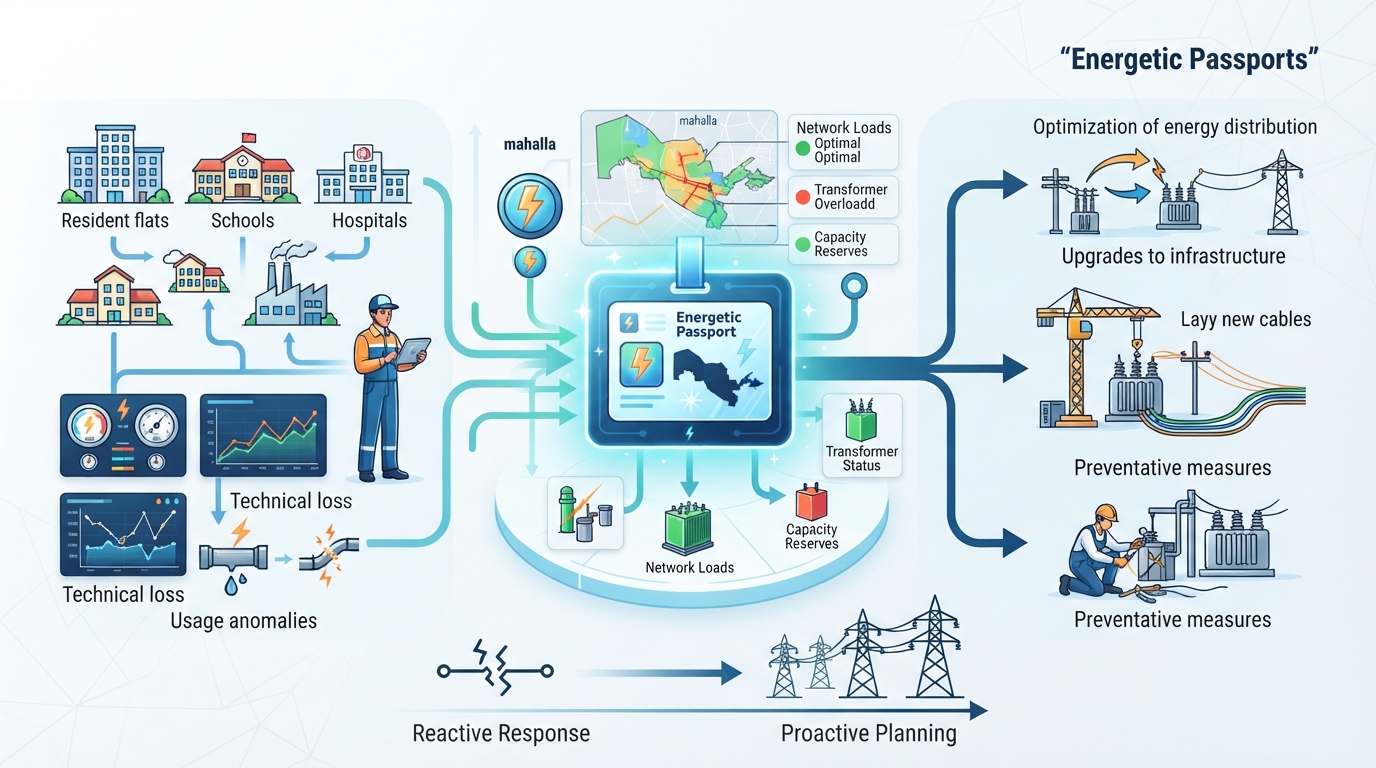
Energy passports containing important information on electricity and natural gas supply for each mahalla will be introduced in Uzbekistan. The Ministry of Energy of Uzbekistan announced this.
These passports will serve as an important tool for assessing the state of energy infrastructure, analyzing resource consumption and making decisions on the development of networks.
The energy passport reflects information such as the number and composition of consumers, consumption volume, available capacities, composition and technical condition of electricity and gas infrastructure, opportunities for connecting new consumers to the network and the need for modernization.
The collected data will allow analyzing the distribution and consumption of energy resources in each mahalla. In particular, it is planned to use them to identify areas with high technical and commercial losses, sharp or unusual changes in consumption volumes, unaccounted consumption, as well as illegal or non-compliant connections.
The passport also allows you to assess the load on the networks, their power reserves and their technical condition in one place. This is expected to help in advance assessing the risk of emergency situations, taking measures to prevent them and, if necessary, to restore energy supply more quickly.
As an example, the Ministry of Energy cites the possibility of rapid redistribution of power by using the network's reserve capacity. This will allow you to make decisions on transferring the load to another direction and not leave consumers without energy supply for a long time.
When forming energy passports, future additional loads associated with the emergence of new apartment buildings, social facilities, enterprises and production sites are also taken into account. If the existing capacities are not enough, it will be possible to determine which network or transformer needs to be strengthened, where additional infrastructure is required and how many resources will be needed for this.
Thus, the energy passport is considered not only as a data collection system, but also as a management tool.
It should allow for a comprehensive assessment of energy movement and consumption, losses, network status and associated risks, identifying the causes of problems, making quick decisions and planning for the future development of infrastructure.
The Ministry defines the main task of such an approach as a transition from responding to already existing problems to a preliminary assessment of their causes and risks, rapid redistribution of power, restoration of supply and timely strengthening of infrastructure.