

Uzbek Firms Invited to Raise Livestock in Kazakhstan
Uzbek and Kazakh business representatives discussed a pilot project allowing Uzbek investors to raise cattle in Kazakhstan for export to Uzbekistan.
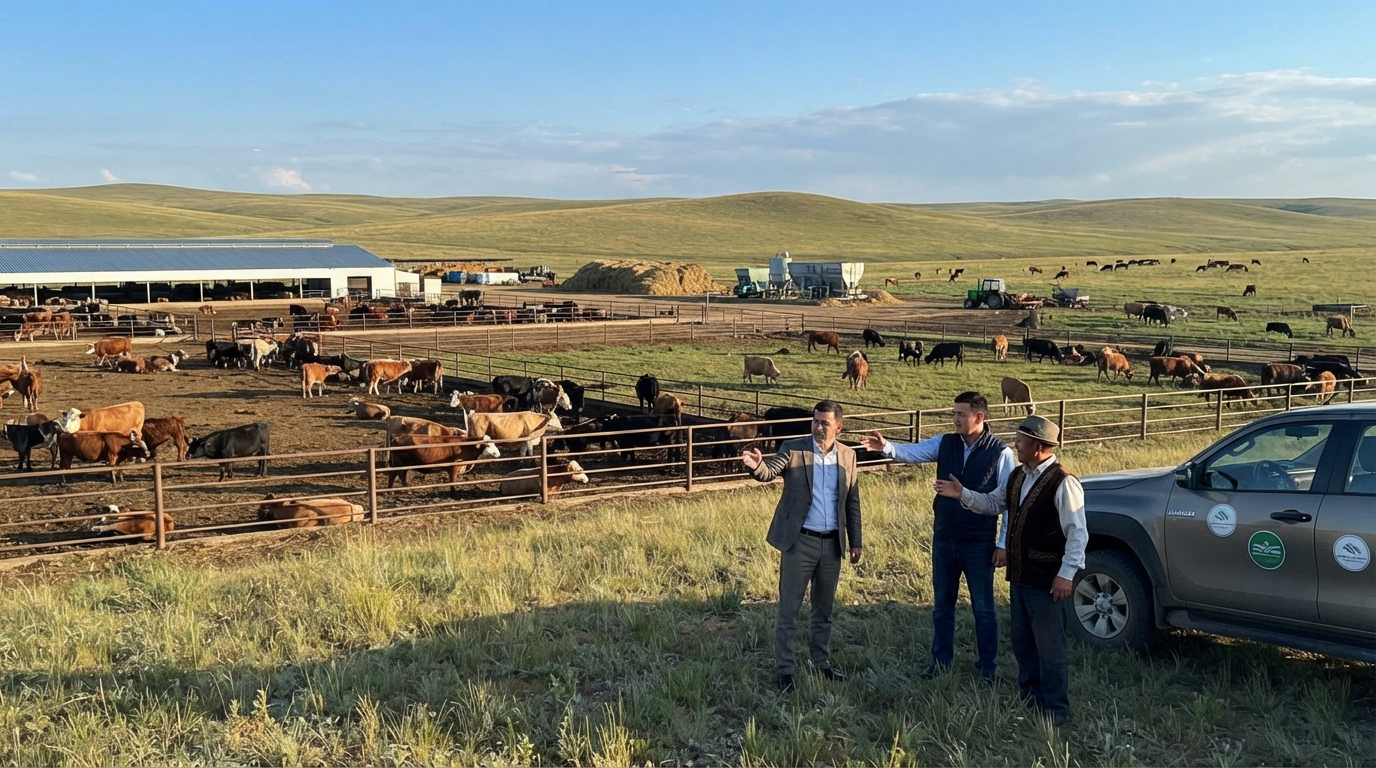
Uzbek businesses have been extended an invitation to engage in livestock farming within Kazakhstan, as discussed during the Uzbek-Kazakh Business Forum in Tashkent. This initiative aims to grant Uzbek entrepreneurs access to Kazakh pastureland for raising livestock intended for export, with a proposed pilot project encompassing a minimum of 50,000 hectares.
Davron Vakhabov, Chairman of the Chamber of Commerce and Industry of Uzbekistan, put forward the idea of enabling Uzbek entrepreneurs to invest in the acquisition and rearing of cattle in Kazakhstan. This would cover the entire process from purchasing young animals to fattening them, with the stipulation that they would have the right to export livestock weighing over 400 kg back to Uzbekistan.
Vakhabov cited previous agreements between Uzbekistan and Belarus as a precedent. Under those arrangements, investors who independently establish a feed base and raise livestock from the initial stages are permitted to export both meat and live cattle exceeding 400 kg in weight.
"If an entrepreneur from Uzbekistan buys a young bull from scratch, develops both dairy and beef production there, and then exports the livestock that he has raised himself to Uzbekistan, why shouldn't we raise this issue?" Vakhabov questioned.
He suggested designating a pilot area of at least 50,000 hectares, highlighting the disparity in land availability between the two countries. Vakhabov noted that Uzbekistan allocates up to 0.5 hectares of land per head of livestock, whereas Kazakhstan provides between two and seven hectares per head.
In response to the proposal, Dauren Salykov, Chairman of the Livestock Union of Kazakhstan, explained that current restrictions on live livestock and meat exports from Kazakhstan are due to veterinary safety requirements and the necessity of supplying the domestic market. He mentioned that an export quota of 25,000 tonnes of meat has been set for the latter half of the year.
Salykov proposed differentiating between various categories of producers.
"If someone comes, invests money, builds facilities, buys and fattens livestock themselves, they should be allowed to export it. We simply need to agree with the Ministry of Agriculture so that such operators have centralized permits and oversight," he stated. He also suggested that a separate quota system could be implemented for Kazakh farmers who specialize in breeding livestock without undertaking the fattening stage.
Kanat Sharlapayev, Chairman of the Presidium of the Atameken National Chamber of Entrepreneurs of Kazakhstan, expressed support for the proposal, emphasizing its advantages for Kazakhstan.
"If an entrepreneur comes, builds a feedlot, we know why it was built — to take the product. They will buy equipment and agricultural machinery and employ workers. Most importantly, a large share of the added value will remain and be shared between the investor and the Republic of Kazakhstan. That is exactly what we need," he affirmed.
Both parties agreed to continue their discussions. The forum did not specify the exact details of the pilot project, such as the land's location, investor eligibility criteria, or the permitting processes.
According to information from the forum, Kazakhstan exported 32,000 tonnes of beef and 34,000 tonnes of lamb to Uzbekistan in 2025, marking a 1.7-fold increase from the previous year, with these exports valued at approximately US$300 million. Uzbekistan accounted for over 90% of Kazakhstan's meat exports.
Kazakhstan possesses 188 million hectares of pastureland and, as per the Livestock Union of Kazakhstan, has the capacity to expand its cattle herd from the current 9 million to 25 million head. The country also operates a state-backed financing program that offers loans at a 5% annual interest rate over 10 years, including a two-year grace period, to support the import of 50,000 pedigree breeding females.