

Uzbekistan, Kazakhstan to lift trade barriers on nearly 20 product categories
Tashkent Times is an English language online-newspaper that brings all latest Uzbekistan news
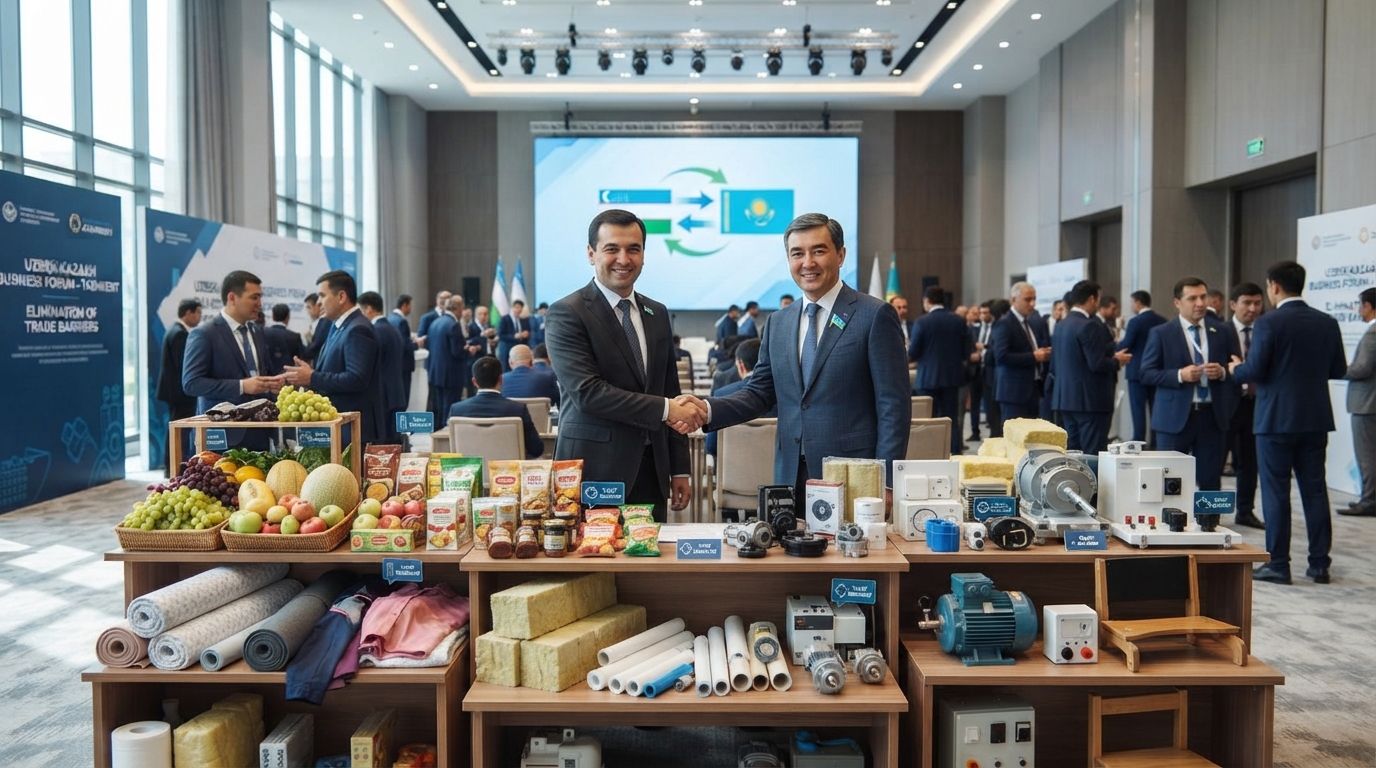
Uzbekistan and Kazakhstan have reached an agreement to eliminate trade barriers, both tariff and non-tariff, on approximately 20 categories of goods, effective August 10. This announcement was made on August 5 during the Uzbek-Kazakh Business Forum held in Tashkent.
The Chamber of Commerce and Industry of Uzbekistan confirmed that the agreement encompasses a variety of products, including agricultural and food items, textiles, construction materials, machinery, electrical equipment, and furniture.
During the forum, speakers highlighted that these trade restrictions were a key topic at a recent meeting of the Uzbekistan-Kazakhstan intergovernmental commission in Aktau, which was attended by the prime ministers of both nations. Following these discussions, the two countries committed to addressing long-standing issues identified by businesses.
Davron Vakhabov, head of the Chamber of Commerce and Industry, stated, "Businesses have been raising this issue for a long time — it was a real problem... A week ago it was announced that starting August 10, all existing tariff and non-tariff barriers would be lifted. We're confident this will give a major boost to entrepreneurs in both countries."
Yerlan Turgumbayev, Kazakhstan's ambassador to Uzbekistan, noted that the decision impacts roughly 20 product categories. He remarked on the rapid progress in bilateral relations, attributing it to the trust between the leaders. "Barriers on nearly 20 product categories were lifted within a single week. I don't believe decisions have ever been made this quickly before," he added. Turgumbayev also mentioned Kazakhstan's potential to increase exports to Uzbekistan across an additional 261 product lines.
**Affected Products**
The Chamber of Commerce and Industry specified the following product groups are included:
* Meat and edible offal
* Dairy products
* Eggs
* Natural honey
* Edible products of animal origin
* Vegetables
* Fruits
* Nuts
* Coffee
* Tea
* Spices
* Cereals
* Flour
* Oilseeds and oleaginous fruits
* Sugar
* Confectionery
* Alcoholic and non-alcoholic beverages
* Vinegar
* Tobacco
* Salt
* Sulfur
* Earth and stone
* Plastering materials
* Lime and cement
* Mineral fuels
* Mineral oils
* Products of their distillation
* Bituminous substances
* Mineral waxes
* Cotton
* Textile materials
* Footwear
* Headwear
* Umbrellas
* Walking sticks
* Whips
* Riding crops
* Feathers
* Artificial flowers
* Articles of human hair
* Machinery
* Electrical equipment
* Furniture
* Bedding
* Mattresses
* Mattress supports
* Cushions
* Puffs
* Blankets
* Lamps and lighting equipment
* Prefabricated buildings
The Chamber did not provide details on the specific restrictions that applied to each product group or whether both countries would remove them simultaneously.
Kanat Sharlapayev, chairman of the presidium of Kazakhstan's National Chamber of Entrepreneurs "Atameken," emphasized the need for an ongoing, institutionalized approach to removing trade obstacles. He acknowledged existing logistical and border issues, stating, "There are areas where logistical disputes still need to be resolved. Everyone knows there are issues at the border — we won't deny that, and they need to be addressed. This is the beginning of long-term joint work."
Trade between Uzbekistan and Kazakhstan reached approximately $5 billion in 2025, marking an 11% increase year-on-year. The presidents of both countries have set an ambitious target to boost bilateral trade turnover to $10 billion. Sharlapayev stressed that this goal should be achieved through daily cooperation rather than solely through political declarations. "That $10 billion will be built from a $5 million contract here, a $1 million contract there, from day-to-day work. We shouldn't try to reach $10 billion in trade turnover through political statements, but through daily cooperation between our countries," he said.
As previously reported, Uzbekistan and Kazakhstan had agreed in January 2024 to establish a working group specifically tasked with addressing and removing barriers in bilateral trade.