

Trump retreat over Hormuz tolls suggests he is struggling to end Iran war
The abrupt about-face from the US president was the latest twist in a conflict that has now lasted more than four months.
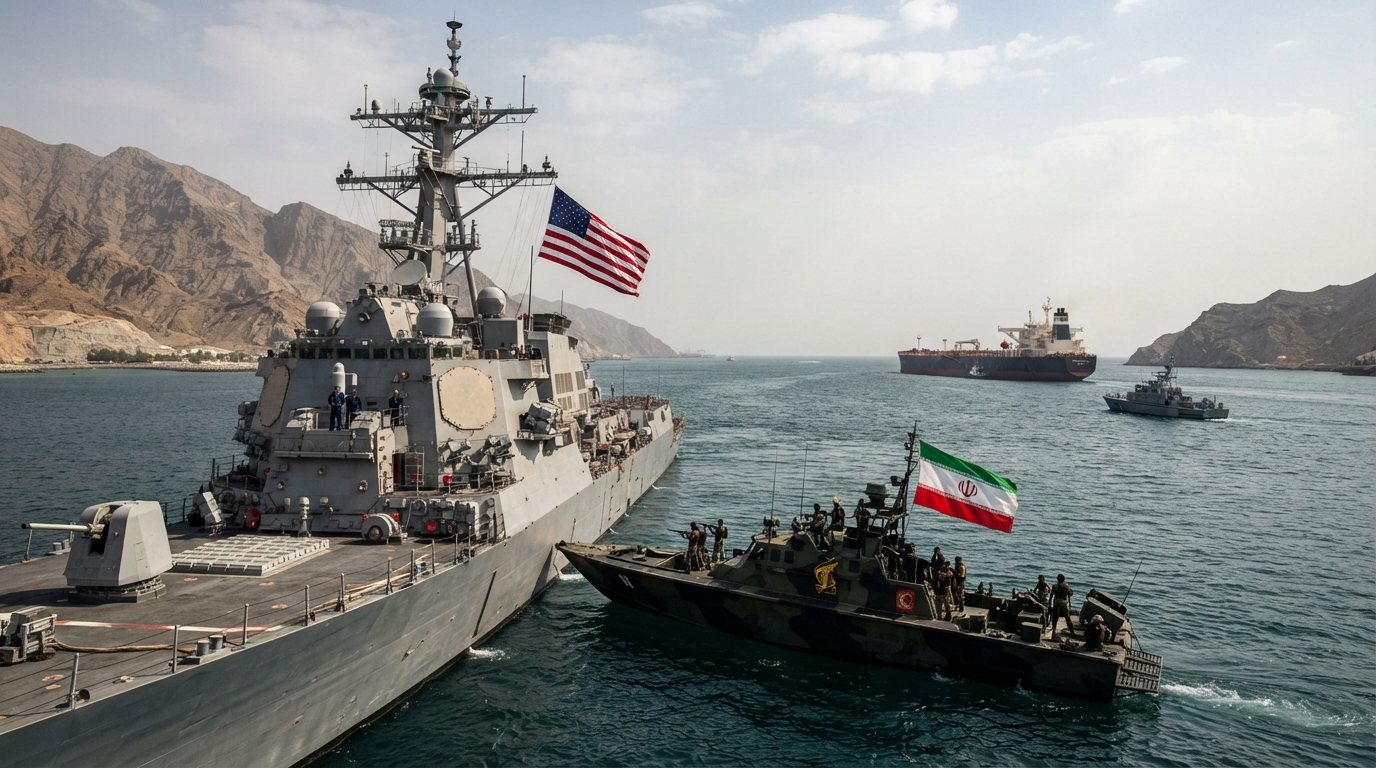
Trump's retreat on Hormuz tolls indicates his struggle to conclude the Iran war
Donald Trump's recent demand regarding the Iran War lasted just 24 hours, highlighting a president seeking unconventional solutions to a challenging situation. On Monday morning, he announced via social media the reimplementation of an American naval blockade on Iranian shipping, stating that all vessels passing through the Strait of Hormuz, including those belonging to US allies, would be required to pay a 20% fee to cover "any and all costs necessary to do the job of providing safety and security to this very volatile section of the world."
However, by the next day, he completely retracted that proposal, suggesting instead that he would pursue "trade and investment deals" with Gulf allies, implying that the US would ensure their safe passage through the Strait in exchange. This sudden reversal marks another development in a conflict that has persisted for over four months and, despite a month-old "memorandum of understanding" that established a temporary ceasefire and a framework for negotiations, shows no signs of resolution.
Trump may be hesitant to escalate the conflict due to its ongoing unpopularity, the potential for rising energy prices, and the dangers associated with American forces and allies facing renewed Iranian attacks. He might also find the idea of ending the war without achieving a better agreement than the one negotiated by Barack Obama's administration in 2015 unappealing.
"I think the most likely ending is a non-ending," stated Rosemary Kelanid, Director of the Middle East program at Defense Priorities. "This has turned into a war of attrition, and wars of attrition tend to go on for a long, long period of time."
The US-Iran memorandum of understanding (MOU) and the hopes it raised for an end to the war effectively ended at 10:16 ET (16:16 BST) on Tuesday when Trump announced the resumption of the US blockade on Iranian shipping, coinciding with a series of new US military strikes on targets across Iran.
In response, Iran intensified its attacks on US allies and commercial shipping in the region, causing traffic through the Strait of Hormuz to nearly halt once again. After nearly a month of fluctuating negotiations between the two nations, marked by sporadic hostilities that tested the definition of a "ceasefire," Trump and the Americans seem to be grappling with the same challenges that have plagued the Iran War.
While the US has achieved military objectives, as evidenced by the destruction of Iranian ships, planes, and targets, and the degradation of defense capabilities, the political resolution remains elusive. Despite being militarily weakened, Iran can still obstruct access to the Strait of Hormuz. Unless the US is prepared to significantly escalate its military operations in the region, there is little it can do to prevent this.
Trump's proposal of a 20% fee—potentially a strategy to make military commitment more acceptable to the American public—was not entirely new, as he had suggested similar arrangements throughout the war. However, just last month, US Secretary of State Marco Rubio condemned an Iranian plan to impose "fees" on shipping through Hormuz, asserting, "No country is allowed to charge tolls or fees on an international waterway. That's existing international law."
Trump's reversal on the Hormuz fee reflects a president who appears to lack a clear strategy moving forward. The MOU, which both sides claimed as a victory, was intentionally vague, leaving much to be negotiated later. It envisioned some role for Iran in overseeing shipping in Hormuz, stating, "The Islamic Republic of Iran will make arrangements using its best efforts for the safe passage of commercial vessels with no charge." This is a role Iran has been eager to assert. The MOU also included billions of dollars in promised "investment" in Iran and an end to international sanctions.
Americans may have believed that these incentives, coupled with warnings about the consequences of noncompliance, would deter Iran from leveraging its geographic advantages to assert control over Hormuz. That assumption, at least for now, appears to be incorrect. "The MOU is completely dead," Kelanid remarked. "All of the things that it stipulated have now been undone."
Now, both Trump and the Iranians find themselves in a familiar situation. The latter are once again facing American military strikes across their territory, highlighting their inability to defend their sovereignty. With the reimposed blockade, their oil revenue—a crucial lifeline for the Iranian regime—is once again cut off.
Meanwhile, Trump is confronted with a choice between escalation, which carries domestic economic and political repercussions, and settling for a resolution that leaves a hostile Iranian regime intact. "We're back to where we were initially, where the question was: who's got more patience?" said Elliot Abrams, a senior fellow for Middle Eastern studies at the Council on Foreign Relations. "The Iranians, who will not be able to export oil, or the US and other countries that use Persian Gulf oil?"
After months of concern that the Iran war was leading to a new wave of inflation that could hurt his popularity, Trump received some positive news