

Strait of Hormuz remains a fault line as Iran and US drift back into war
Control of the waterway has become a key point of contention between the US and Iran, as a ceasefire deal falters.
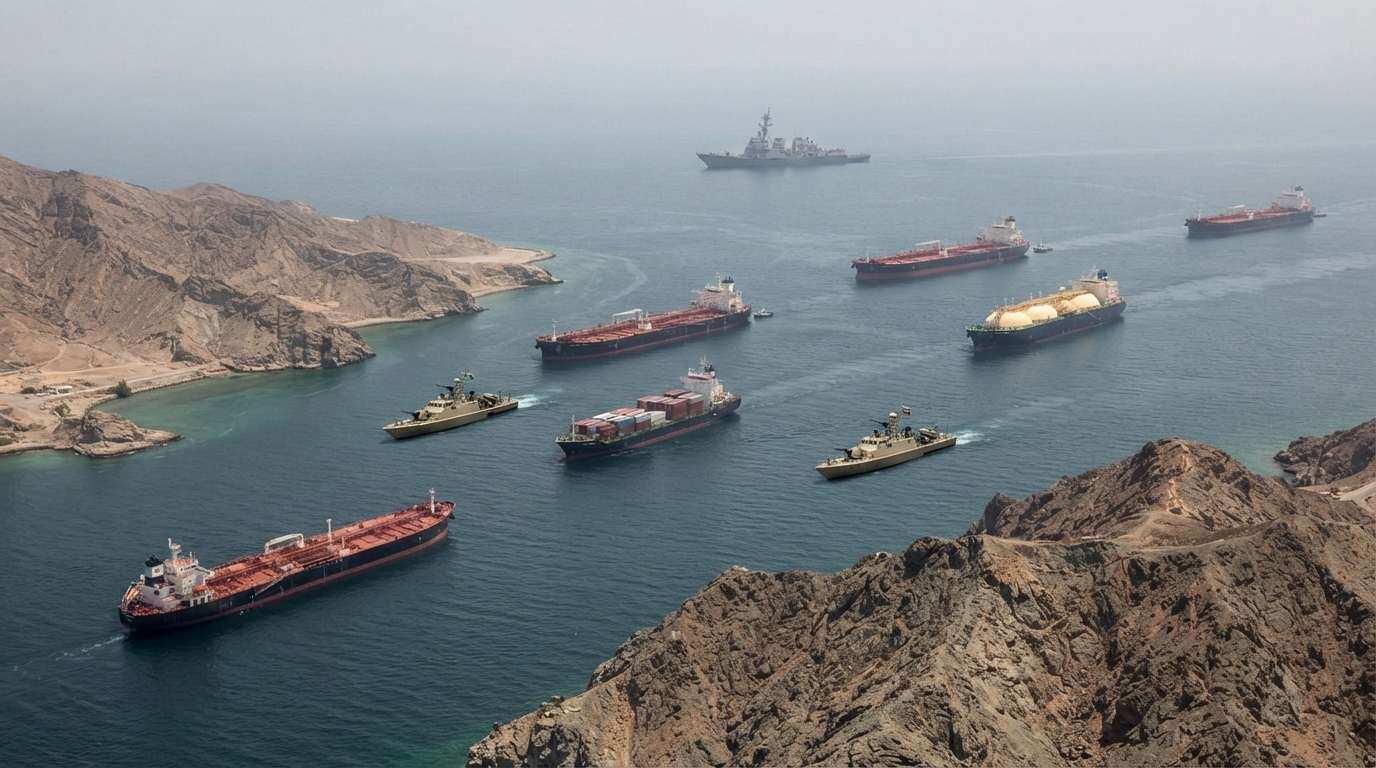
Strait of Hormuz remains a critical point as tensions between Iran and the US escalate towards war. The delicate "no war, no peace" scenario that emerged after the US and Iran reached a preliminary agreement last month appears to be shifting towards conflict.
This intermittent ceasefire could potentially be revived through the efforts of increasingly frustrated Arab and Pakistani mediators, as both parties prefer to avoid a protracted, full-scale war. However, the most significant point of contention is the status of the strategic Strait of Hormuz, with Iran reiterating that its control over this essential maritime route is a non-negotiable boundary that cannot be breached by military, economic, or diplomatic pressure.
"We told you: keep your word or pay the price," stated Iran's chief negotiator Mohammad Bagher Ghalibaf on social media, referencing the agreement.
The importance of the Strait of Hormuz in the context of the Iran conflict cannot be overstated. Tehran interprets the vague terms of the hastily drafted memorandum of understanding from June as granting it authority over the management of this crucial maritime corridor. Specifically, point five of the 14-point plan states: "The Islamic Republic of Iran will make arrangements using its best efforts for the safe passage of commercial vessels."
Conversely, the US interprets this as Iran being required to ensure the free flow of global oil and gas supplies, along with other essential goods, including fertilizer production materials. "You can drive a truck through those clauses," remarked an Arab oil executive operating in the region.
While the new leadership in Tehran, which emerged from a period of intense conflict and US-Israeli assassinations, seems unified in their overarching strategic vision for this new phase of the Islamic Republic, there are evident and increasing divisions regarding the path forward. "Some want to capitalize on battlefield gains through diplomacy, while others believe the ceasefire was premature, as Iran had not yet inflicted sufficient damage on the US," noted Robert Malley of the International Crisis Group, who was part of the US delegation that negotiated the landmark 2015 nuclear deal, which President Donald Trump abandoned during his first term.
Recent Iranian assaults on three vessels, including a Qatari-flagged liquefied natural gas tanker navigating a shipping corridor near Oman's coast, were characterized by a diplomatic source in the region as the actions of a "rogue unit" within the Islamic Revolutionary Guard Corps (IRGC). In a system where the IRGC holds significant influence, Iran's unwavering red line is that vessels must adhere to its designated routes.
Meanwhile, far from the escalating tensions, Iran's parliament quietly introduced a new bill aimed at managing the strait, titled the Strategic Action for the Security and Sustainable Progress of the Strait of Hormuz and the Persian Gulf. This information was shared on X by Ebrahim Azizi, head of the assembly's national security commission, who previously stated in April that controlling the waterway was Iran's "inalienable right." When asked when Iran would relinquish control, his response was succinct: "never." He described it as an "asset to face the enemy."
Iran's deep-seated distrust of US promises, exacerbated by repeated threats and conflicts during negotiations, has solidified its determination. Control over the strait is viewed not only as a bargaining chip in this stalemate but also as a new form of leverage, deterrence, and an economic lifeline in the event that sanctions remain in place and its global assets stay frozen.
However, Tehran's resolve to redefine the rules in the region is also straining relations with neighboring countries, including Qatar, a key mediator in this crisis, and Oman, a long-standing ally that has played a behind-the-scenes role for decades. The United Arab Emirates has made it abundantly clear that Iran's intentions to exert control, including imposing "service fees," are unacceptable and set a perilous precedent.
A source familiar with the negotiations indicated that Oman had raised objections to Iran's specific mention in the contested fifth point of the agreement, which stated that Iran "will conduct dialogue with the Sultanate of Oman to define the future administration and maritime services." Muscat now finds itself caught between the demands of Washington and Tehran, as it seeks to uphold its reputation as the region's discreet diplomatic intermediary.
"Oman has been very patient with the Iranians, trying to maintain good neighborly relations," said Omani analyst Professor Abdullah Baabood during an interview with the BBC's Newshour program. "This particular episode has compelled Oman to take a significant stand... but we want this conflict to be resolved through dialogue."
Some analysts still perceive a slim chance for a potential compromise. "I don't think there are any great solutions out there, but the sweet spot could be in some sort of arrangement where no tolls are charged for ships passing through the strait, while allowing for some form of shipping fees that enable Iran to demonstrate it retains its authority," suggested former senior British diplomat Simon Gass, who was part of Britain's team during the negotiations on the 2015 deal.
Beyond this dispute lies a