

Tonnes of rotting food from vast LA warehouse fire creates unbearable stench
A fire destroyed a warehouse, leaving heaps of rotting chicken, poultry and fish to attract flies and rats.
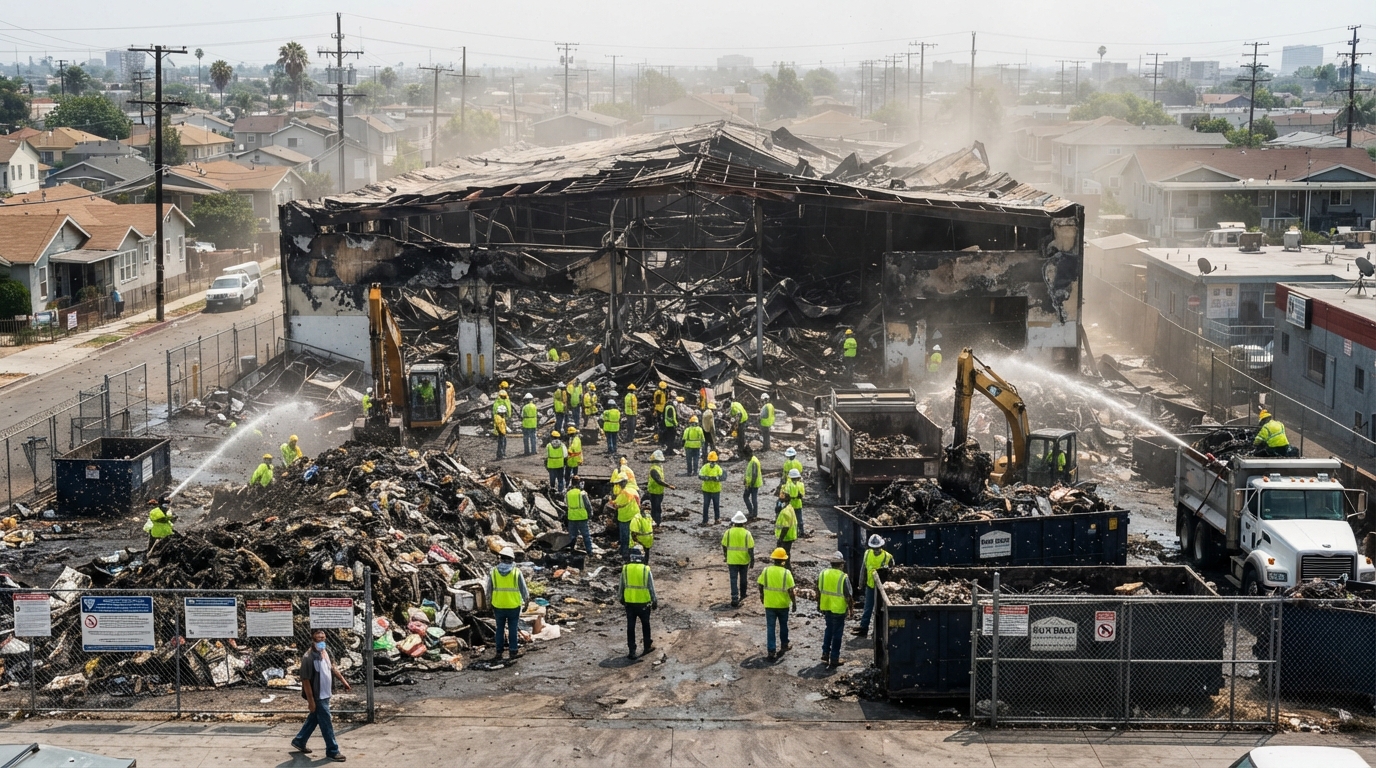
A massive fire at a Los Angeles cold-storage warehouse on June 17 has left behind 85 million pounds (39 million kg) of rotting food, including beef, pork, poultry, and seafood, creating an "unbearable stench" that has plagued residents of Boyle Heights for nearly two months. The lingering odor has severely impacted local businesses and daily life, with residents expressing frustration over the slow cleanup process.
Alexis Sicairos, 30, who operates a coffee stand called Brew Sting, has seen a significant drop in customers. "It's been tough," he said, noting that the usual line of patrons for his banana buzz lattes and cloud matchas has disappeared. The smell, described by 37-year-old security guard Mesha as "really bad... to the point that you want to throw up," has driven away customers, as have the relentless swarms of flies attracted by the decaying food. Mesha likened the smell to that of a dead body.
Lineage, the company that operated the warehouse, stated on Monday that approximately 80% of the food waste had been removed, an increase from 60% on July 31. They aim to complete bulk food waste removal next week and anticipate spending between $80 million and $100 million on the cleanup. However, city officials have criticized Lineage's response, issuing public health and safety violation notices and stating that the company's efforts "have fallen short."
The area, primarily a warehouse district surrounded by homes, is now infested with flies of various sizes and colors. Sicairos noted that flies land on his tables and body as he packs up his coffee stand, acknowledging that customers are deterred by their presence. A city-commissioned inspection report from a pest control company warned that the waste and high temperatures could accelerate the breeding of flies capable of infecting wounds in people and animals, posing a risk of disease for those with open wounds. Residents have also reported an increase in large rats, with existing traps proving inadequate.
Many residents blame the city for what they perceive as an insufficient response, lack of transparency, and inadequate resources. Los Angeles Mayor Karen Bass acknowledged the residents' frustration, stating, "They deserve transparency, clear communication, and meaningful support." Bass, who is up for re-election this year, said she has been in Boyle Heights listening to residents and has directed city departments to collaborate with local, state, federal, nonprofit, and community partners to provide immediate support and solutions. She has also issued executive orders to mobilize resources and expedite the cleanup, with the city and partners providing mobile health clinics and thousands of air purifiers to the neighborhood.
Late last month, the county's public health department fined Lineage $500-a-day for "unsanitary and nuisance" conditions. Mayor Bass has set an August 13 deadline for Lineage to complete the cleanup.
In a letter to Lineage shareholders on Tuesday, Bass reiterated that the company's response "has fallen short," citing "delayed communication, limited transparency, and insufficient public engagement" regarding cleanup, remediation, environmental monitoring, and recovery efforts. She also directed city departments to halt plans to rebuild the warehouse until the community's health and safety are protected.
Lineage, a temperature-controlled warehousing and logistics company, stated that "cleanup crews are working around the clock to remove food waste, clear debris and dismantle damaged sections of the structure," acknowledging the operation's complexity and prioritizing odor reduction. Dozens of workers in hard hats and neon vests, some wearing face coverings, are visible at the warehouse site, alongside officials from the local air quality authority and sheriff's office.