

What to know about 'explosive diarrhoea' parasite outbreak in US
The source of the cyclosporiasis outbreak, which has spread across at least 45 states, is unclear.
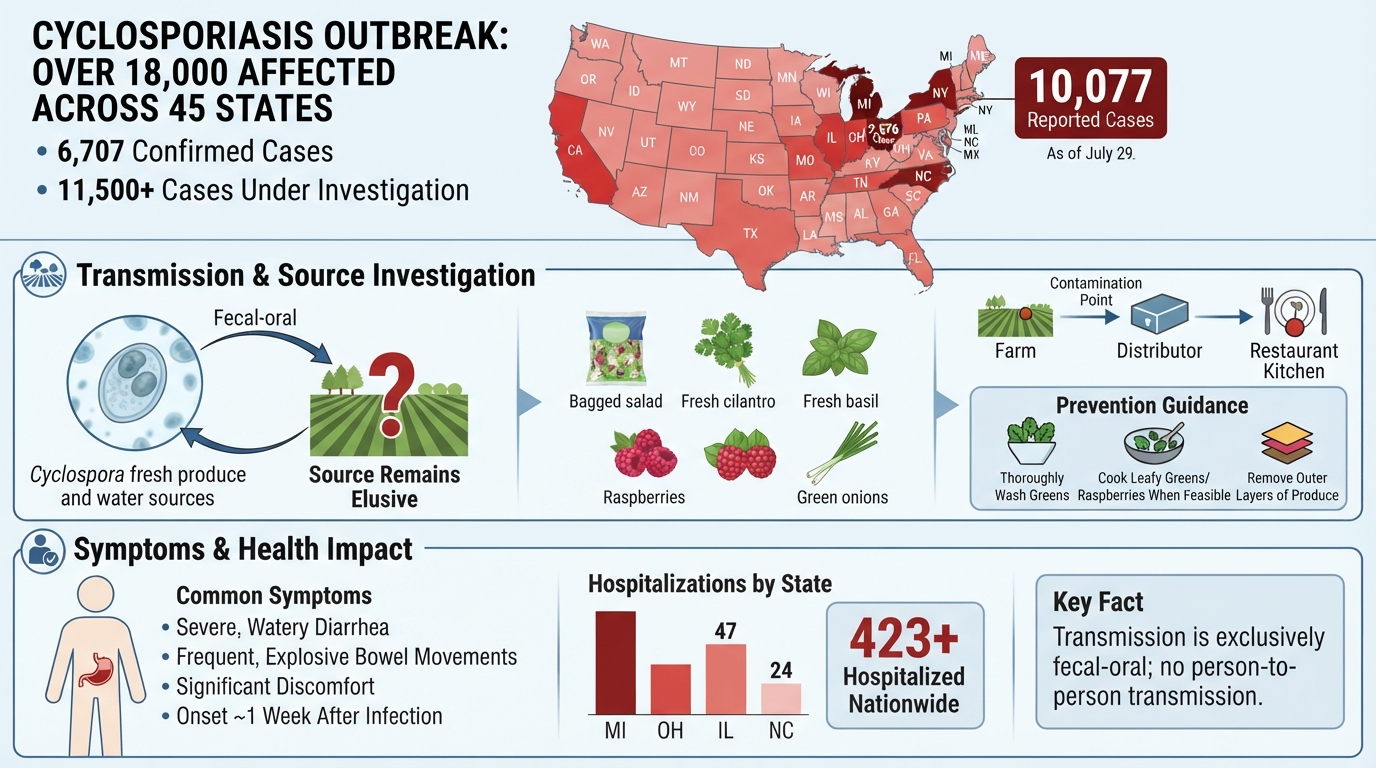
**Over 18,000 Americans Potentially Affected by "Explosive Diarrhea" Parasite Outbreak**
A parasitic outbreak causing severe, watery diarrhea has potentially sickened more than 18,000 individuals across the United States, according to the latest update from the Centers for Disease Control and Prevention (CDC). The infection, known as cyclosporiasis, is caused by a microscopic parasite and is characterized by frequent and often "explosive" bowel movements. Transmission occurs through the consumption of contaminated food or water.
The outbreak has now reached 45 states, with Michigan reporting the highest number of cases, exceeding 10,000, according to the state's health department. While no fatalities have been reported in connection with these recent infections, 423 patients have required hospitalization.
As of Wednesday, the CDC confirmed 6,707 cases of cyclosporiasis nationwide, with an additional 11,500 cases currently under investigation. Michigan and Ohio have reported the most new cases.
**Source Remains Elusive Amidst Rising Case Counts**
The precise source of the current outbreak remains unidentified, though past cyclosporiasis outbreaks have been linked to raw produce. Officials are struggling to pinpoint the origin, making traceback investigations challenging as contamination often occurs at the farm or irrigation level.
State-specific figures, which may differ from the CDC's national tallies, provide a more granular view of the outbreak:
* **Michigan:** 10,077 reported cases as of July 29.
* **Ohio:** 2,576 cases reported as of July 23.
* **New York:** 787 cases, with over half originating from New York City.
* **North Carolina:** 718 people sickened since May 1, with 24 hospitalizations.
* **Illinois:** 707 confirmed and probable cases as of July 28, including 47 hospitalizations.
Other states with a significant number of cases include Indiana and North Carolina, according to the CDC. The actual number of people affected is likely higher than reported, as some individuals recover without seeking medical attention or being tested. The CDC anticipates a continued rise in case counts as new data becomes available.
**Understanding Cyclosporiasis: Symptoms and Prevention**
Cyclosporiasis is an intestinal illness caused by the *Cyclospora* parasite. While not typically life-threatening and less common than other foodborne illnesses like salmonella or E. coli, it can cause significant discomfort. Symptoms, which may or may not be present, usually manifest about a week after infection and include diarrhea with frequent and sometimes explosive bowel movements. If left untreated, the illness can persist for days to over a month, with symptoms potentially recurring.
Unlike some other illnesses, person-to-person transmission of cyclosporiasis does not occur. Dr. Caitlin Rivers of the Johns Hopkins Center for Health Security noted that transmission is exclusively fecal-oral, through the ingestion of contaminated food or water. The CDC has indicated that infected individuals became sick after eating food within the United States and did not report any international travel in the 14 days prior to illness onset.
Previous outbreaks in the US and Canada have been linked to various raw produce items, including bagged salad mixes, fresh cilantro, fresh basil, raspberries, snow peas, and green onions.
In response to the escalating number of cases, Michigan's health department has advised restaurants and kitchens to implement measures to reduce risk when preparing or serving raw produce. These recommendations include thoroughly washing greens, cooking raspberries and leafy greens when feasible, and removing the outer layers of lettuce and green onions.
Amidst the ongoing investigation, Taco Bell announced it was "voluntarily and temporarily removing limited ingredients at select restaurants as a precautionary measure." While public health officials have not confirmed any link to a specific ingredient, supplier, restaurant, or retailer, Taco Bell stated its intention to closely monitor the situation and adhere to official guidance.
Although the US Food and Drug Administration suggests that rinsing produce may not be entirely effective against this parasite, the CDC still recommends it. Individuals experiencing diarrhea are urged to contact a healthcare provider to inquire about potential infection.