

They don't moo or calve
Uzbekistan will invest nearly $900 million to provide the country with meat.
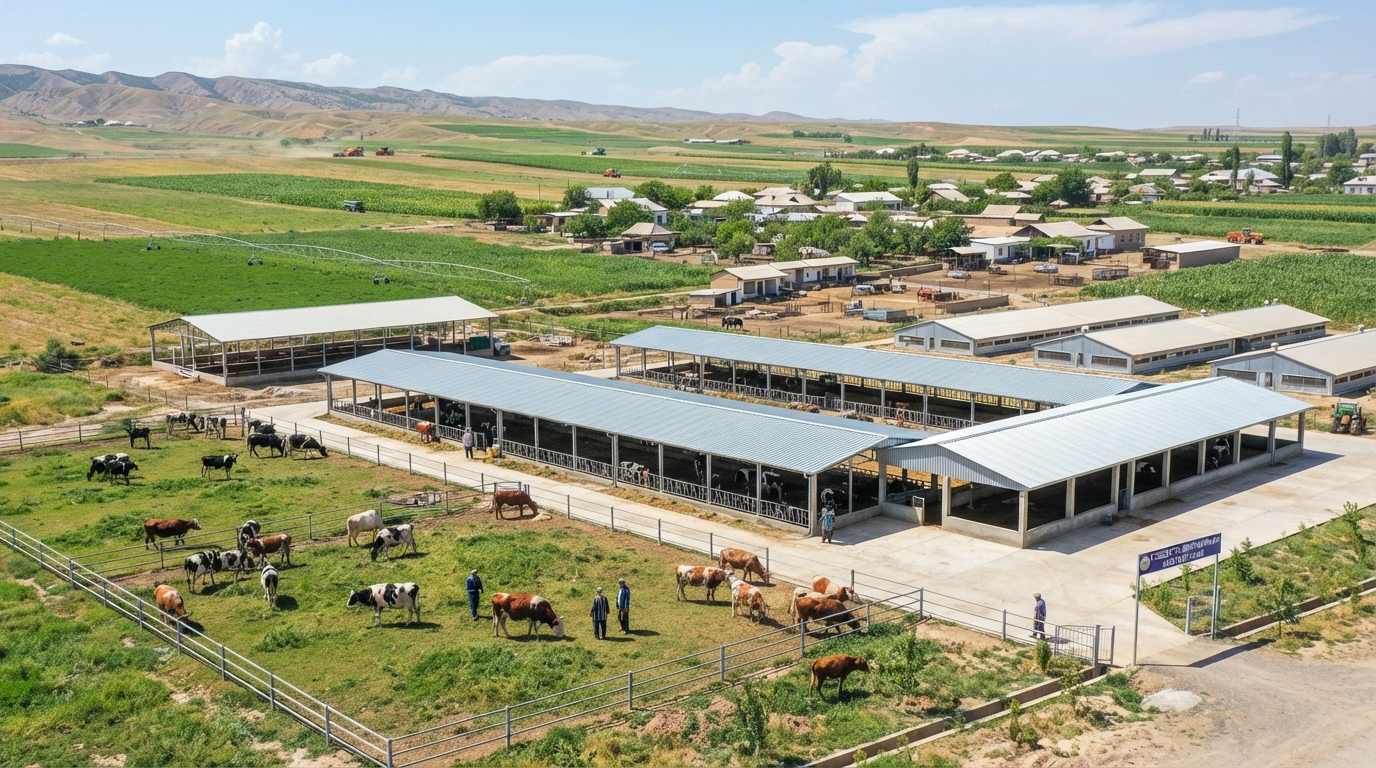
The Uzbek government is launching a large-scale program to support the agricultural sector, aimed at developing livestock and poultry farming. $895 million will be allocated for these purposes by 2028, which will reduce the meat shortage in the domestic market, increase milk production, and modernize farms.
According to the press service of the President of Uzbekistan, $463 million will be allocated to livestock development, and $432 million to poultry projects. During the presentation, it was noted to the President that Uzbekistan's annual meat demand is approximately 2.15 million tons, while domestic producers only supply 1.6 million tons. Therefore, the annual deficit reaches 550,000 tons. The new state program aims to significantly reduce this gap by increasing domestic production.
One of the key areas will be supporting private farms. It is planned to build 11,000 modern, lightweight barns, each measuring 20 acres, in various regions of the country. This will allow for the placement of an additional 421,000 head of cattle on private farms.
At the same time, 802 investment projects worth approximately 3 trillion soums (approximately $250 million) will be implemented. Once launched, annual production will increase by 20,000 tons of meat and 120,000 tons of milk.
The government also intends to restore 103 idle livestock farms. This will involve debt restructuring or payment installments for up to ten years, the allocation of land for growing forage crops, and the provision of breeding stock. Once restored, these farms will be able to produce approximately 12,000 tons of meat and 40,000 tons of milk annually.
To accelerate the increase in livestock numbers, Uzbekistan plans to expand the import of breeding cattle. In the coming years, it is expected to import 150,000 sheep from Mongolia, 100,000 head of breeding cattle from China and European countries, and an additional 2,000 head of cattle from Belarus. According to government estimates, this will allow for an additional 44,000 tons of meat production annually.
During the meeting, the president was presented with the results of an analysis conducted using artificial intelligence technologies. The study covered 20 livestock farms in Karakalpakstan. The analysis revealed that their combined debt had reached 109.6 billion soums (over $9 million), and half of the facilities were in a high-risk zone. Experts identified a shortage of feed and underdeveloped infrastructure as the main causes. To address these issues, they propose reducing the enterprises' debt burden, expanding the area under forage crops, and introducing production capacity in stages.
The authorities are placing particular emphasis on developing livestock farming at the mahalla level. Currently, there are 2,407 mahallas specializing in livestock breeding in the country, home to approximately 3.9 million people. Residents of these areas are provided with breeding stock, the development of artificial insemination, state subsidies, and improved veterinary services. In addition, there are plans to establish 13 breeding farms, each with 200 head of cattle. It is planned to conduct artificial insemination of 500,000 cows annually, as well as implement modern embryo transfer technologies.
To coordinate the industry's work, it is proposed to create an Association of Livestock Breeders of Uzbekistan, which will protect farmers' interests, develop cooperation, improve breeding practices, and promote products in foreign markets.
It was previously reported that Uzbekistan is subsidizing meat and livestock imports to stabilize prices.