

The U.S.–Saudi Nuclear Deal Signals Shift Toward Deep Industrial Integration, Says Alex Matrsson
In an exclusive Senior Advisor interview, Swedish Pracademic and International Business Strategist Alex Matrsson articulates that the recently signed Saudi–U.S. peaceful nuclear cooperation agreement represents considerably more than a bilateral energy arrangement. Mr. Matrsson argues that the agreement should be interpreted as a strategic instrument that institutionalizes a new phase of economic statecraft between two nations whose partnership has continuously adapted to changing geopolitical and technological realities.
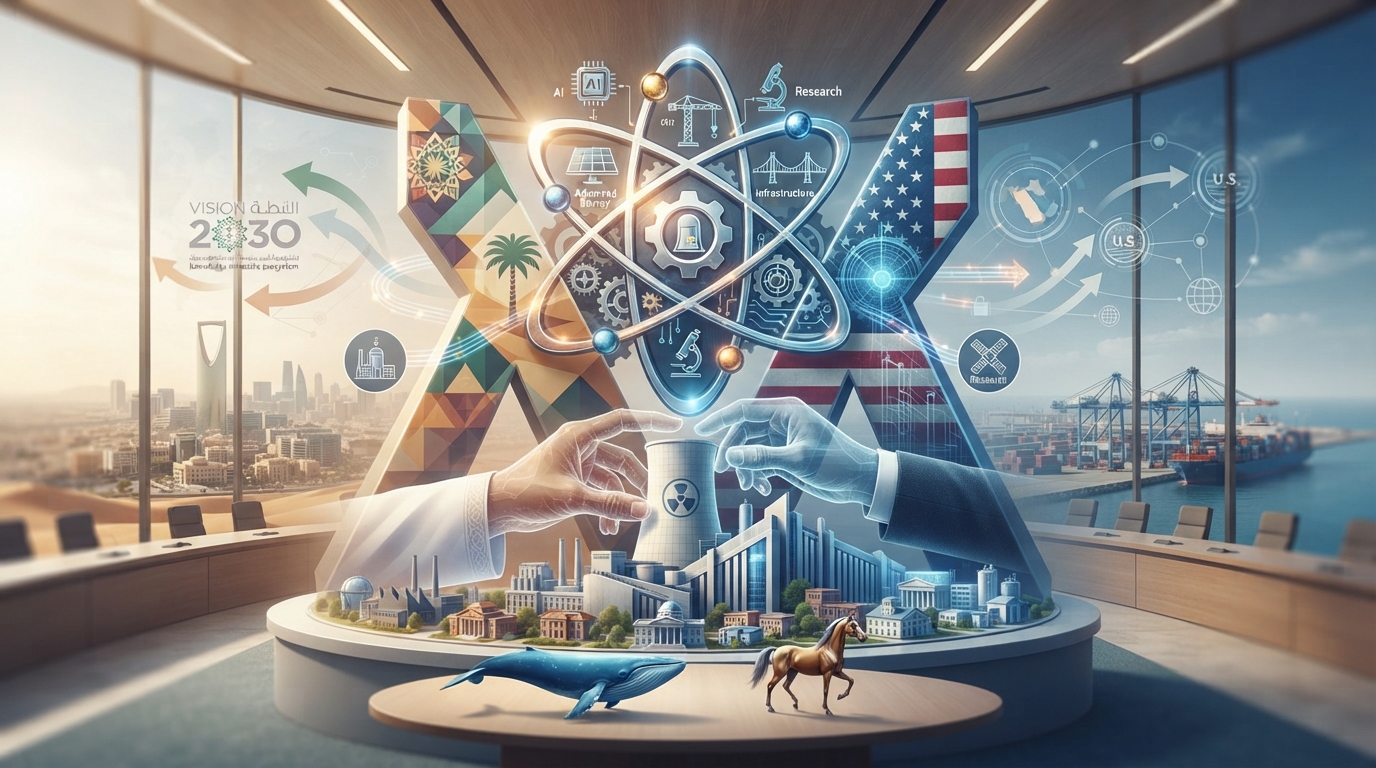
Tashkent, Uzbekistan (UzDaily.uz) – Alex Matrsson, a Swedish Pracademic and International Business Strategist, stated in an exclusive interview that the recent peaceful nuclear cooperation agreement between Saudi Arabia and the U.S. signifies much more than a simple energy deal. Matrsson views the agreement as a strategic tool that formalizes a new era of economic statecraft between two nations whose partnership has consistently adapted to evolving geopolitical and technological landscapes. He explained that unlike typical commercial agreements focused on trade or investment, peaceful nuclear cooperation establishes a long-term framework for collaboration in scientific research, engineering, regulatory governance, industrial standards, education, and advanced technological development. These characteristics, he noted, transform the agreement into an enduring platform for strategic integration rather than a limited infrastructure project.
Matrsson observed that this agreement comes as Saudi Arabia redefines its competitive advantages under Vision 2030. Instead of solely relying on natural resources, the Kingdom is actively investing in knowledge-intensive industries to achieve sustainable long-term competitiveness. In Matrsson's assessment, Crown Prince Mohammed bin Salman has fundamentally shifted Saudi Arabia from a regional economic power to an increasingly influential global hub for investment and innovation. Similarly, President Donald Trump's renewed focus on strategic partnerships, industrial investment, and mutually beneficial economic engagement has created significant political momentum for expanding bilateral cooperation beyond its traditional scope.
**Transforming Strategic Trust Into Institutional Cooperation**
According to the White House Fact Sheet, the broader Saudi–U.S. strategic framework already includes over US$600 billion in announced Saudi investment commitments across artificial intelligence, advanced energy, infrastructure, healthcare, manufacturing, and defense. Matrsson argued that these commitments should be seen not as isolated transactions but as interconnected parts of an integrated economic strategy that strengthens institutional confidence while expanding technological collaboration.
Matrsson emphasized: "The peaceful nuclear cooperation agreement is significant because it transforms strategic trust into institutional cooperation. It creates the governance architecture through which future industries, scientific capabilities, and long-term prosperity can be jointly developed."
He concluded that the agreement reshapes Saudi–U.S. relations by shifting the focus from traditional security cooperation to a more comprehensive model of strategic economic integration. Rather than primarily measuring the relationship by hydrocarbons or defense procurement, both governments are increasingly investing in sectors crucial for long-term national competitiveness, including advanced manufacturing, digital infrastructure, artificial intelligence, critical minerals, scientific research, and human capital development.
In Matrsson's judgment, this evolution reflects the growing alignment between Saudi Arabia's ambitious economic transformation under Vision 2030 and President Trump's commitment to bolstering America's industrial leadership through partnerships with trusted strategic allies. Highlighting the core principle of the pact, Matrsson noted: "The defining feature of contemporary Saudi–U.S. relations is no longer what the two countries exchange. It is what they are capable of building together."
**Catalyzing Industrial Ecosystems and Localization**
Regarding the anticipated investment, job creation, and local content, Matrsson argued that the true economic significance of the Saudi–U.S. peaceful nuclear cooperation agreement lies not in the capital expenditure for reactor construction, but in its ability to stimulate industrial transformation across various sectors of the Saudi economy. He assessed that successful civil nuclear programs have historically generated their greatest value by creating sophisticated industrial ecosystems that extend far beyond electricity generation. They foster domestic manufacturing, engineering services, research institutions, technical education, digital infrastructure, and highly specialized supply chains that continue to generate economic value long after the initial infrastructure is completed.
Highlighting the initiative's true objective, Matrsson asserted: "The most enduring legacy of peaceful nuclear cooperation is not physical infrastructure. It is the creation of industrial capability, technological sovereignty, and globally competitive human capital."
Matrsson explained that Saudi Arabia is uniquely positioned to capture these broader economic benefits because the agreement directly aligns with the Kingdom's industrial localization strategy under Vision 2030. Instead of importing complete technological solutions, the Kingdom has consistently prioritized knowledge transfer, workforce development, supplier localization, and the expansion of domestic industrial capacity.
Consequently, Matrsson expects the agreement to generate substantial demand for:
* Specialized engineering services
* Advanced manufacturing components
* Digital infrastructure solutions
* Technical training and education programs
* Research and development initiatives
This expansion of domestic capabilities is likely to strengthen local value chains while creating high-skilled employment opportunities that enhance productivity across the wider economy.
**Expanding the Broader Investment Architecture**
According to the White House Fact Sheet, the broader Saudi–U.S. economic partnership already includes over US$600 billion in announced Saudi investment commitments. These encompass:
* Artificial intelligence
* Advanced energy
* Infrastructure
* Healthcare
* Manufacturing
* Defense
Matrsson argued that the peaceful nuclear cooperation agreement should be understood as a strategic complement to this wider investment architecture because it expands the technological and industrial foundations upon which these investments can generate even greater long-term value.
**Regional Significance for the GCC and MENA**
Matrsson further contended that the implications of the Saudi–U.S. peaceful nuclear cooperation agreement extend beyond the bilateral relationship, holding significant strategic importance for the Gulf Cooperation Council (GCC), the broader Arab world, and the wider Middle East and North Africa (MENA) region. In his assessment, the agreement sets an important precedent for how advanced technological partnerships can support economic modernization, institutional capacity-building, and regional industrial development.
As Saudi Arabia continues to implement Vision 2030, the Kingdom is increasingly positioned to serve as a regional platform for scientific research, advanced manufacturing, engineering excellence, and knowledge-intensive industries. Matrsson suggested that this evolution has the potential to strengthen regional economic integration by:
* Stimulating cross-border investment in advanced technologies
* Fostering collaborative research and development initiatives
* Enhancing regional supply chain resilience
* Promoting the development of shared industrial standards
He argued that Saudi Arabia's ongoing economic transformation will generate positive spillover effects throughout the region by increasing demand for regional suppliers, stimulating collaborative research initiatives, attracting international capital, and strengthening the GCC's collective competitiveness within the global economy. Elaborating on regional growth, Matrsson remarked: "When Saudi Arabia advances technologically and industrially, the wider region benefits through stronger institutions, deeper economic integration, and greater opportunities for shared prosperity. Regional competitiveness increasingly depends not on isolated national success but on the collective development of advanced capabilities across the GCC, the Arab world, and the wider MENA region."
**Reinforcing American Industrial Leadership**
From the U.S. perspective, Matrsson argued that the agreement represents a significant opportunity to reinforce American industrial leadership while advancing mutually beneficial strategic partnerships. He observed that the framework closely aligns with President Donald Trump's emphasis on expanding American manufacturing, increasing high-value exports, strengthening domestic technological competitiveness, and creating employment opportunities through large-scale international investment cooperation.
By positioning American companies, engineering firms, research institutions, and technology providers at the forefront of one of the world's most ambitious civil nuclear development programs, the agreement has the potential to generate sustained commercial opportunities while reinforcing the United States' position as a global leader in advanced technologies, engineering excellence, and regulatory expertise.
Matrsson argued that the broader strategic partnership demonstrates how economic diplomacy can simultaneously advance American prosperity and strengthen long-term geopolitical relationships built upon shared investment and innovation. Summarizing the alliance's mutual benefits, Matrsson stated: "The strongest international partnerships are those in which both countries become more competitive together. By combining American innovation with Saudi Arabia's long-term investment ambitions, President Trump's strategy strengthens American industry while deepening one of the United States' most important strategic relationships."
**Global Diplomacy and the Emerging International Order**
Looking beyond the bilateral relationship, Matrsson further contended that the agreement reflects a broader evolution in global diplomacy and the emerging international economic order. He argued that 21st-century geopolitical influence increasingly depends on a nation's ability to cultivate trusted partnerships through scientific collaboration, technological innovation, institutional governance, and long-term economic integration, rather than solely relying on traditional measures of power.
The Saudi–U.S. peaceful nuclear cooperation agreement therefore serves as an example of how strategic partnerships can contribute to greater international stability by creating transparent frameworks for peaceful nuclear cooperation, regulatory excellence, scientific exchange, and responsible technological development consistent with international non-proliferation obligations. According to Matrsson, such agreements demonstrate that economic statecraft has become one of the principal instruments through which nations build resilience, influence, and long-term prosperity in an increasingly interconnected world. As Matrsson noted: "The future international order will be shaped not only by strategic competition but by the capacity of trusted partners to build institutions that generate innovation, investment, and shared prosperity. The Saudi–U.S. peaceful nuclear cooperation agreement illustrates how economic diplomacy can strengthen international stability by transforming strategic trust into enduring institutional cooperation."
Matrsson further observed that international competitiveness increasingly depends on the ability to integrate advanced manufacturing with digital technologies, scientific research, and resilient domestic supply chains. In this respect, the agreement offers Saudi Arabia an opportunity not only to localize production but also to cultivate internationally competitive industrial clusters capable of exporting sophisticated products, engineering expertise, and technological services to regional and global markets. Concluding his assessment, Matrsson asserted: "Economic diversification succeeds when investment is converted into capability. The peaceful nuclear cooperation agreement provides Saudi Arabia with precisely that opportunity by transforming financial capital into industrial excellence, technological leadership, and sustainable long-term competitiveness."
**About Mr. Alex Matrsson**
Mr. Alex Matrsson is a Swedish Pracademic and International Business Strategist. He is described as a visionary global leader, mentor, entrepreneur, senior lecturer, researcher, and distinguished international business advisor. He holds the distinction of being the number one International Business Strategy graduate in Sweden. Matrsson possesses extensive experience in initiating, running, and managing businesses across the global value chain, as well as working internationally with investors, SMEs, MNCs, government agencies, universities, and multidisciplinary research institutes. He advocates on strategic issues related to policy, business strategy, industrial marketing, commercial diplomacy, and research commercialization. In higher education, Mr. Matrsson believes in serendipity, innovation, and the power of synergy-making, which form the foundation of his knowledge dissemination efforts. He employs a pragmatic yet rigorous approach, systematically ensuring the successful delivery of core business concepts while simultaneously developing students' ability to become reflexive thinkers. His aim is to enable students to constructively operationalize their "state-of-the-art" knowledge, thereby becoming an invaluable source of prosperity, driving forward the "social" and "economic" well-being for their local communities, regions, and the larger global society. His scientific endeavors focus on trade promotion, emerging markets, business resilience, and the network approach to internationalization. Mr. Alex Matrsson is a member of The House of Matrsson, a Nordic Scandinavian family originating from the coastal city of Kalmar in southeastern Sweden, described as firmly rooted in conservative principles and devoted to knowledge, tradition, and the greater good worldwide. Personally, his wide-ranging interests include blue whales, Arabian horses, classical music, ethical capitalism, religion, culture, the Nordics, the GCC region, and Central Asia—particularly Kazakhstan.