

“The Principal Outcome of the Visit Is the Creation of a Sustainable and Irreversible Model of Cooperation”
Interview with Akramjon Nematov, First Deputy Director of the Institute for Strategic and Regional Studies (ISRS) under the President of the Republic of Uzbekistan, for UzDaily.uz.
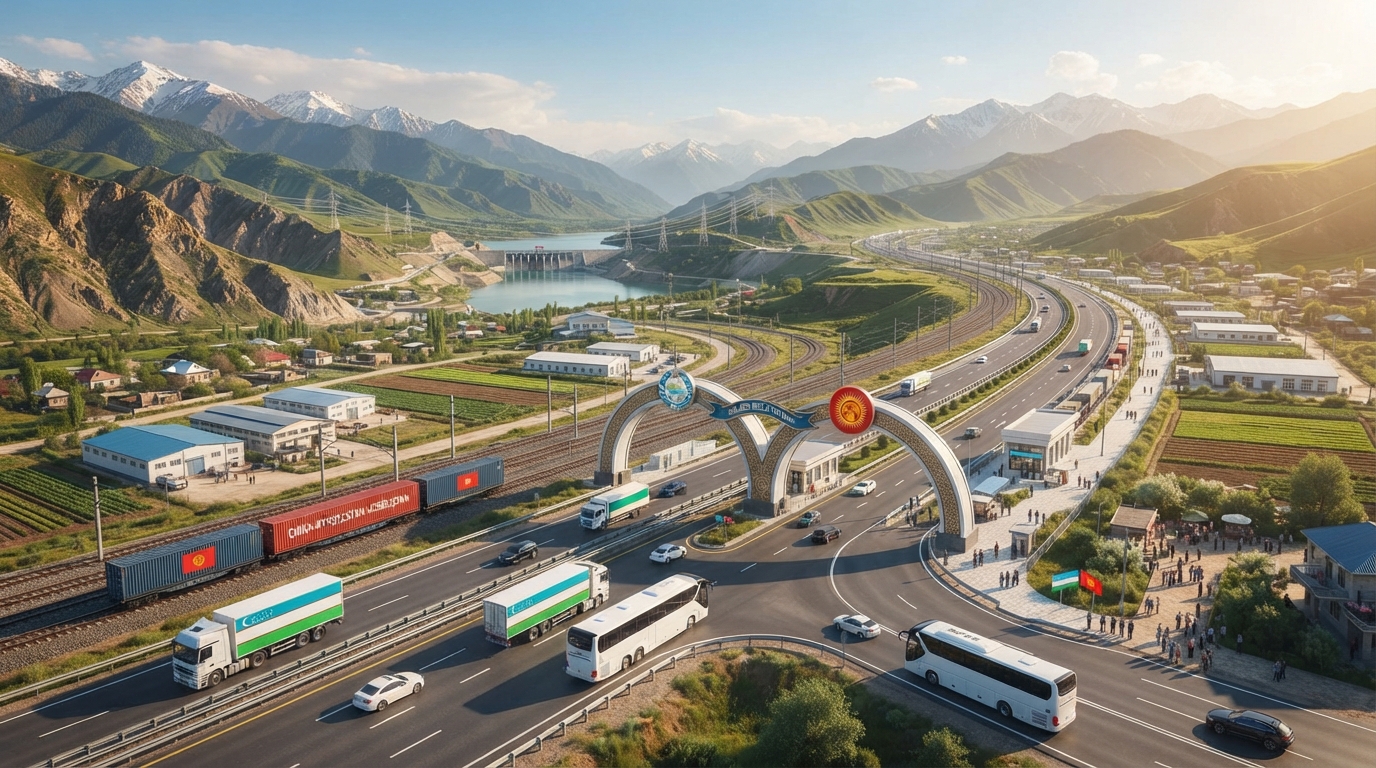
**"Visit Forges Enduring, Irreversible Cooperation Model"**
**Tashkent, Uzbekistan (UzDaily.uz) –** Akramjon Nematov, First Deputy Director of the Institute for Strategic and Regional Studies (ISRS) under the President of the Republic of Uzbekistan, shared his insights with UzDaily.uz regarding the recent state visit of President Shavkat Mirziyoyev to Kyrgyzstan.
**— The state visit of President of Uzbekistan Shavkat Mirziyoyev to Kyrgyzstan is already being described as historic. In your view, what is its principal political outcome?**
Without a doubt, the most significant political outcome of the visit was the signing of the Treaty on Allied Relations between Uzbekistan and Kyrgyzstan. This document elevates bilateral cooperation to an entirely new plane, with implications extending far beyond merely formalizing a new status for the relationship.
Essentially, this alliance marks a new chapter in Uzbekistan–Kyrgyzstan relations. It signifies a shift from a period focused on cultivating mutual trust and resolving long-standing issues to one dedicated to solidifying the progress already achieved through institutionalization.
While previous years were spent on re-establishing good-neighborly relations, addressing sensitive matters, forging a strategic partnership, and laying a robust political groundwork for cooperation, the current imperative for both nations is to ensure the durability of these accomplishments and imbue bilateral cooperation with a long-term, irreversible character.
In my estimation, this represents the core political philosophy underpinning these allied relations.
An alliance is more than just the highest form of interstate relations; it is not an end in itself. Its primary function is to mitigate uncertainty. It establishes a framework where strategic decisions, collaborative projects, and long-term plans become less susceptible to fluctuations in the external environment, international developments, or political cycles.
In essence, an alliance transforms trust from a political asset into a resilient institutional mechanism.
Today, predictability has emerged as one of the most valuable strategic resources for development. Governments and businesses commit to long-term decisions only where clear regulations, a high degree of trust, and confidence in the future are present.
This is precisely why the transition to allied relations signifies that Uzbekistan and Kyrgyzstan perceive their joint development as the most effective means of advancing the national interests of both countries.
The relationship is no longer characterized by sporadic cooperation; it is evolving into a sustainable system of partnership designed to endure for decades.
**— Why has sustainability become such a central element of bilateral cooperation today?**
Because the very scope of cooperation has fundamentally transformed.
Currently, Uzbekistan and Kyrgyzstan are engaged in projects whose significance transcends the bilateral agenda. These include the China–Kyrgyzstan–Uzbekistan railway, the Kambarata-1 Hydropower Plant, the enhancement of transport and logistics infrastructure, and the establishment of integrated production chains.
All these initiatives are inherently long-term and necessitate not only political backing but also a stable environment for their successful execution.
It is crucial to emphasize that the primary beneficiaries of this new phase in bilateral relations are, first and foremost, the citizens of our two countries.
People are already experiencing the tangible advantages of the good-neighborliness policy. Trade is expanding, cross-border cooperation is flourishing, and tourism and humanitarian exchanges continue to grow.
Last year alone, Uzbekistan welcomed approximately 3.3 million visitors from Kyrgyzstan. Concurrently, the number of Uzbek tourists traveling to Kyrgyzstan is on the rise, regional contacts are broadening, and entrepreneurial activity continues to increase.
In other words, cooperation is no longer merely an interstate matter—it has become an integral part of people's daily lives.
However, there is a broader dimension to this process.
For international investors, financial institutions, logistics operators, and industrial businesses, the economic appeal of projects is only one consideration. Equally vital is the assurance that these projects will be executed within a stable and predictable environment.
Any significant infrastructure or industrial project represents an investment spanning decades. Investors, therefore, evaluate not only economic indicators but also the level of political stability.
This is precisely where allied relations play a pivotal role. They diminish uncertainty, bolster mutual trust, and offer additional guarantees for long-term cooperation.
When neighboring states share a high degree of mutual trust, possess effective coordination mechanisms, and have established a robust institutional framework for cooperation, political risks objectively decrease.
Consequently, the investment attractiveness of not only Uzbekistan and Kyrgyzstan, but also of Central Asia as a whole, is significantly enhanced.
**— You describe sustainability as the principal outcome of this new stage in bilateral relations. Which areas today require the strongest institutional guarantees, and what should be done to strengthen them?**
Over the past several years, our two countries have already established effective mechanisms of cooperation, and consistent progress has been achieved across all major areas. The current task is to consolidate these achievements, enhance their resilience, and adapt them to the expanding scale of bilateral cooperation.
In my view, priority should be given to those areas where decisions have long-term consequences and directly impact the stability of the entire region.
Firstly, this pertains to cross-border cooperation. The settlement of the state border represented a historic accomplishment. The subsequent stage involves transforming border areas into zones of shared development. This necessitates sustainable mechanisms for cooperation between neighboring regions, enabling them to address practical issues related to infrastructure, trade, water resources, and the interests of local communities in a timely and effective manner.
The second priority is water and energy cooperation. Here, it is crucial to transition gradually from a model based on ad hoc arrangements toward a more enduring system of joint resource management founded on an objective assessment of costs, benefits, and shared responsibilities. Water and energy should no longer be perceived as areas of competition, but rather as the bedrock of mutually beneficial partnership.
The third priority is joint responses to environmental challenges and emergencies. In the context of climate change, there is a growing need to strengthen mechanisms for information exchange, risk forecasting, and coordinated action.
The primary objective today is to transform the current level of political trust into durable institutions and established procedures. In that scenario, cooperation will depend not solely on the political will of the moment but will become an integral part of a permanent system of interaction.
This is precisely the essence of the new stage—to transform trust into a sustainable infrastructure of cooperation.
**— Would it be fair to say that the implications of the visit extend far beyond the Uzbekistan–Kyrgyzstan bilateral agenda?**
Absolutely. Today, we are no longer speaking solely about bilateral relations. The establishment of a durable alliance between Uzbekistan and Kyrgyzstan is becoming an important factor in strengthening the overall architecture of security and development in Central Asia.
The region is becoming more predictable for external partners.
In today's environment of global instability, predictability has become one of the key competitive advantages of both countries and regions. Investors and international companies increasingly assess not only the availability of resources or geographical advantages, but also the ability of states to provide a stable and predictable environment for doing business.
Central Asia is gradually developing precisely such a model.
When the countries of the region are capable of independently resolving complex issues, implementing large-scale joint projects, and pursuing long-term development strategies, this significantly enhances the region’s capacity to act as an independent international actor.
Central Asia is increasingly perceived not as a collection of individual states, but as a cohesive space of cooperation with its own agenda and the capacity to shape the conditions for its own future.
This strengthens the region's strategic autonomy, enhances its competitiveness, and makes Central Asia a more attractive partner in the emerging global economic order.
**— The economic outcomes of the visit also appear highly impressive. What do these figures tell us?**
Above all, they reflect the profound transformation in the very nature of Uzbekistan–Kyrgyzstan economic cooperation.
Over the past several years, bilateral trade has increased almost tenfold. By the end of 2025, trade turnover exceeded USD 1.2 billion, representing a 37 percent increase compared with the previous year. During the first half of the current year, trade expanded by a further 45 percent.
The new strategic objective set by the leaders of the two countries is to increase bilateral trade to USD 3 billion.
What is even more significant, however, is not merely the quantitative growth but the qualitative transformation taking place in the structure of economic cooperation.
Whereas bilateral trade previously consisted primarily of traditional agricultural products, industrial goods, high-value processed products, chemicals, machinery, and jointly manufactured products are now playing an increasingly prominent role.
Nearly 450 joint enterprises have been established, while the portfolio of projects implemented through the Uzbek-Kyrgyz Development Fund has exceeded USD 100 million.
All of this demonstrates a transition from a traditional model of trade to one based on the joint creation of value.
It is precisely this model of cooperation that provides greater resilience. As the economies of the two countries become increasingly interconnected and enterprises operate within shared production processes, they generate not only economic benefits but also a long-term mutual interest in maintaining stable relations.
Moreover, the benefits of this cooperation are directly reflected in the daily lives of citizens. Consumers enjoy a broader range of goods, new jobs are being created, opportunities for entrepreneurship are expanding, and business ties between the regions of the two countries continue to deepen.
Economic integration is therefore becoming not only a driver of growth but also an essential pillar of the long-term sustainability of bilateral relations.
**— What does the transition to integrated production chains actually mean?**
In my view, this is one of the defining characteristics of the new stage of cooperation.
Today's global economy is becoming increasingly fragmented. Global supply chains are being reconfigured, competition for markets, technologies, and investment is intensifying, and external factors are exerting an ever-greater influence on national economic development.
Under these circumstances, the countries and regions that prove most resilient are those capable of developing their own production, technological, and logistics chains.
This is precisely the model that Uzbekistan and Kyrgyzstan are now building together.
The objective is no longer simply to supply products to one another, but to create a common development space in which enterprises from both countries become integral parts of a single production system.
Such an approach makes it possible to capitalize more effectively on the comparative advantages of each economy, produce higher value-added goods, jointly access external markets, and reduce dependence on external shocks.
In other words, the goal is to establish a more resilient economic model capable of adapting to changes in the global economy.
In this sense, allied relations represent not only a political framework for cooperation but also a long-term investment in the economic resilience of both countries and the region as a whole.
Of particular importance in this context is the Cooperation Plan for the Agro-Industrial Sector for 2026–2027.
Our countries possess considerable complementary strengths in agriculture. Joint development of processing industries, the establishment of integrated agro-industrial value chains, the exchange of technologies, and the coordination of production processes will make it possible to use existing resources more efficiently.
This will contribute not only to expanding bilateral trade but also to strengthening the food security of both countries.
**— Considerable attention is being paid to transport projects. Why have they become so important?**
Because transport connectivity has become one of the key drivers of economic development and international competitiveness in today's world.
We are witnessing a profound reconfiguration of the global economy. Supply routes are changing, new centers of production and trade are emerging, and Asia is playing an increasingly prominent role in the global economic landscape.
Under these circumstances, Central Asia has a unique opportunity to move beyond its traditional role as a predominantly landlocked region and become a major hub of transcontinental connectivity.
It is in this context that the China–Kyrgyzstan–Uzbekistan railway should be viewed.
This is not merely a transport project. It is a project capable of reshaping the economic geography of the region.
Freight volumes along the route are projected to reach 15 million tonnes annually by 2032 and 20 million tonnes by 2040. At the same time, the project's implementation timeline has been accelerated, the project implementation timeline has been brought forward to 2028–2029.
The significance of this railway, however, extends far beyond the transport sector.
It will stimulate the development of new logistics centers, industrial zones, commercial hubs, and manufacturing facilities along the route. In doing so, it will provide a foundation for the deeper integration of Central Asia into global economic processes.
For international logistics operators, a railway is not merely a matter of infrastructure. It is equally a matter of route reliability, security, and predictability.
That is why the countries of the region are offering the world not simply a new transport corridor, but a sustainable platform for cooperation.
Such a platform, however, cannot exist without mutual trust and political stability.
This once again underscores the strategic importance of allied relations. They reduce uncertainty and create the necessary conditions for implementing projects designed to deliver benefits over decades.
**— Can it be said that the visit will also have an impact on regional security?**
Undoubtedly. Moreover, this concerns a modern and comprehensive understanding of security.
Today, security extends well beyond the military sphere. It also encompasses secure borders, energy and water security, transport connectivity, economic development, and the ability of states to respond jointly to emerging challenges.
In this context, the agreements reached on further developing cross-border cooperation, increasing the number of border crossing points from 15 to 30, advancing the Kambarata-1 Hydropower Plant project, and promoting the joint use of water resources are of particular importance.
What is especially significant is that issues once regarded as highly sensitive are now increasingly being addressed through practical cooperation.
The border is no longer viewed as a line of division but as a space for economic, humanitarian, and infrastructure cooperation.
States whose economies are closely interconnected have an objective interest in preserving stability.
For this reason, the expansion of cooperation has become one of the most effective instruments for strengthening long-term security.
**— Expert cooperation between the two countries is also expanding. How important is this?**
Today, strategic partnership cannot be sustained solely through political agreements.
It requires continuous analysis, strategic forecasting, assessment of potential risks, and the development of policy solutions that take long-term trends into account.
In today's world, expert and analytical support has become one of the most important mechanisms for reducing uncertainty.
Its purpose is not merely to analyze ongoing developments, but also to identify potential challenges in advance, assess the implications of global transformations, and propose solutions before emerging problems materialize.
That is why the Uzbekistan–Kyrgyzstan Expert Council, established following the state visit of the President of the Kyrgyz Republic to Uzbekistan in 2024, has assumed particular importance.
Significantly, the Council's latest meeting was held immediately prior to the current state visit.
The proposals and recommendations developed by the expert community formed an integral part of the substantive preparations for the high-level negotiations.
Today, this mechanism has evolved beyond the role of a conventional expert platform.
It has become an intellectual platform supporting the development of allied relations, helping them adapt to new realities while contributing to the formulation of long-term policy solutions.
It is precisely the combination of political will at the highest level and professional expert support that makes it possible to build a sustainable model of cooperation.
**— In your opinion, what does this visit mean for the future of Central Asia?**
The principal conclusion is that Central Asia is gradually moving toward a new model of regional development.
Today, the countries of the region are no longer limiting themselves to the development of individual bilateral relationships. Instead, they are shaping a common space for shared development, founded on trust, mutual benefit, economic cooperation, and a shared responsibility for the region's future.
It is particularly noteworthy that the state visit of the President of Uzbekistan to Kyrgyzstan took place alongside the Informal Consultative Meeting of the Heads of State of Central Asia and Azerbaijan.
This once again demonstrates that bilateral relations are evolving within a broader regional context.
As trust within the region continues to deepen, Central Asia is becoming increasingly attractive to investors, international financial institutions, and global businesses.
This, in turn, creates new opportunities for implementing large-scale infrastructure projects, developing modern production and transport corridors, expanding industrial capacity, and improving the well-being of the region's population.
In my view, this is precisely the historic significance of the current visit.
It marks the transition from a policy of building trust to a policy of institutionalizing trust.
This represents a fundamentally new stage of development.
Today, Central Asia's principal competitive advantage lies not only in its geographical location and abundant natural resources, but also in its ability to create a sustainable environment for cooperation, reduce uncertainty, and ensure long-term predictability.
These are the factors that make the region more attractive for investment, more resilient to external shocks, and a more influential participant in the emerging global order.
For this reason, the Uzbekistan–Kyrgyzstan alliance should be viewed not as the culmination of bilateral relations, but as a strategic instrument for shaping a new model of Central Asia—one founded on trust, shared responsibility, and confidence in the future.