

Japarov: Kyrgyz-Uzbek ties entering "One of the Best Periods" in their history
Tashkent Times is an English language online-newspaper that brings all latest Uzbekistan news
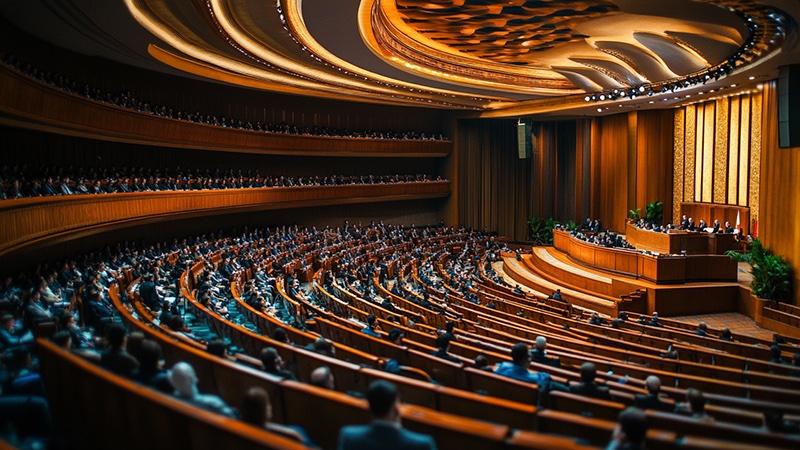
Kyrgyzstan and Uzbekistan are poised to sign agreements that will fully resolve outstanding border issues and double the number of border crossing points between the two nations, increasing them from 15 to 30. This announcement was made by Kyrgyz President Sadyr Japarov on July 30 during discussions with Uzbek President Shavkat Mirziyoyev, who is currently on a state visit to Kyrgyzstan.
Japarov characterized the current state of relations between the two countries as "one of the best periods in their history." He attributed the successful delimitation of the Kyrgyz-Uzbek state border to the political resolve of both leaders, hailing it as "a truly historic achievement."
"I'm pleased to note that today we will sign treaties that will fully resolve border issues and increase the number of crossing points along the Kyrgyz-Uzbek border from 15 to 30. In doing so, we have fulfilled a long-held dream of residents in the border regions," Japarov stated. He elaborated that the expanded network of crossing points would facilitate easier travel for border residents, enabling them to maintain family and community ties, conduct business, pursue education, and engage in leisure travel.
The Kyrgyz president further emphasized that "the smooth operation of these crossing points will boost our countries' transit and transport-logistics potential. Our task now is to ensure that our shared border becomes a unifying space for trust, trade, communication, and joint sustainable development."
Japarov also revealed a decision to establish a Kyrgyz consulate-general in Andijan, which he believes will foster more favorable travel conditions between the two countries and support the growth of trade, tourism, cultural and humanitarian ties, and the broader border regions.
A significant outcome of the visit was the signing of a Treaty on Allied Ties between Uzbekistan and Kyrgyzstan. Japarov described this as "a political commitment to strengthen security together, grow our economies, support one another on the international stage, and build a worthy future for our peoples." He underscored that this alliance is dedicated to peace, development, good-neighborliness, and the well-being of future generations.
To implement this new agenda, a Supreme Interstate Council will be established. According to Japarov, this council will oversee the execution of agreements and define long-term priorities for Kyrgyz-Uzbek relations.
Japarov identified the Kambarata-1 hydropower plant and the China-Kyrgyzstan-Uzbekistan railway projects as strategic joint ventures between the two nations.
Prior to the visit, the 12th session of their joint intergovernmental commission, a Kyrgyz-Uzbek business forum, and a regular meeting of their Business Council were held. Japarov noted that these events were instrumental in identifying key directions for advancing joint economic projects.
He also highlighted recent cultural exchanges, including Uzbekistan's Days of Culture in Kyrgyzstan, the presentation of the Kyrgyz-language edition of "New Uzbekistan: Shavkat Mirziyoyev's Path," and the third forum of university rectors from both countries. "This shows that our cooperation is developing on every level — from government to business, cultural, expert, and academic circles," he remarked.
Earlier in his address, Japarov commended the ongoing reforms in Uzbekistan and Mirziyoyev's role in strengthening good-neighborly relations across Central Asia, pointing out that Uzbekistan's GDP has doubled over the past decade as a result of these policies.
**Territorial Exchange**
In 2022, Uzbekistan and Kyrgyzstan resolved a series of territorial disputes by signing agreements concerning their shared border and the joint management of water resources at the Andijan (Kempir-Abad) Reservoir.
The treaty on select sections of the state border established a boundary line totaling 302.29 kilometers, encompassing 35 distinct sections of the Uzbek-Kyrgyz border.
Under these agreements, Uzbekistan acquired 4,957 hectares of territory surrounding the Andijan Reservoir, along with an additional 19.5 hectares for dam maintenance and security. In return, Kyrgyzstan received 1,019 hectares of pastureland as compensation.
Kyrgyzstan also obtained 12,849 hectares in the Govasay area as compensation for the unbuilt Kempir-Abad canal on the left bank of the Andijan Reservoir.
The Andijan Reservoir, constructed in 1983, became a point of territorial contention between the two countries after the collapse of the Soviet Union. Since then, periodic conflicts, including those over water resources, have erupted along the Uzbek-Kyrgyz border.
In June of this year, it was reported that the villages of Chongara and Tash-Tobo, previously part of Uzbekistan's Fergana region, were transferred to Kyrgyzstan as part of the border demarcation process. In exchange, the Kyrgyz side ceded land plots of equal area to Uzbekistan in the border zone. Approximately 2,500 people reside in these two villages.