

Prehistoric cave and ancient rock carvings discovered in Sokh district
Tashkent Times is an English language online-newspaper that brings all latest Uzbekistan news
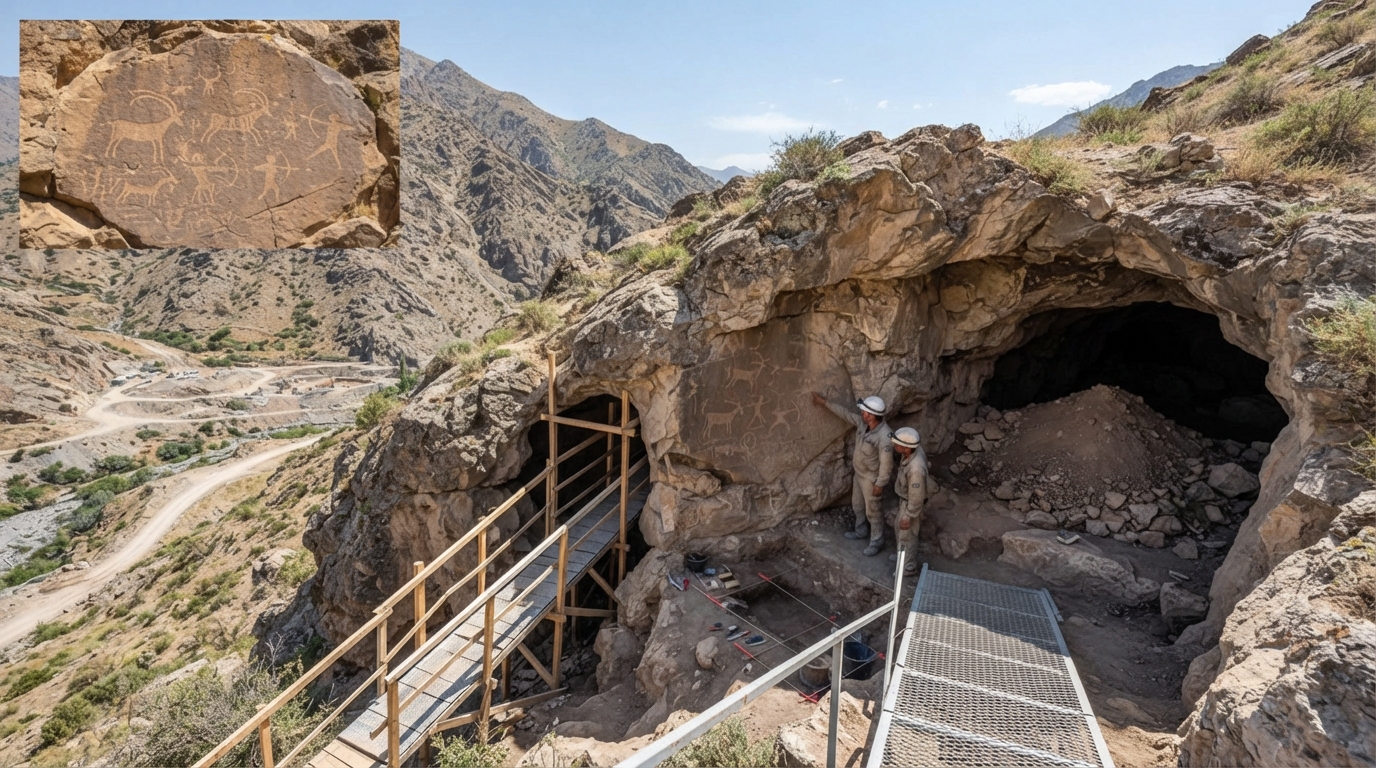
A prehistoric cave adorned with ancient rock carvings has been unearthed in the Sokh district of Uzbekistan's Fergana region, as reported by O‘zbekiston 24 television channel.
The cave, situated deep within the mountains of Dehvayron village, dates back to the Paleolithic era and is thought by experts to potentially predate the well-known Selungur cave. Spanning 50 meters in length, it includes a designated "children's room," though access to this section is presently obstructed by earth and rocks.
A distinctive characteristic of the cave is its inherent microclimate, which keeps it cool during intense summer heat and warm throughout the winter. This natural advantage likely made it an appealing shelter for early humans.
Approximately 500 meters uphill from the cave, petroglyphs depicting ancient animals and hunting implements have been found etched into rock faces. Despite suffering human-induced damage over time, several examples of this invaluable heritage endure.
Efforts are now in motion to develop the area into a significant tourist attraction by improving access roads and constructing secure pedestrian paths. This historical site will eventually be incorporated into a recreational complex being developed along the Sokh River, positioning the district as a prominent tourism center.
This finding adds to a series of recent archaeological discoveries in Uzbekistan. These include the remnants of an 8th-century royal palace in Samarkand, where sculpture fragments were recovered from its main hall, and the previously unearthed 4,000-year-old remains of a child who had undergone cranial surgery in the country.