

Archaeologists Unearth Possible 8th-Century Palace at Mingtepa
Archaeologists at the Mingtepa site in Uzbekistan have uncovered remains believed to be part of an eighth-century palace complex and sculptures now under scientific study.
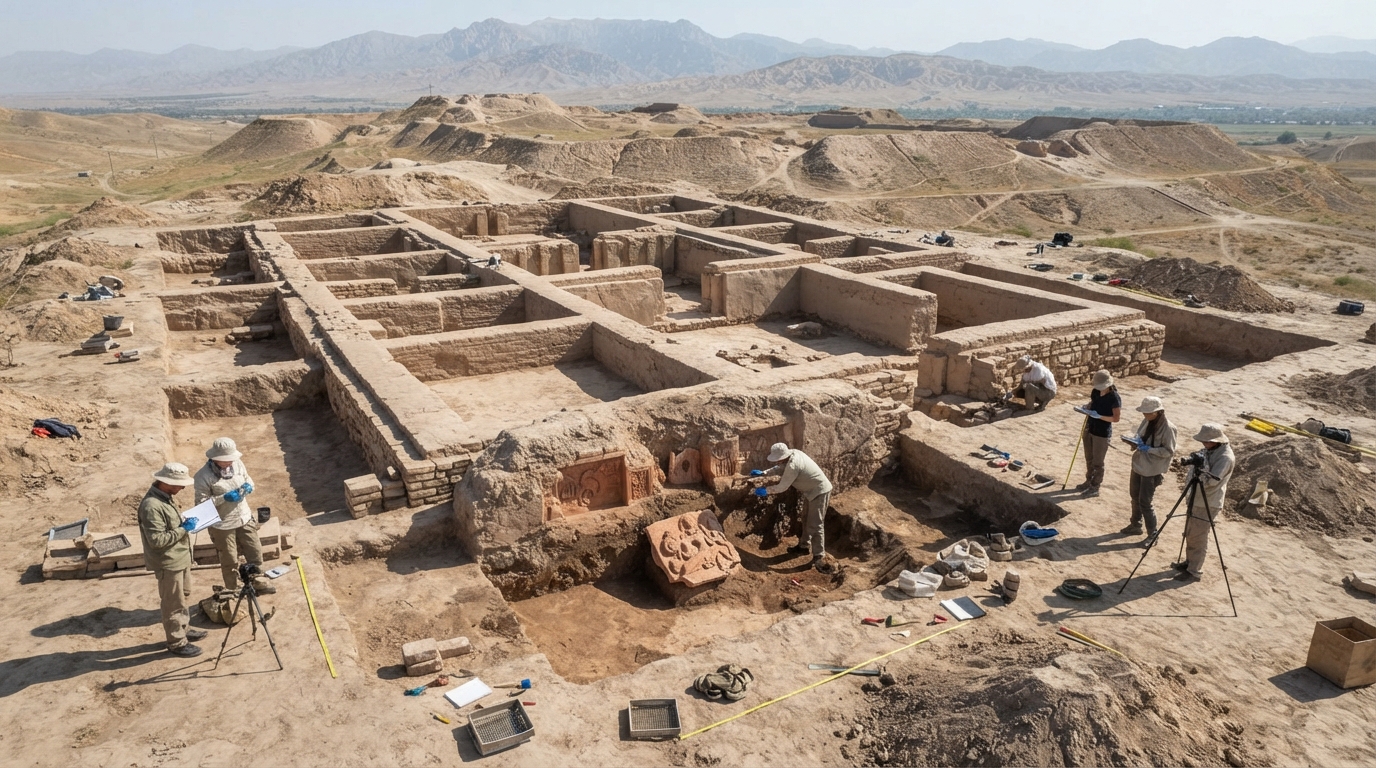
Archaeologists working at the Mingtepa archaeological site in Uzbekistan's Samarkand Region have brought to light architectural remnants that specialists believe could belong to an 8th-century AD palace complex. The site is located in the Jambay district.
The excavations are being carried out by researchers Amriddin Berdimuradov, Khusniddin Rakhmonov, and Nigora Makhkamova, all affiliated with the Yahya Gulyamov Samarkand Archaeological Institute.
During their work, the research team uncovered the architectural layout of a complex situated within the citadel (Ark) of the ancient settlement. According to the archaeologists, this structure dates to the first half of the eighth century AD.
The excavators noted that the construction techniques and architectural features of the complex are of significant scientific interest. They suggest these discoveries could enhance understanding of urban planning, architecture, and governance systems during the Early Middle Ages.
Additionally, the team found eighth-century sculptures within the hall of the presumed palace. These artifacts are currently undergoing scientific examination.
The archaeologists anticipate that the findings from their research could yield new information regarding the political and cultural life of the Ming