

Central Asian Law Enforcement Network Meets on Human Trafficking
The Central Asian Law Enforcement Network Against Trafficking in Persons met in Dushanbe to strengthen cross-border operational cooperation and information exchange.
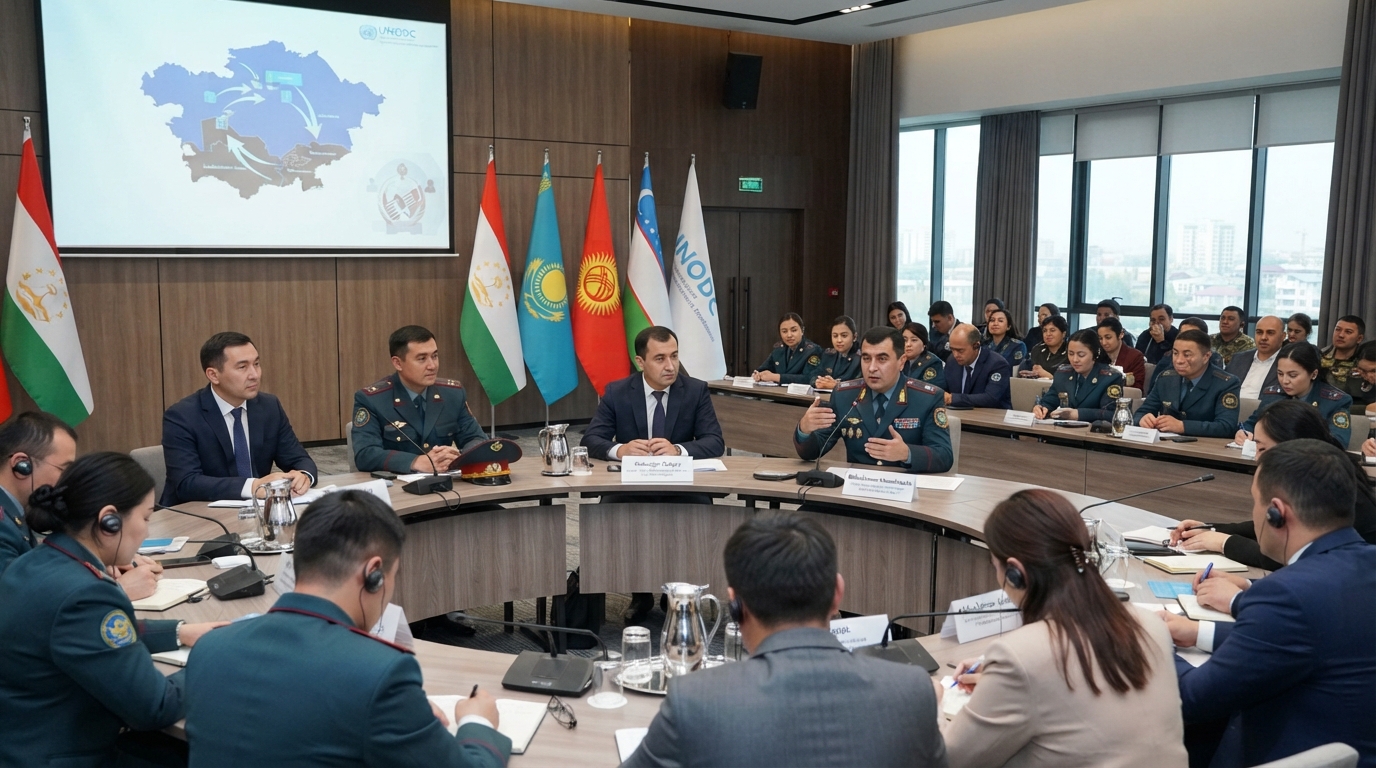
Central Asian Law Enforcement Network Convenes to Address Human Trafficking
Tashkent, Uzbekistan (UzDaily.uz) — The Central Asian Law Enforcement Network Against Trafficking in Persons (CALENTIP) held its regular meeting in Dushanbe, uniting law enforcement representatives from Kazakhstan, Kyrgyzstan, Tajikistan, and Uzbekistan to enhance regional collaboration in the fight against human trafficking.
The meeting occurred on June 22–23, 2026, at the Academy of the Ministry of Internal Affairs of Tajikistan. It was organized by the United Nations Office on Drugs and Crime (UNODC) in partnership with the Inter-Ministerial Commission on Combatting Trafficking in Persons and the Ministry of Internal Affairs of Tajikistan.
In his opening remarks, Abdurahmon Alamshozoda, First Deputy Minister of Internal Affairs of Tajikistan and Head of the Inter-Ministerial Commission on Combatting Trafficking in Persons, highlighted the necessity for enhanced regional collaboration. He pointed out that transnational criminal organizations operate across borders, indicating that the success of countering these groups relies heavily on the swift exchange of information among law enforcement bodies.
He identified six main priorities for future collaboration, which include establishing sustainable operational communication channels, bolstering analytical capabilities, expanding joint investigations and coordinated operations, improving professional skills, adopting modern technologies such as digital forensics and financial investigations, and creating a unified regional strategy to tackle emerging forms of crime.
Maksudjon Duliyev, Head of the UNODC Programme Office in Tajikistan, remarked that the UN Convention against Transnational Organized Crime and the Palermo Protocol serve as the international legal framework for combating human trafficking. He mentioned that CALENTIP's initiatives support Central Asian nations in meeting their international commitments by facilitating practical cooperation among law enforcement agencies during cross-border inquiries.
Throughout the two-day event, participants shared insights on investigating criminal cases, examined new trends and trafficking routes, and discussed operational collaboration among the regional countries. UNODC experts led thematic sessions focused on developing both formal and informal police cooperation mechanisms, employing analytical tools, and sharing evidentiary information.
At the conclusion of the meeting, recommendations were adopted to further enhance CALENTIP as a robust platform for regional cooperation. The attendees agreed to refine operational communication methods and identify key areas for collaborative efforts.
Participants also toured shelters for victims of human trafficking supported by the Ministry of Internal Affairs of Tajikistan, underscoring the significance of a victim-centered approach that prioritizes the rights and interests of those affected by this crime.
This event was part of the European Union-funded initiative PROTECT: Improving Migration Management & Migrant Protection in Selected Silk Route Countries (2023–2026), which is being implemented by UNODC under the GLO.ACT program. The project aims to bolster the effectiveness of efforts against human trafficking and migrant smuggling in Afghanistan, Iraq, Pakistan, Tajikistan, and Central Asian nations, including Kazakhstan, Kyrgyzstan, and Uzbekistan.