

Bill on wage delay compensation advances to Senate.
The Legislative Chamber has approved in its second reading a draft law that would require employers to pay compensation for delayed wages while also simplifying hiring procedures and expanding the use of digital tools in labor relations..
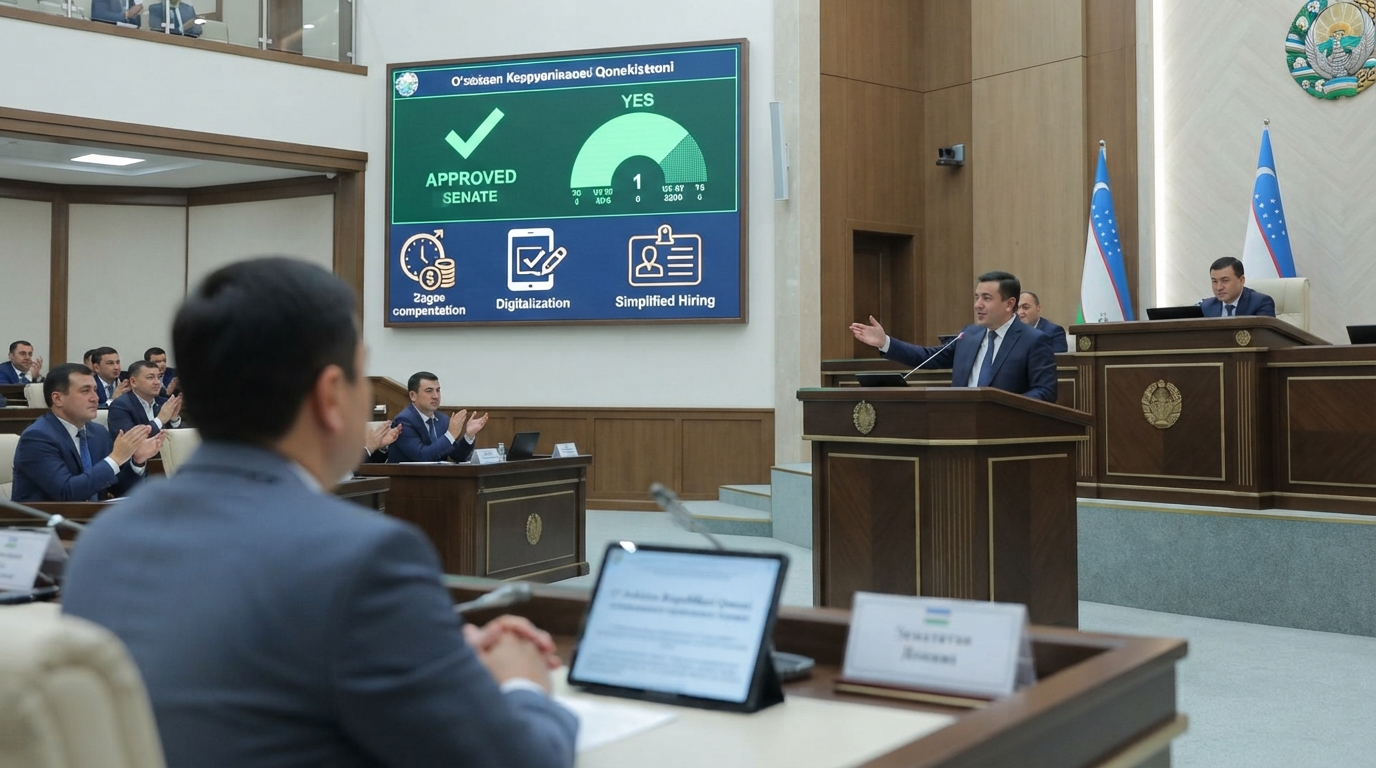
Bill on wage delay compensation moves forward to the Senate.
The Legislative Chamber has passed a draft law in its second reading that mandates employers to provide compensation for late wage payments, while also streamlining hiring processes and enhancing the use of digital tools in labor relations.
As stated by the Legislative Chamber, the objective of the bill is to simplify employment procedures, eliminate unnecessary bureaucratic hurdles, and bolster the protection of workers' rights.
A significant aspect of the bill clarifies the compensation process for employees when wages are not paid on time. According to the draft law, compensation would be owed for each day of delay. However, the chamber did not specify how this compensation would be calculated or the applicable rate.
Currently, Uzbekistan's legislation does not set a standard daily penalty for late wage payments. Instead, compensation is determined by the Labor Code, collective agreements, employment contracts, or other internal regulations.
The bill also suggests a reduction in the documentation required for hiring employees. Under the proposed changes, employers would typically need only the applicant's personal identification number. Those liable for military service or subject to conscription would also need to present either a military identification card or a certificate of military registration.
Additionally, the proposed amendments encourage the digitalization of labor relations. Documents verified with an electronic digital signature or biometric identification through Face ID would hold the same legal validity as those signed manually.
The draft law also includes measures aimed at preventing harassment and violence in the workplace. It establishes provisions to prohibit such behavior, prevent violations, and protect employees who are victims.
The Legislative Chamber has approved the bill and sent it to the Senate for further consideration.
For the legislation to take effect, it must receive approval from the Senate and be signed by the president.