

'You're not alone in the darkness': Gambia president urges calm after violent blackout protests
The country has endured persistent blackouts since June, with residents saying some have lasted as long as 48 hours.
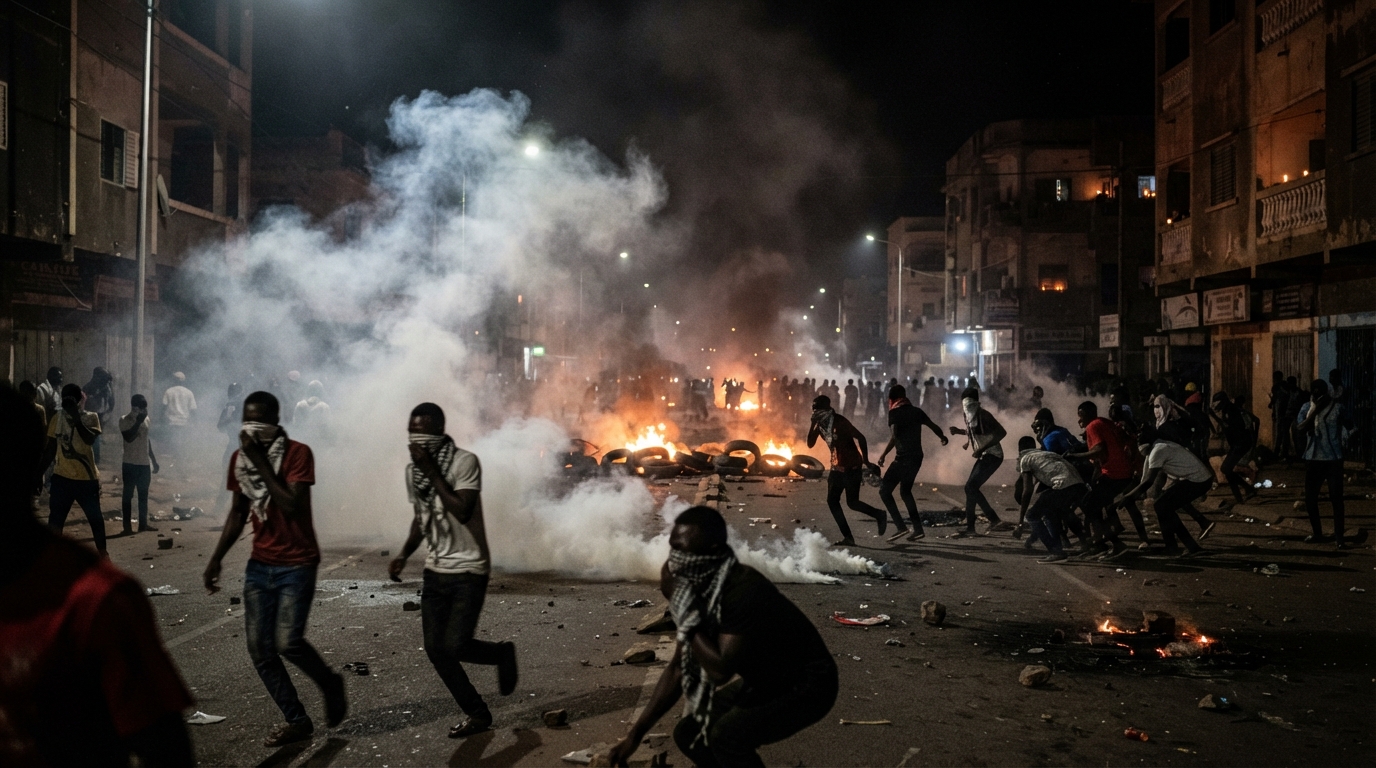
“You’re not alone in the darkness”: Gambia president urges calm after violent blackout protests
Police fired tear gas to break up hundreds of protesters who marched on Monday over extended power outages.
The Gambia’s President Adama Barrow has called on citizens to stay calm amid the prolonged cuts, saying the country is not the only one dealing with an electricity crisis affecting parts of West Africa.
His remarks came after protests on Monday night in the capital, Banjul, and nearby areas over blackouts that residents say have at times lasted as long as 48 hours.
“When you lie down in the heat and the dark, believe that you are not alone in that darkness,” Barrow said, promising to increase power supplies by next month.
The Gambia relies partly on imported electricity to supplement its own generation, including supplies from Guinea and neighbouring Senegal.
The small West African nation has faced ongoing blackouts since June, with outages growing longer and more frequent during the current hot season as rising temperatures push up electricity demand.
Anger erupted on Monday night, when protesters went into the streets in Banjul and surrounding areas, burning tyres and blocking roads over the prolonged power cuts.
Police used tear gas to disperse crowds in the Westfield area as they headed toward the headquarters of the national electricity company, Nawec, with some chanting: “Barrow must go”.
Protesters also assembled outside the vice-president’s residence in Farato, where banners at an office of Barrow’s ruling National People’s Party were torn down.
The unrest comes only months before a presidential election expected in December, in which Barrow is pursuing a controversial third term.
In a televised speech on Tuesday night, Barrow acknowledged the suffering caused by the blackouts but warned protesters not to damage public infrastructure, saying it would only deepen the disruption and divert funds to repairs.
“Let us not destroy in a moment of anger what we suffered so long to gain,” he said.
The president admitted there had been failings in the government’s planning, power generation and maintenance systems, describing the resulting outages as “a national security issue” and an “emergency”.
“I know that the fans have stopped turning, children work in the dark, mothers throw away stale food, and the heat is unbearable by day and by night,” the president, promising that supplies would improve by the end of October.
He said a new 24-megawatt generating unit was being installed at the Brikama power station and would be commissioned by the end of next month.
A contract has also been awarded for a 50MW solar power plant in Soma, although no completion date was given.
“For a system of our size, this is considerable power, enough to make a big difference in your homes,” Barrow added.
The president visited facilities for the national energy utility on Tuesday morning and promised that The Gambia would receive new generators this week.
Gallo Saidy, the Nawec chief, also appealed for patience, saying reduced electricity imports from the regional grid had contributed to the shortages.
He said lower rainfall this year had reduced the electricity available through the regional network.
“We are aware of the frustration and constraints that the Gambian people have,” he said. “We are just asking The Gambian people to give us a little bit of time and patience.”
Nawec had warned in August that unusually high temperatures had driven a surge in electricity demand, while a technical problem had also affected a major generating unit supplying imported power.