

Xiaomi's humanoid robots worked an 8-hour shift at a car plant for the first time (video)
Robots sorted car parts and put them in their places. During the shift, they stopped twice to recharge.
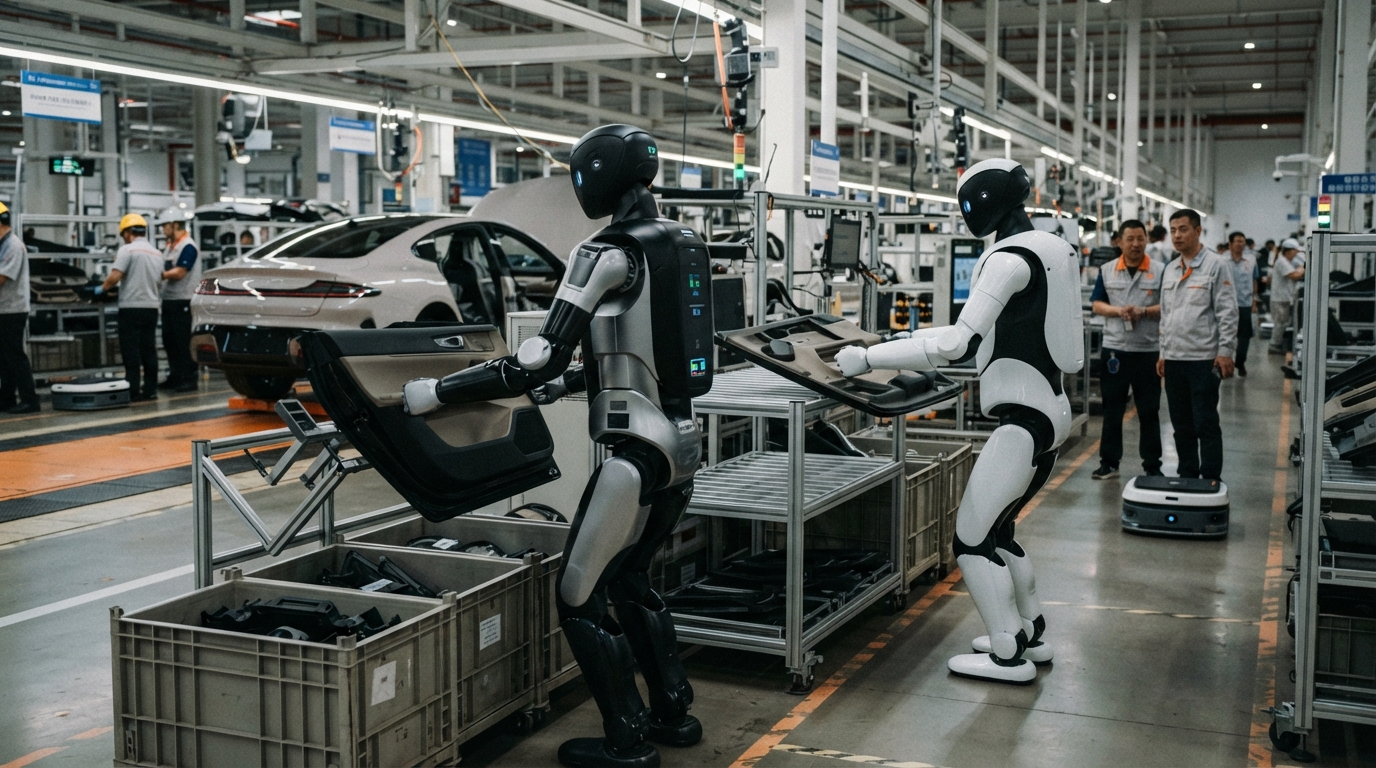
Xiaomi's humanoid robots worked an 8-hour shift at an auto plant for the first time (video)
Xiaomi founder Lei Jun published a video showing the company's humanoid robots working an eight-hour shift at an auto plant for the first time, Chinese publication The Paper reported.
According to Xiaomi, the robots fully completed their set daily work quota. This test was said to be the first experiment to verify the robots' operation under real factory conditions.
The video was filmed in the final assembly shop of the cars. It depicts two CyberOne 02 model robots — one black and one white — working. The robots sorted side panels to be installed in the car interior. They picked up parts lying randomly in boxes, turned them in the required direction, and placed them on shelves. In doing so, the robots had to work quickly to match the speed of the car assembly line.
During the shift, the robots stopped twice to recharge. They powered up for the first time after 3 hours and 2 minutes of work, and for the second time after 6 hours and 3 minutes.
In the second half of the shift, one of the robots dropped a panel on the floor. A wheeled robot returned it to its place. Overall, the robots worked for 8 hours and 5 minutes.
To users who doubted the need for such robots in a factory, Lei Jun responded:
"This is a universal humanoid robot. There is no need to change its technical parts. It can adapt to different workplaces and tasks."
Similar tests have been conducted by other companies as well. In particular, the Figure 03 robot worked at a BMW plant in Spartanburg, USA, while the AgiBot G2 worked at the Longcheer tablet manufacturing factory in Nanchang, China.
For context, in late July, the US Federal Communications Commission banned the import of new foreign-made humanoid robots into the country. The Commission cited security concerns for this decision. Journalists noted that the ban is primarily targeted at China, as that country accounts for 85 percent of the global humanoid robot market.