

Why India is importing sugar for the first time in nearly a decade
Domestic sugar prices have jumped nearly 40%, forcing India to import 1 million tonnes of the sweetener.
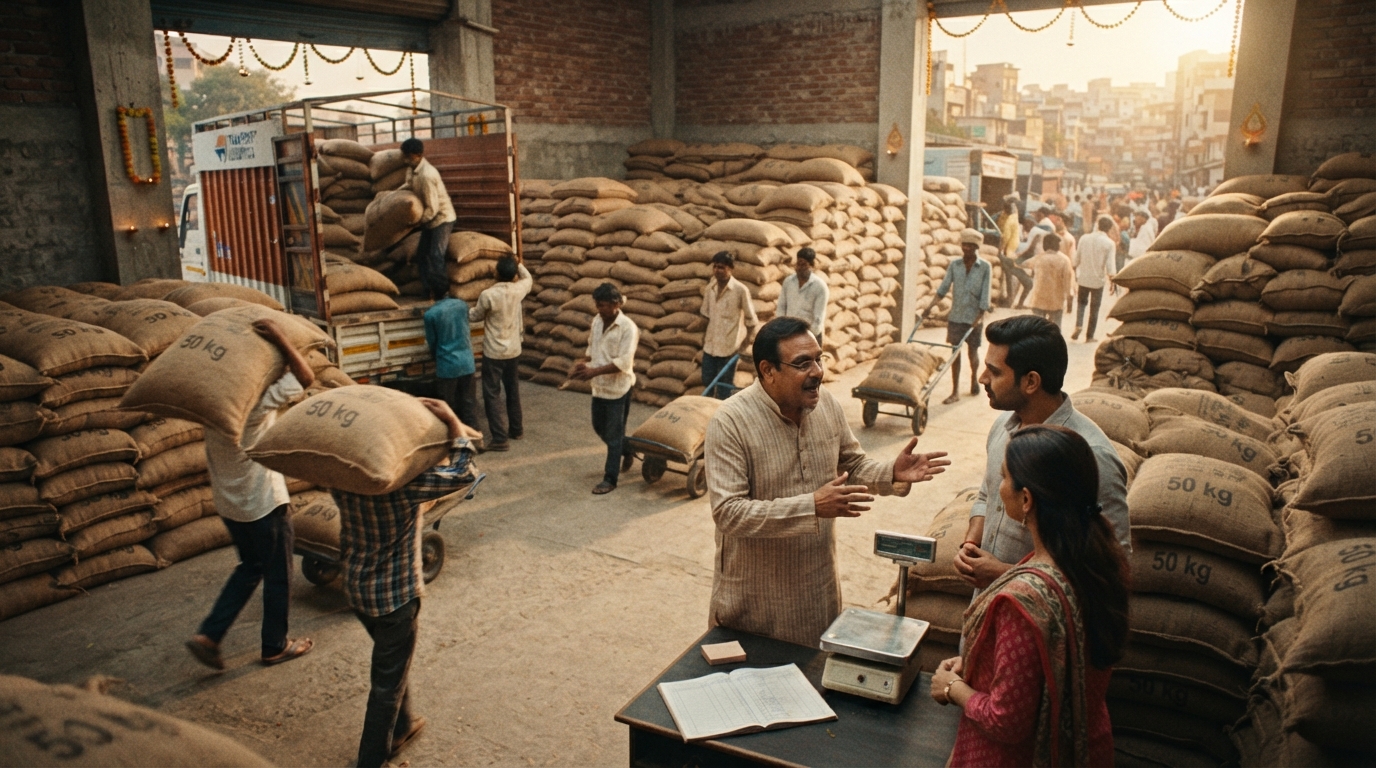
India, the world's leading sugar consumer, is importing the commodity for the first time in nearly a decade to prevent a difficult festive season. Sugar prices have surged by almost 40% in the last two months, prompting the government to import 1 million tonnes.
This decision comes as demand typically rises from August due to festivals like Ganesh Chaturthi, Dussehra, and Diwali, followed by the busy wedding season. Food and beverage companies also increase their stock during this period, adding pressure to wholesale prices.
Current season production, running from October 2025 to September 2026, is now projected at 30.6 million tonnes, an 11% reduction from the government's initial estimate of 34.3 million tonnes. This shortfall has caused prices to skyrocket; a kilogram of sugar that cost approximately 40-45 rupees ($0.42-0.47; £0.31-0.35) in May-June was selling for over 58-60 rupees in August, though prices have since slightly moderated.
Despite being the world's second-largest sugar producer, India now requires imports. The government attributes this to lower sugarcane production due to reduced rainfall during El Niño, hoarding, and tighter global supplies caused by adverse weather affecting other major producers.
However, experts suggest that a significant factor was India's overestimation of its own production, leading to sugar exports before the full extent of the shortfall became apparent. Initially, the government approved exports of 1.5 million tonnes for the season, adding another 500,000 tonnes in February. Approximately 800,000 tonnes were shipped before exports were halted in May.
Vikram Suryavanshi, a senior analyst at PhillipCapital India, commented, "From allowing exports at the start of the season to ending with an import of a million tonnes is a large variation on production estimates - and that's a big surprise."
This is critical because India has limited surplus sugar. Last season, it consumed over 28 million tonnes, close to its expected production this year. Additionally, nearly three million tonnes are anticipated to be diverted for ethanol production, leaving little room for any deficit.
Atul Chaturvedi, non-executive director of Shree Renuka Sugars, India's largest sugar refiner and a major ethanol producer, stated that the imports will provide a crucial buffer.
From September 1st for three months, sugar refineries in special economic zones near ports, which typically import raw sugar for refining and re-export, will be permitted to sell duty-free sugar in the domestic market. The last time India imported sugar for domestic consumption was almost a decade ago, during a drought.
Other measures are also being implemented. The Indian Sugar Mills Association (ISMA) has requested mills to begin crushing cane two weeks earlier than usual to build up stocks as the new harvest arrives in October. However, this crop also faces risks from unpredictable weather.
Sugarcane is a water-intensive crop, and inconsistent monsoon rains and prolonged dry spells in key growing states like Maharashtra, Uttar Pradesh, and Karnataka have impacted the crop. Yields are expected to decrease, and thinner cane with lower sucrose content will result in less sugar production.
Chaturvedi noted, "Looking at the climate conditions, the next season is also not going to be a bumper crop, although it is too early for actual assessment."
India has a history of restricting agricultural exports when domestic supplies tighten and prices rise. For example, in 2023, it banned non-basmati white rice exports for over a year following crop damage that contributed to rising food prices.
However, experts argue that the failure to anticipate the sugar shortfall before allowing exports raises questions about the government's forecasts. Siraj Hussain, a former secretary at the federal agriculture ministry, said, "This year, the initial projections for sugarcane production did not materialise due to unusual weather in some parts and disease in certain varieties."
The government has not explained why the extent of the shortfall was not identified before exports were halted on May 13th. It has attributed the production drop to sugarcane disease and waterlogging from excessive rainfall. The BBC has sought comment from the agriculture ministry.
Some commentators also blame the diversion of sugarcane to ethanol production for the shortage in a deficit year. Historically, sugar mills would allocate about 10% of their output for ethanol, which helped stabilize prices during periods of excess production. However, India's adoption of E20 (petrol blended with 20% ethanol) as the standard fuel this year, coinciding with low sugar output, has exacerbated the challenge, according to experts.
The government disputes the extent to which this policy is responsible. It states that the share of cane diverted to ethanol has decreased from 12% in 2022-23 to approximately 9% in 2025-26, arguing that weak production, hoarding, and tighter global supplies are the primary drivers of the sugar price surge.
Some industry figures agree. Deepak Ballani of the Indian Sugar Mills Association (ISMA), representing private mills that produce nearly half of India's sugar, asserts that stocks and monthly sugar quotas released into the market are adequate. He contends that speculation and hoarding, rather than a genuine shortage, are pushing prices higher.
To curb hoarding, the government has capped stocks held by traders and wholesalers at 400 tonnes for three months.
However, Suryavanshi disagrees, pointing out that India has implemented such measures before, yet prices continued to rise after the latest restrictions were announced. For him, this indicates a real supply squeeze.
India's decision to import also comes at a time when global supplies are tightening. El Niño has affected rainfall in Thailand, while heavy rains have disrupted cane harvesting in Brazil, the world's largest sugar producer, where mills are also diverting more cane to ethanol. Heatwaves have damaged Europe's sugar beet crop, with France anticipating its worst harvest in four years.
US government forecasters predict global production will fall to 184.9 million tonnes this season, down from a record 186.1 million tonnes the previous year. London white sugar futures reached $541 a tonne in mid-August, their highest since April 2025, while New York raw sugar futures jumped 4% on the day India announced its imports.
For India, sugar availability could improve next year if high prices incentivize mills to divert less cane to ethanol. Chaturvedi believes that "At current sugar prices, it simply doesn't make economic sense for mills to divert cane juice to ethanol, so India's sugar scenario should be quite all right going forward."
However, he added that the larger lesson from this year's squeeze is clear: it serves as a "warning that going forward, we need to be a lot more careful in estimating our sugar crop numbers."