

Why don't antidepressants help everyone equally? A new study offered an explanation
Australian researchers have suggested that there may be a subtype of depression associated with a disruption of the body's internal biological clock. In an analysis of data from over 11,000 participants, people included in this group were observed to have an earlier onset of depression, lower efficacy of antidepressants, and more side effects.
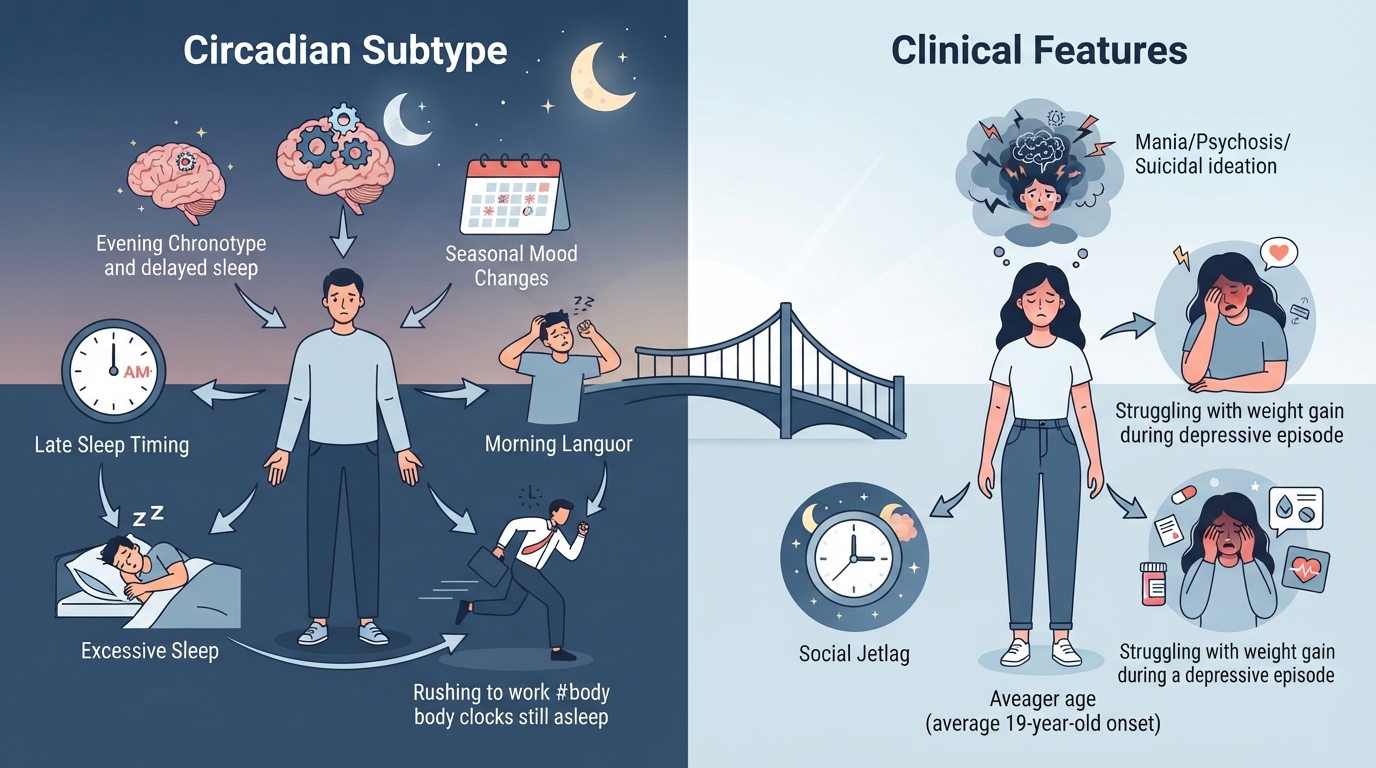
Why don't antidepressants help everyone equally? A new study has offered an explanation
Depression symptoms and response to treatment vary significantly from person to person. Neuroscientists and psychiatrists at the University of Sydney investigated whether part of these differences could be linked to circadian rhythms — the body's internal biological clock.
Circadian rhythms are approximately 24-hour fluctuations in physiological processes that correspond to the alternation of day and night. Light is considered the primary external signal coordinating them.
This system plays an important role in sleep and wakefulness, mood, metabolism, and focus. Its disruption can manifest in fatigue and sleep issues similar to jet lag — the condition experienced after crossing several time zones.
The study, published in the British Journal of Psychiatry, analyzed data from 11,380 people aged 18 to 90. The scientists categorized participants with at least three of the following six signs into the circadian subtype:
- Seasonal mood changes.
Symptoms worsening or easing depending on the seasons of the year.
- Evening chronotype.
A tendency to go to bed late and be active at night.
- Delayed sleep timing.
The midpoint of the sleep period falling later than usual.
- Excessive sleep duration.
Sleeping significantly more than usual when given the opportunity.
- Morning lethargy.
Feeling unrefreshed upon waking up.
- "Social jetlag."
A mismatch between the body's natural sleep rhythm and work or study schedules, leading to attempts to compensate for weekday sleep deficits on weekends.
Based on these criteria, 2,604 people — nearly 23 percent of the participants — were placed in the circadian group. This is a classification used in the study, and the presence of these signs does not automatically mean a separate diagnosis.
In this group, depression typically began at a young age, at an average of 19 years old. The proportion of women was higher, and severe clinical signs such as mania, psychosis, and suicidal tendencies were also reported more frequently. A tendency toward weight gain during depressive episodes was also higher.