

Why did the CIA enter Afghanistan in a Soviet helicopter?
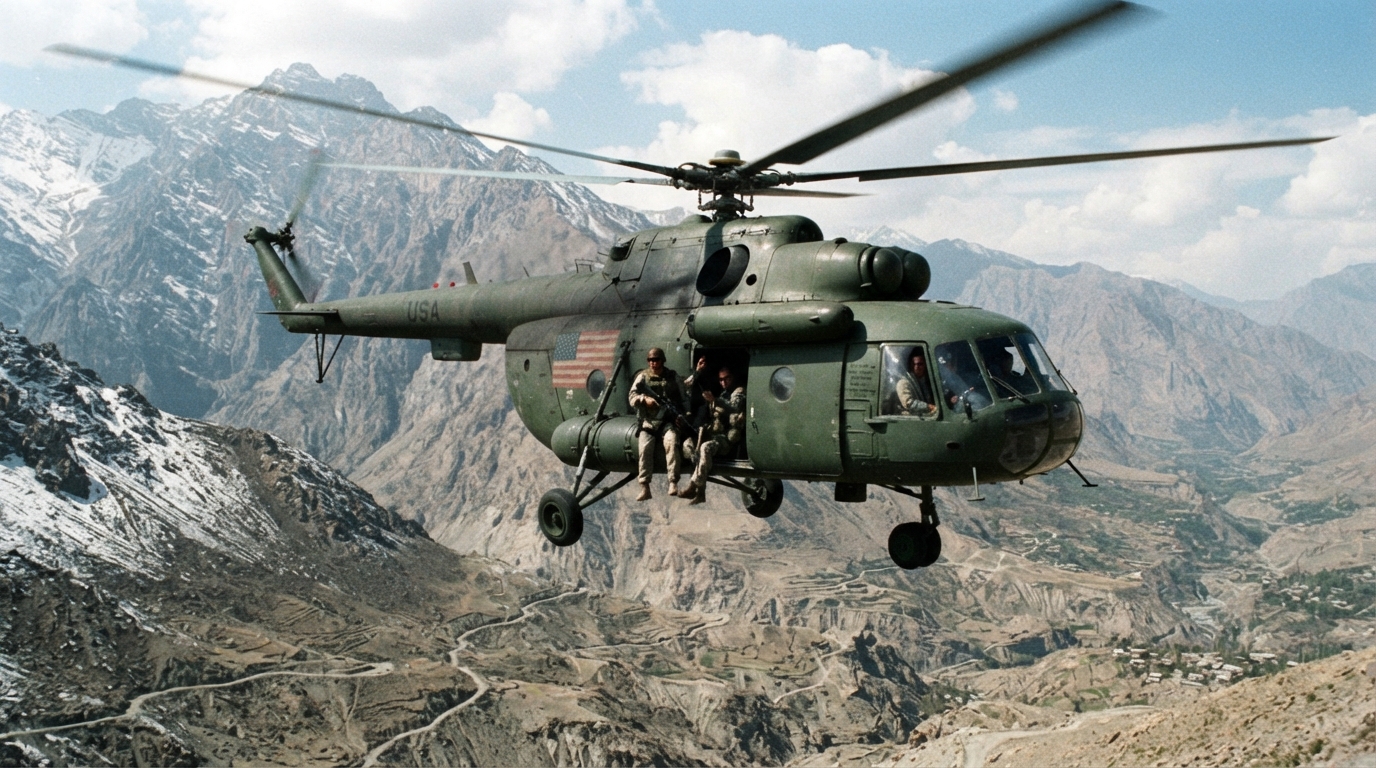
The US Central Intelligence Agency (CIA) has restored the Mi-17 helicopter that carried the JAWBREAKER team into Afghanistan in 2001. In honor of the 25th anniversary of the initial mission, the museum exhibit was restored to its camouflage from that era. American intelligence officers chose this Soviet-designed type of helicopter because it was widely used in the region.
Why did the CIA enter Afghanistan in a Soviet helicopter?
On September 26, 2001, 15 days after the September 11 terrorist attacks in the US, it carried a team of intelligence officers into the Panjshir Valley.
The JAWBREAKER team was led by Gary Schroen, an experienced intelligence officer. He delayed his retirement to participate in the new operation.
On board were seven CIA officers, three crew members, and two Afghan partners. Their mission was to establish contact with the Northern Alliance and lay the groundwork for the subsequent US military campaign against Al-Qaeda and the Taliban.
The Mi-17's appearance did not attract attention
There was a practical reason for choosing a Soviet-made helicopter: such machines were already in use in Afghanistan and the region. Therefore, its appearance did not seem strange.
The CIA purchased this helicopter in the 1990s. However, flying it over the mountains with people and cargo was a difficult task for the crew.
The route to Panjshir lay through the Anjuman Pass in the Hindu Kush, which is nearly 4,400 meters high. In addition to passengers, the helicopter carried weapons, ammunition, fuel, and equipment.
Gary Schroen recalled at the exhibit's opening ceremony in 2019 that the helicopter shook violently while climbing before the pass.
"The Russians built it for performance and service, not for looks and style," he said.
The inscriptions in the cockpit were translated by hand
The helicopter was retrofitted to meet the needs of American intelligence. According to the CIA Museum catalog, new avionics were installed in it.
Some changes, however, were very simple: English translations were written in pencil over the Cyrillic inscriptions in the cockpit. This helped the crew adapt to the controls more quickly.
The helicopter had radio communications and an emergency beacon, but no transponder—a device that transmits an identification signal.
To ensure US and coalition forces could identify it, the letters USA and an image of the American flag were painted on the horizontal surface of the tail section. Since blue paint could not be found, only the red and white stripes of the flag were drawn.