

Why are elections in the US held specifically on a Tuesday?
In America, general elections are held on Tuesday, a workday, rather than on Sunday, a weekend day. So, what are the historical, political, and practical reasons behind this election tradition that has been preserved for over 180 years?
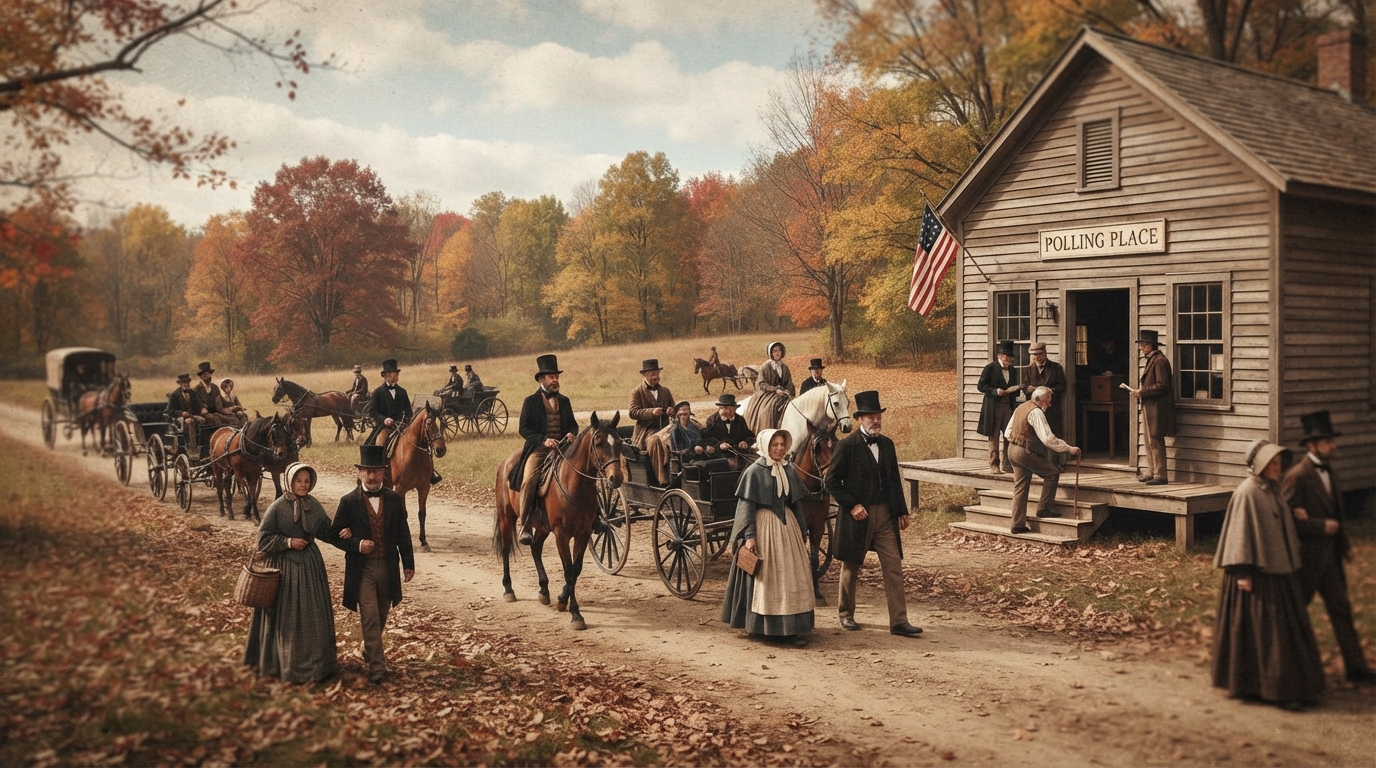
Why are elections in the US held specifically on Tuesday?
In the United States of America, presidential and Congressional elections are usually held on the Tuesday after the first Monday in November. Interestingly, this date was neither previously specified in the constitution nor chosen by chance. Behind it lie important reasons related to the life, economic conditions, and political experience of 19th-century America.
Initially, US states held presidential elections on different days. In some states, voting took place in September, while in others it occurred in October or November. This procedure created a number of problems.
For example, after election results became known in one state, voting would still be ongoing in other states. Political groups could exploit this to influence voters, and it could even create opportunities for certain individuals to vote again in different places. The risk of external influence on election results and fraud also increased.
Therefore, the US Congress decided to establish a single election day for all states.
On January 23, 1845, the 28th US Congress passed a special law. According to the law, the selection of presidential and vice-presidential electors (representatives of the Electoral College) was set to take place in all states on the Tuesday after the first Monday in November.
The main purpose of this law was to conduct elections simultaneously, prevent disorganization among states, and ensure that the election process proceeded fairly.
The first general presidential election based on this new system was held on November 7, 1848.
Why specifically November and why Tuesday?
To answer this question, one needs to imagine life in 19th-century America. At that time, a large portion of the population was engaged in agriculture. November, when the autumn harvest had been gathered but the severe cold of winter had not yet begun, was considered a convenient period for elections. The farmers' work had relatively decreased, and their ability to travel to polling stations was better.
The choice of Tuesday was also connected to simple practical needs.
At that time, there were no automobiles or modern means of transportation. Many voters covered long distances on horseback or in wagons to vote. Sunday was considered a day of religious worship and rest in Christian society. It was not deemed acceptable for people to travel on Sunday.