

Why a US-funded vaccine trial on babies was cancelled in Guinea-Bissau
The trial was condemned as "unethical" and "neocolonial" because half of the babies would not be given the vaccine.
Why a US-funded vaccine trial on babies was cancelled in Guinea-Bissau
Like many neighbouring countries, Guinea-Bissau waits until babies are six weeks old before vaccinating them against hepatitis B, even though the WHO says it should happen at birth (file photo).
A planned hepatitis B vaccine trial involving newborn babies in Guinea-Bissau has been cancelled after being denounced as “unethical” and “neocolonial”.
The study was financed by the US under Health Secretary Robert F Kennedy Jr, who has long been known for his scepticism about vaccines.
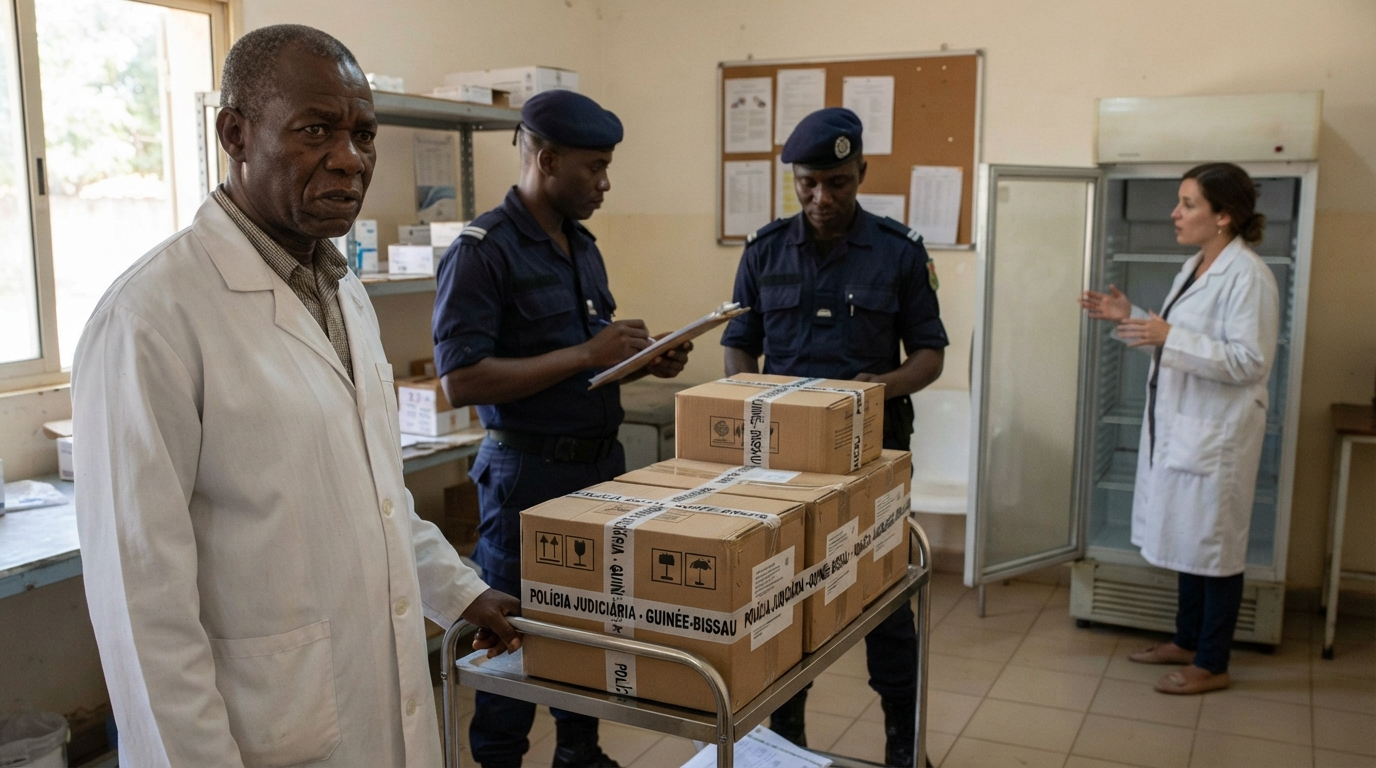
Police have confiscated a shipment of vaccines from the research centre at the centre of the dispute.
The proposal attracted international backlash because it would have withheld a World Health Organization (WHO)-recommended vaccine from half of the newborns taking part.
Some public health specialists said the plan raised wider concerns about whether vulnerable people in African countries were being asked to accept risks that researchers would not tolerate in richer nations.
The research was due to take place at the Bandim Health Project, a research centre operating in Guinea-Bissau since 1978.
It was intended to include 14,000 newborns, with half given a hepatitis B vaccine soon after birth and the other half not receiving the shot.
Bandim said the trial was meant to examine whether the hepatitis B vaccine given at birth has health effects beyond preventing infection.
Earlier studies in The Gambia and Guinea-Bissau have raised questions about a possible association with higher mortality.
Researchers said Guinea-Bissau does not currently provide routine hepatitis B vaccination at birth, despite WHO guidance, giving them a rare chance to study its effects before such vaccines are introduced in 2028.
Critics, however, questioned the ethics of denying the vaccine to some babies, especially in one of the world’s poorest countries, where the infection is common.
The Trump administration backed the proposed study, with the CDC awarding the University of Southern Denmark (SDU) $1.6m (£1.2m) in December 2025.
Walter Kazadi Mulombo, the WHO representative in Guinea-Bissau, told the BBC that concerns arose after questions were raised about the study and no public protocol could be found.
He said the main ethical issue was that the trial would withhold an intervention already proven to protect newborns from hepatitis B.
“The vaccine has been used for more than 30 years in more than 115 countries,” he said. “A study that will withhold that intervention from other newborns is unethical.”
He warned that babies could be exposed to the virus during birth if their mothers were infected, as well as later in life.
Nearly a fifth of Guinea-Bissau’s population has hepatitis B, a viral infection that affects the liver.
People infected in infancy are especially likely to develop chronic infections, which kill up to 25% of patients, mostly through liver failure or liver cancer, according to data published in 2020.
The WHO is working with the government to move forward the birth-dose vaccine.
“The country had been expected to add it to its routine immunisation schedule in 2028, but officials are considering introducing it in the first quarter of next year,” Mulombo said.
Guinea-Bissau currently gives children the hepatitis B vaccine at six weeks, making it less effective.
In January, Guinea-Bissau’s government banned hepatitis B vaccine trials involving children. At the time, it asked a team of experts from the Africa Centres for Disease Control and Prevention (Africa CDC) to help assess the study.
Health Minister Quinhin Nantote said in October that the suspension was still in place and had not been lifted by the Council of Ministers after reports emerged suggesting the trial would go ahead anyway.
“We were surprised to learn from media reports that the study might proceed,” Nantote said. “We are outraged because even I, as the minister responsible for this sector, was not informed.”
The row deepened after SDU said a revised study protocol had received ethical approval “from the relevant authorities in Guinea-Bissau,” which Nantote denied.
Dr Gavin Yamey, a professor of global health and public policy at Duke University in the US, criticised the plan.
“The proposed trial reeks of neocolonialism,” he told the BBC, asking why the research was not being carried out in Denmark.
His objection focused on the decision to withhold a recommended vaccine from some newborns in a country where hepatitis B is widespread.
SDU dean Jakob Grauslund said the trial had never begun, no babies had been enrolled and no vaccinations had been given as part of the research.
SDU said it had received a separate positive review from the university’s own research ethics committee.
Grauslund said the university had sought an additional independent review, although Danish law did not require one.
He added that the relevant Danish statutory research ethics bodies were unable to carry out the review.
After the SDU ethics committee approved the project, Grauslund decided it could go ahead.
He stressed, however, that this did not replace the separate authorisation required from Guinea-Bissau’s authorities.
On 19 October, Guinea-Bissau’s Judicial Police searched the Bandim Health Project’s premises in the capital, Bissau, and seized a batch of hepatitis B vaccines.
Police said the batch was meant for vaccinating children but did not say how many doses were taken or what specific grounds there were for the investigation.
They emphasised that the seizure did not, by itself, mean the vaccines were defective or unsafe.
Police have not clearly said whether their investigation concerns the proposed trial, the importation of the vaccines or other circumstances surrounding the batch.
Grauslund said he could not comment on the seizure.
The proposed trial was funded by the US government during a period of major changes to vaccine policy under President Donald Trump and Health Secretary Kennedy.
Under Kennedy’s leadership, a US vaccine panel tried to end a long-standing recommendation that all newborns receive a hepatitis B vaccine at birth, but a federal judge later blocked that, along with other Trump administration vaccine policy changes.
Critics have questioned whether the research could help support that policy shift, although the study’s stated purpose was to examine possible effects of the vaccine beyond preventing infection.
Kennedy has praised the Danish researchers as “the deities of vaccine research”, and cited earlier findings from their work in support of concerns about vaccine safety. A later study by some of the same researchers, however, found no evidence of the previously reported effect.
There is no evidence in the available information that the proposed trial was intended to justify a change in US policy.