

Ebola vaccine trial to start in DR Congo as warning issued over speed of infections
About half of the 2,500 recorded deaths from Ebola happened in the last 20 days, the WHO says.
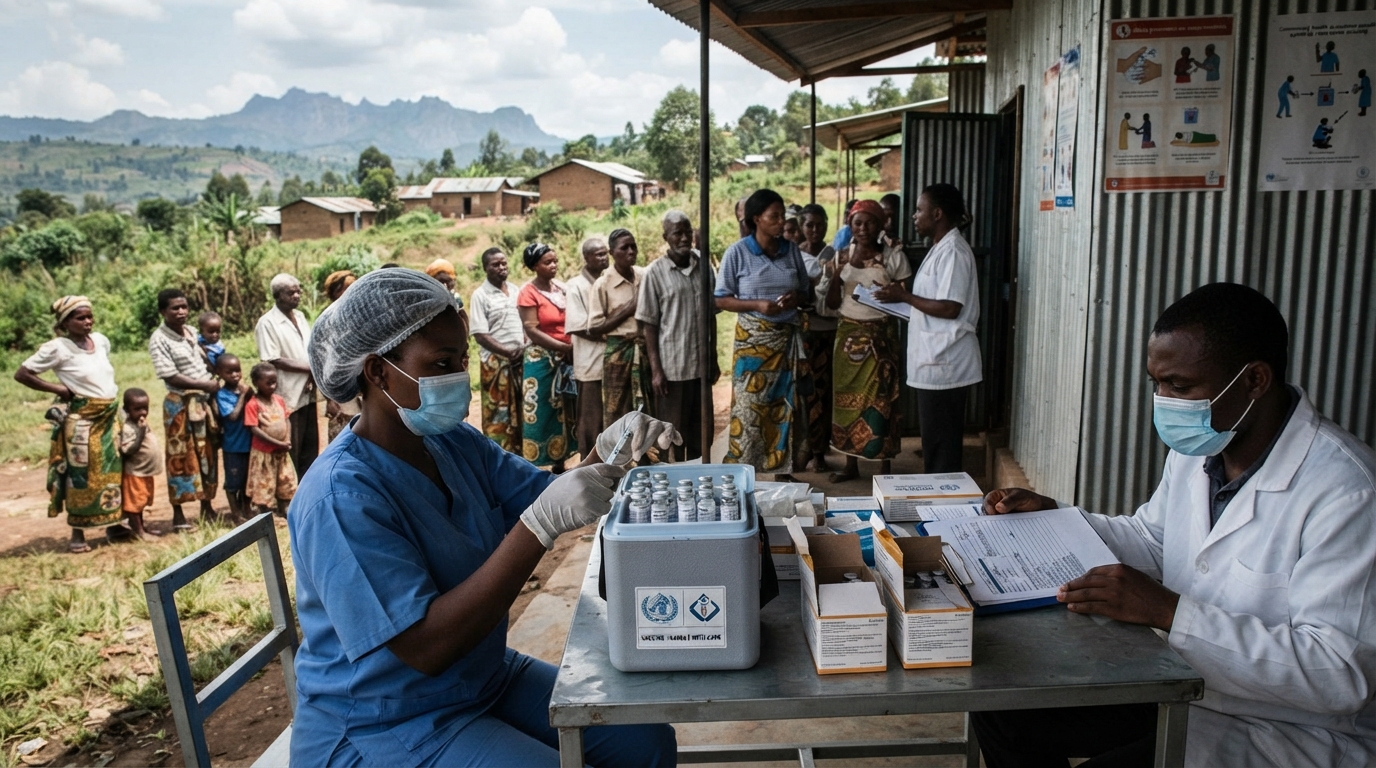
A trial for an Ebola vaccine is set to commence in the Democratic Republic of Congo, amidst warnings about the escalating rate of infections. The Ervebo vaccine, known to offer protection against the Zaïre strain of Ebola, will now be evaluated for its efficacy against the Bundibugyo species, which is responsible for the current outbreak.
The DR Congo is preparing to deploy the Ervebo vaccine, with a portion of the doses allocated for a trial to determine its effectiveness against the Bundibugyo strain presently circulating in the country. While Ervebo is effective against the Zaïre species of Ebola, there are currently no established vaccines or treatments for Bundibugyo.
This rollout coincides with a new alert from the World Health Organization (WHO), stating that Ebola is "growing exponentially" in the northern and eastern regions of the DR Congo, with the spread of infections now encompassing an area larger than France.
Approximately 2,500 individuals have succumbed to this outbreak, which was declared three months ago. Julien Harneis, the WHO's Ebola co-ordinator, informed reporters that half of these fatalities occurred within the last 20 days. The AFP news agency quoted him as saying, "It is growing faster and wider than the Ebola response."
A recent report by Save the Children indicates that at least 180 Congolese children have lost both parents or caregivers since the outbreak began. This outbreak is now the deadliest in the DR Congo's history and the second-worst ever recorded, surpassed only by the 2014-2016 West Africa outbreak, which claimed over 11,000 lives.
Experts suggest that the virus may have been circulating in the DR Congo as early as February, but initial infections of the Bundibugyo species were misdiagnosed as typhoid and malaria. This, coupled with the challenges faced by health teams operating in conflict-ridden areas, local distrust of health authorities, and certain traditional burial practices, has hindered the response.
There is hope that the Ervebo vaccine may offer assistance. The WHO confirmed that 20,000 doses would be utilized in a clinical trial to assess the vaccine's effectiveness against Bundibugyo, while 50,000 doses will be administered to frontline health workers. The WHO and the Africa Centres for Disease Control and Prevention welcomed this allocation, characterizing it as a crucial reinforcement of the response. Strict protocols regarding burials must now be observed to prevent the virus from spreading from infected bodies.
Meanwhile, the M23 rebel group, which controls parts of eastern DR Congo, has announced new restrictions on movement between government-held and rebel-held areas of North Kivu province. Shared taxis and passenger boats between these areas will be suspended for one month, beginning on Saturday. Other forms of transport will continue to operate under stringent health controls. These measures follow reports of two travelers testing positive for Ebola in a village under M23 control. Rebel authorities stated that the restrictions were necessary to prevent further spread. This development underscores the complexity of combating Ebola amidst ongoing hostilities between the Congolese government and the rebels.
The M23 alliance, which seized Goma and Bukavu in early 2025, has sought to demonstrate its administrative capabilities by implementing a parallel Ebola response in territories under its control. In late June, the rebel authorities declared their zones Ebola-free.
Ebola is a rare but lethal viral disease, and the Bundibugyo species is even rarer, with only two prior outbreaks known. Symptoms of Ebola, which resemble those of the flu or malaria, include fever, headache, and tiredness, and can manifest suddenly within 2 to 21 days of infection. As the disease progresses, vomiting and diarrhea can develop, leading to organ failure. The virus spreads through contact with infected bodily fluids such as blood or vomit.