

Who is arming whom? Map of global arms supplies
In 2021–2025, the volume of major arms deliveries worldwide increased by 9.2 percent compared to the previous five-year period. While the US supplies weapons to many countries, deliveries from certain exporters mainly go to a single nation.
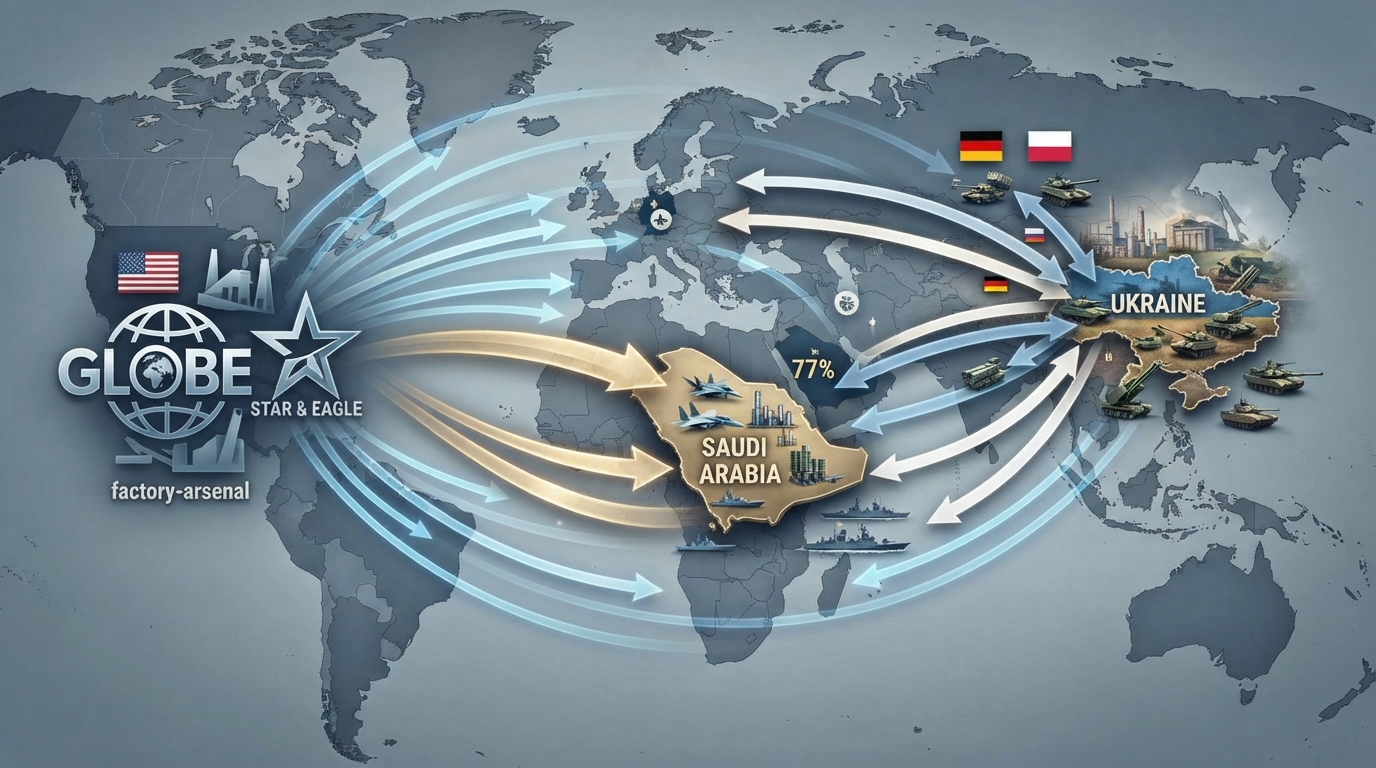
Who is Arming Whom? The World's Arms Supply Landscape
The Naked Science publication, citing data from the Stockholm International Peace Research Institute — SIPRI, wrote about the main partners of major arms exporters.
The data shows that there are two different approaches to arms supplies. Major exporters like the US work with many countries. In some other countries, however, a single recipient country accounts for a large portion of the total export.
Such differences can be explained by long-standing military cooperation, regional security threats, or needs arising from ongoing armed conflicts.
In 2021–2025, Saudi Arabia ranked third in the world in terms of imports of major types of arms. The US accounted for 77 percent of the country's arms imports.
Military cooperation between the two countries has a history spanning several decades. American aircraft, air defense systems, and other modern weapons play an important role in strengthening Saudi Arabia's military capabilities, deterring regional threats, and protecting critical infrastructure.
However, not all international arms transfers are commercial trade. Weapons, especially during periods of active combat, are also provided as military assistance.
For example, in 2021–2025, Ukraine became the world's largest recipient of major types of arms, receiving them from the US, Germany, Poland, and other countries.
The supplied weapons serve various purposes. Some replace equipment lost in combat and depleted stockpiles, while others serve to modernize the military, deter potential attacks, or build reserves for future threats.
The SIPRI ranking measures the volume of major arms delivered, not the monetary value of the weapons. Furthermore, these figures do not reflect whether or not the weapons were subsequently used in combat operations.