

Who gets the tops, and who gets the roots
What the US wants from Central Asia: outcomes of the Samarkand summit — expert opinion
Who Gets the Tops, and Who Gets the Roots
A meeting of foreign ministers from Central Asian countries and the United States took place in Samarkand. Washington expects to strengthen its position in the region, while Uzbekistan reported agreements with American companies worth $12 billion. But what will the Central Asian states themselves gain from this? In his article, Stanislav Pritchin, Head of the Central Asia Sector at IMEMO RAS, analyzes the outcomes of the negotiations and explains the goals pursued by the US.
A Summit Without Concrete Decisions
Particular attention was focused on the summit in Samarkand, as it was the first meeting following the top-level "Central Asia + US" summit held at the White House in November 2025. It was assumed that the negotiations in Uzbekistan would help advance the implementation of initiatives previously agreed upon by the presidents.
However, contrary to expectations, the meeting turned out to be lacking in substance in terms of real outcomes. Following the negotiations, the ministers adopted only a joint statement that contains no real specifics or practical decisions.
The document, published only by the US Department of State, mentions the Trans-Caspian Trade Route, designated as an important element in enhancing connectivity between Central Asia and the US, and also notes the "B5+1" interaction format at the level of American business and regional partners. The statement also addresses the importance of cooperation in energy, natural resource extraction, and security—again without any specific projects or initiatives (source – C5+1: Historic Partnership, Prosperous Future — United States Department of State).
In addition to the six-party meeting, each of the region's ministers held separate bilateral talks with Marco Rubio.
Uzbekistan: Who Benefits from $12 Billion Agreements
Uzbekistan made maximum use of hosting the international forum on its territory. As part of the American delegation's visit, negotiations were organized with the President of Uzbekistan, Shavkat Mirziyoyev.
The head of the republic awarded Marco Rubio the Order "Buyuk Khizmatlari Uchun" for his contribution to the development of the Uzbek-American strategic partnership, while Sergio Gor was awarded the Order of "Dustlik".
Furthermore, the second meeting of the US-Uzbekistan Business and Investment Council took place on the sidelines of the summit, featuring a representative delegation of 200 American businessmen accompanying the Secretary of State. As official Uzbek and American sources note, the negotiations resulted in a package of 54 agreements and prospective initiatives totaling about $12 billion.
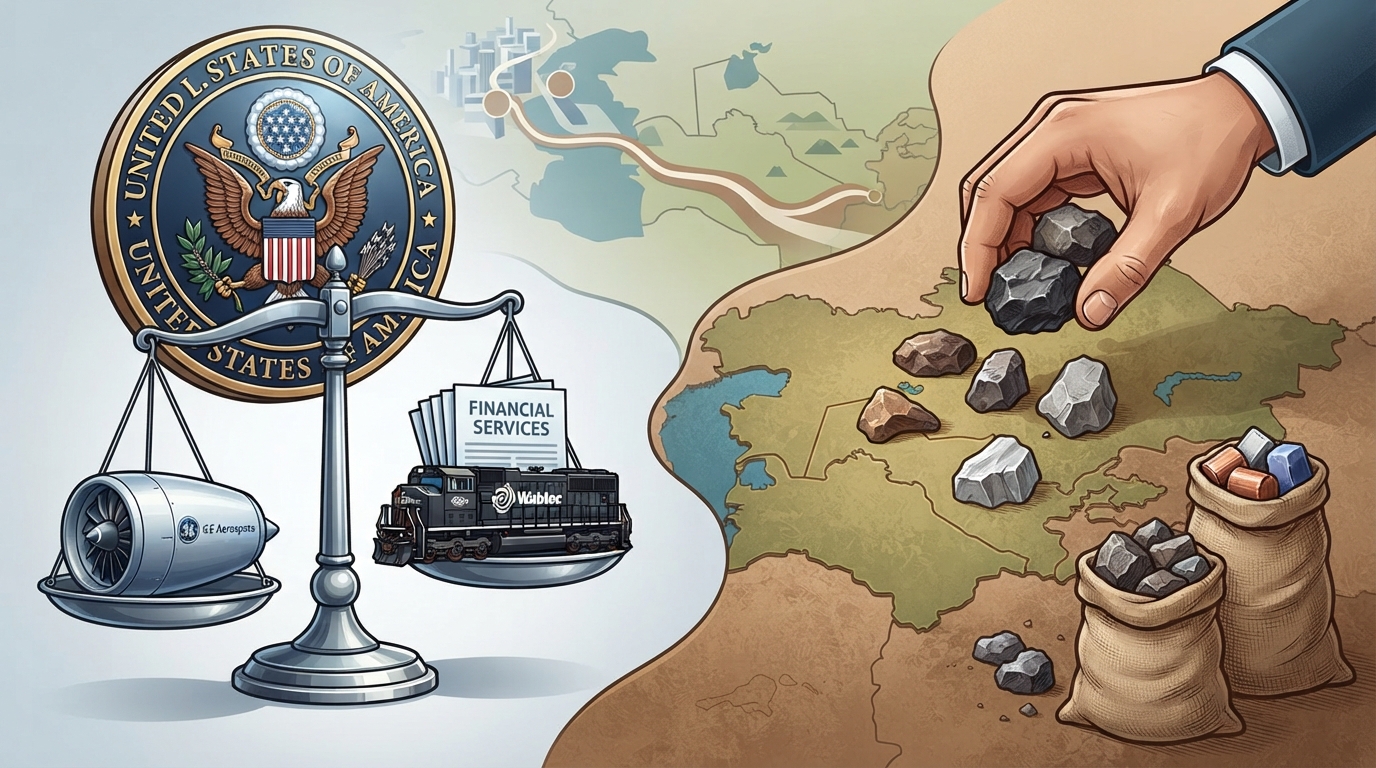
Notably, a detailed analysis of the concluded agreements shows that the results of the meeting are beneficial to the US, but not to Uzbekistan. For instance, the parties agreed on the supply of engines by GE Aerospace for the American Boeing 787 Dreamliner aircraft of the national carrier Uzbekistan Airways (here Uzbekistan pays, or rather the airline—for the equipment).
Following Kazakhstan, the American corporation Wabtec will begin supplying rolling stock for the railways of Uzbekistan. The announcement mentions an effort to localize production in the republic, but it will most likely involve only assembly, since the country's machine-building industry is oriented toward completely different technical standards.
Financial agreements with Franklin Templeton, Oppenheimer & Co., Citigroup, and BlackRock are not news and mostly represent service contracts to assist Uzbek companies in entering international financial markets. In other words, most of the contracts involve supplies of American goods and services to Uzbekistan without any significant investments in the republic itself or job creation.
The only area where the arrival of American capital is possible remains the mining industry, where American companies ReElement Technologies, Traxys, and Trafigura are ready to step in to study the prospects for developing critical mineral deposits.
Why the US Needs Central Asia's Critical Minerals
US interest in Central Asia's critical mineral reserves is no coincidence. In recent years, there has been a steady growth in the dependence of American companies on supplies of these raw materials for high-tech manufacturing from China, which has become a recognized global monopolist. Central Asia, rich in natural resources, including critical minerals, is viewed as an important potential supplier of these raw materials, alternative to China.
Thus, the region concentrates 38.6% of the world's manganese reserves (951 million tons of proven reserves, of which 681 million tons are in Kazakhstan, 270 million tons in Tajikistan), 30% of global chromium reserves (230 million tons, almost all of which are in Kazakhstan), 20% of lead (25 million tons, of which 15 million tons are in Kazakhstan, 10 million tons in Tajikistan), 12.6% of zinc reserves (46 million tons, of which 31 million tons are in Kazakhstan, 10 million in Tajikistan, and 4.5 million in Uzbekistan), and 8.7% of titanium reserves (395 million tons, of which 350 million are in Uzbekistan, 45 million in Kazakhstan).
Additionally, the region holds 5.8% of global aluminum reserves, 5.3% of copper, 5.3% of cobalt, and 5.2% of molybdenum (source – Vakulchuk Roman. Central Asia Is a Missing Link in Analyses of Critical Materials for the Global Clean Energy Transition // One Earth, Elsevier BV, 2021).
While negotiations regarding deposits in Uzbekistan are still ongoing, in Kazakhstan, Cove Kaz Capital Group, an entity affiliated with Donald Trump's family, intends to begin development in the near future on two large tungsten deposits in the Karaganda region of the republic—"Severny Kaptar" and "Verkhnee Kayrakty".
Thus, US strategy in Central Asia continues to be built around two main priorities: securing sales markets for American companies and supplying American industry with raw materials, which overall leaves the countries of Central Asia with very limited opportunities for full-fledged development.