

Where is the snake's head: punishment, indifference, and child protection...
Two and a half centuries ago, the Italian jurist Cesare Beccaria, in his work "On Crimes and Punishments," crime
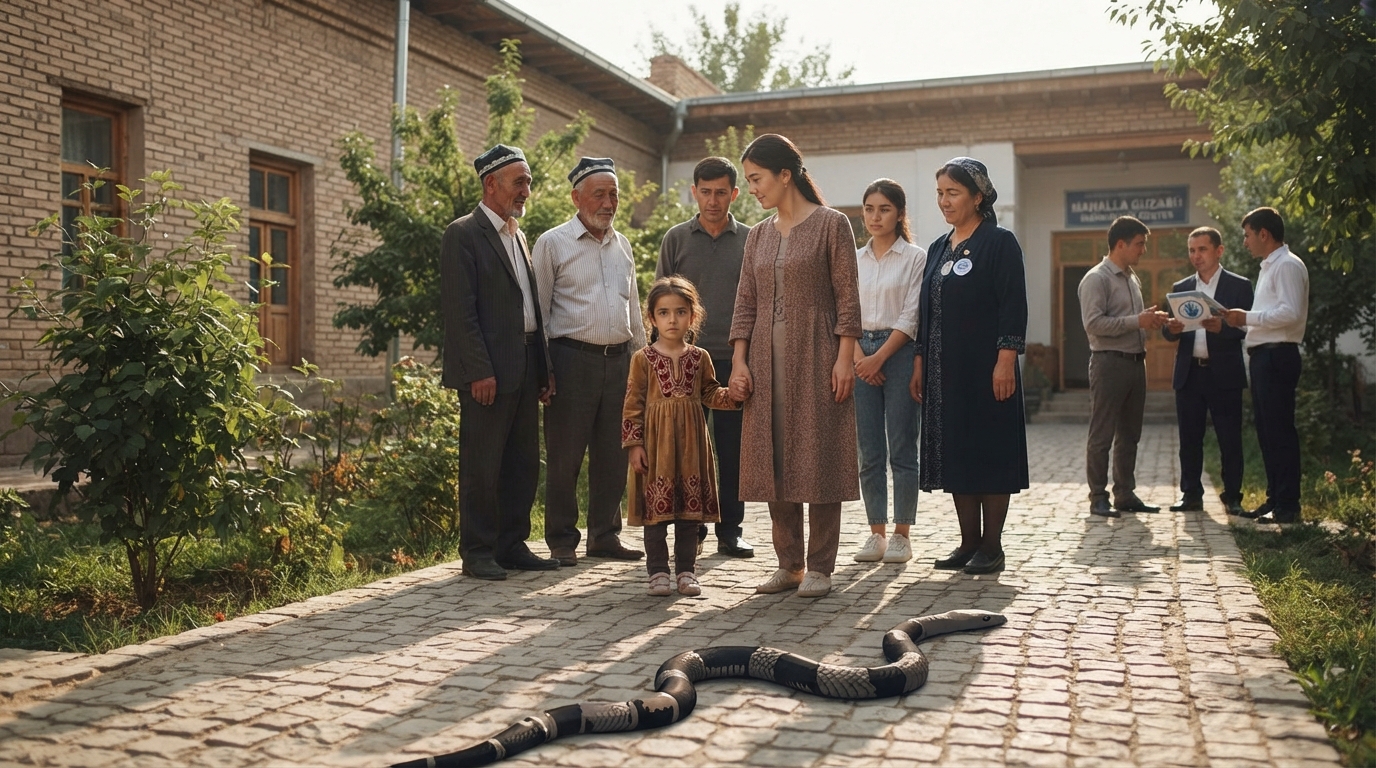
Where is the snake's head: punishment, indifference, and child protection...
Recently, news about an atrocity committed against a five-year-old girl shocked the entire country. The reactions voiced by social media and neighborhood activists did not go unanswered: a criminal case was initiated, the suspect was detained, and the Prosecutor General personally took control of the investigation. The Head of the Presidential Administration announced that the criminal would face the harshest punishment under the law, and all officials who failed to protect the innocent child would also be held accountable. The Ministry of Preschool and School Education began inspecting employees of all state kindergartens. The National Agency for Social Protection announced that the girl and her family would be relocated to another city, provided with housing and rehabilitation, the mother would be assisted with education and employment, and, if necessary, help would be provided to change their surname. For the heartbroken mother and the infant who has not yet come to understand herself, this is an opportunity to start a new life.
The Namangan event sharply brought to the fore a question that has been maturing in society for a long time. The Law "On Amendments and Additions to Certain Legislative Acts of the Republic of Uzbekistan in Connection with the Improvement of the System for Protecting Children from All Forms of Violence," adopted by the Legislative Chamber of the Oliy Majlis on September 30, 2026, and approved by the Senate on October 2, was signed by the President on October 14. The document introduces amendments to five codes and six laws. Its preamble notes that Uzbekistan has joined the Bogota Call to Action, become a member of the Global Alliance to End Violence Against Children, and approved the Strategy for Protecting Children from All Forms of Violence for 2026–2030.
The changes to the Criminal Code are the most discussed. The penalty for the rape of a person under fourteen years of age (Article 118, part four) and the satisfaction of sexual needs in an unnatural way against such a child (Article 119, part four) has been set at fifteen to twenty-five years or life imprisonment. Statute of limitations does not apply to prosecution for such crimes against minors. Conditional sentencing and mitigation of punishment were excluded for intentional crimes that resulted in the death of a child.
However, the value of the law is not only in the prison terms. According to the Criminal Procedure Code, in cases related to sexual violence, a minor victim and witness are assigned a lawyer at state expense. If the crime was committed by a parent or close relative, a representative of the guardianship and trusteeship body participates in all procedural actions. Confrontation between the child and the suspect is conducted only on the basis of a separate decision. An additional ground for terminating the employment contract with an education employee held liable for violence against a child was introduced into the Labor Code. The Code of Administrative Responsibility was supplemented with a new Article 189.3 for the production and distribution of information products prohibited from being distributed among children. This last norm is especially important for our topic, and we will return to it again.
Head of the Presidential Administration Saida Mirziyoyeva briefly and clearly expressed the spirit of the law:
"Violence against a young child can never be tolerated, and punishment must be inevitable and uncompromising... The safety of a young child cannot depend on conditions or situations."
Two and a half centuries ago, the Italian legal scholar Cesare Beccaria wrote in his work "On Crimes and Punishments" that what deters crime is not the cruelty of punishment, but its inevitability. A moderate but certain punishment has a stronger effect than a severe punishment that can be escaped. Here lies the deepest aspect of the new law. News of twenty-five years or life imprisonment satisfies society's thirst for justice. But the abolition of the statute of limitations and the non-consideration of mitigating circumstances leave the criminal with no hope that "years will pass, and it will be forgotten." This is now the inevitability of punishment.
At the same time, any punishment comes into play after the crime has been committed. It responds to the atrocity that occurred, but the child is already traumatized. To be frank, for now, we are cutting off the snake's tail. After each tragedy, punishment is tightened, society remains shaken for a week or two, then life returns to its track, and everything is forgotten until the next news. The snake with a cut tail does not die; it enters its hole and bides its time. Until we crush the snake's head, this cycle will continue.
Unfortunately, it is disheartening that reports of violence against children are frequently covered in the mass media, and such posts are increasing day by day on social networks. But there is an even more worrying situation. Series, staged videos, and "life stories" related to violence are increasingly appearing on social networks. There is a certain truth in the information space: the audience for such content is several times larger than that for good, educational content. And the algorithm delivers what is viewed more to even more people.
American researcher George Gerbner advanced the "cultivation theory" back in the 70s of the last century. According to it, scenes seen repeatedly on screen over a long period gradually change how a person imagines reality. Albert Bandura's experiments proved that children acquire behavior they see through imitation, especially if it remains unpunished. In psychology, this process is called desensitization, that is, a decrease in sensitivity. A terrible news item heard once shakes the heart. When heard for the tenth time, it becomes just "another news item." A person's sense of pain regarding an atrocity becomes dulled, and it begins to seem like a normal situation.
Criminologists James Wilson and George Kelling proposed the "broken windows" theory in 1982. If one broken window in a building is not replaced in time, soon the remaining windows will also be broken. Because those around come to the conclusion that "nobody cares here." It is the same in the information environment. Every video that turns sacred concepts such as honor, family, and kinship into a source of jokes, entertainment, or "hype" is one broken window in our moral wall. Article 189.3 in the new law is a legal step aimed at closing these windows. But we must openly admit: we watch this content ourselves, press "like", and share it. So, the problem is not only that someone is forcing it on us; the problem lies within ourselves as well.
Our Prophet (pbu) said: "He is not one of us who does not show mercy to our young and does not recognize the honor of our elders." It is not without reason that mercy to the young is mentioned first in this hadith. Nelson Mandela's thought that "There can be no keener revelation of a society's soul than the way in which it treats its children" repeats this very truth in the language of another culture. Crushing the snake's head begins from this moral foundation. In this regard, several practical directions can be specially emphasized. For example, in the Namangan event, it became known that the suspect was not an educator, but the manager of the kindergarten's warehouse. Therefore, every employee working in the same area as children, whether a guard, a cook, or a warehouse manager, must be thoroughly checked just like an educator.
Another aspect that needs to be taken into account is teaching the child the inviolability of their own body. The child should know simple rules in an age-appropriate language, such as "good and bad touch," "no one can order you to keep a secret from your parents." Violence often remains hidden for a long time because the child is afraid or does not understand what happened.
Since ancient times, we have had the saying "there is no stranger's child." It is the neighborhood, neighbors, school, and kindergarten community that must notice sharp changes in a child's behavior and not remain indifferent. The new law opened this path as well. Now, a person who applies regarding harassment and violence against women and children can request that a reply letter not be sent to them. This protects a neighbor or relative who reports domestic violence from extra danger.
When covering violence, whether it is the media or a blogger, they must adhere to information culture and media ethics. When covering such events, a journalist and blogger must not disclose the identity, place of residence, or details of the victim, and should present each report not as "entertainment," but as a "warning."
It is also very important to provide long-term assistance to a victim of violence.
The new law closed legal loopholes. The criminal can no longer hope for the passage of time, nor for mitigating circumstances, nor for a conditional sentence. This is a step that cuts off at least the body of the snake, if not the tail. But the snake's head is elsewhere. It is in indifference, in the silence of "what is it to me," in our eyes that get used to atrocity, in content that spreads because it is widely viewed. No code article alone can crush it. Only a society that once again makes the ancient wisdom "there is no stranger's child" a rule of our life can accomplish this.