

What happens if a mistrial is declared in Lindsay Clancy case?
Prosecutors could seek a new trial in the case of the US mother charged with murdering her three children in 2023.
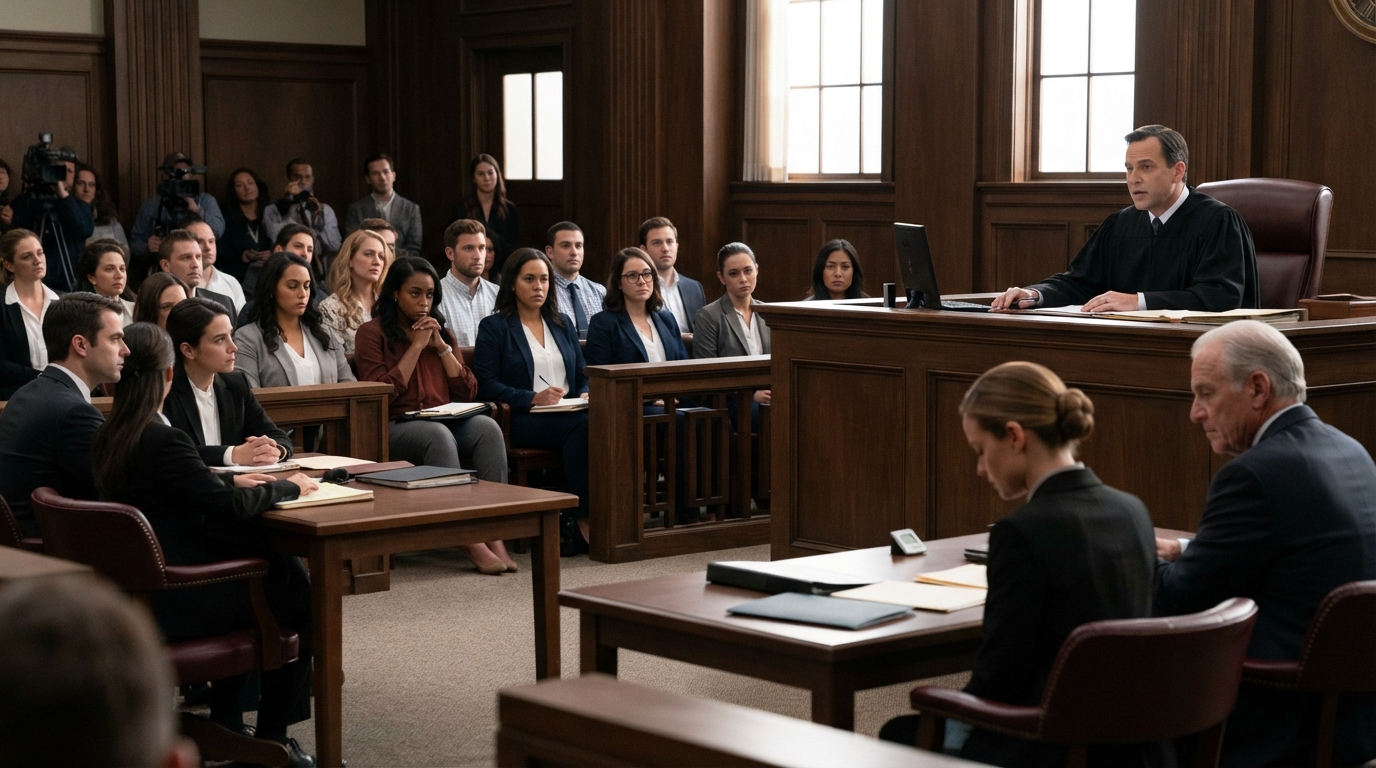
What happens if a mistrial is declared in the Lindsay Clancy case?
Clancy does not dispute that she killed her two sons and daughter in 2023.
After a week of weighing Lindsay Clancy’s fate, jurors were still deadlocked in the case of the US mother accused of murdering her three young children.
Judge William Sullivan has not yet formally declared a mistrial because Clancy’s lawyer, Kevin Reddington, requested an hour to file an emergency appeal.
Still, Sullivan’s signal that he intends to declare a mistrial raises a range of questions about what comes next.
Clancy, who was charged with three counts of first-degree murder, does not deny killing her children in 2023, but she pleaded not guilty. Her lawyers argued that she was suffering from postpartum psychosis and should not be held criminally responsible.
Prosecutors said she made a deliberate, calculated choice to kill them.
Under US law, a jury must unanimously decide the case "beyond a reasonable doubt". If it cannot, the judge may declare a mistrial, ending the trial without a verdict.
Jurors in Clancy’s trial have been unable to agree for days, and have told the judge three times that they cannot reach a unanimous decision.
Sullivan, who is presiding over the trial, had earlier urged them to keep deliberating until there was no possibility of a decision.
In a final attempt, he gave additional instructions, known in the state as a Tuey-Rodriguez charge, urging the panel to consider every viewpoint and making sure jurors were questioning and examining their own positions in the case.
The jury continued to say it could not reach agreement, prompting the judge to say he had no choice but to declare a mistrial.
That does not mean prosecutors have proved their case, and it does not mean the defendant is not guilty.
If a mistrial is officially declared on Friday, prosecutors could either refile the case and begin again with a new jury, or pursue a plea deal.
They could also choose to drop the charges entirely.
Not right away. If there is a mistrial, Clancy would remain held on the same murder charges in the mental health facility where she is currently being housed while lawyers consider their next move.
If a new trial is set, Clancy will stay in that facility until it starts, though her lawyers could request a review of her bail status, said Heather Cucolo, a New York Law School professor and expert in mental health law.
Even while a new trial is being arranged, prosecutors could still negotiate a plea agreement with Clancy’s team, Cucolo said.
In serious felony cases such as this, prosecutors often seek a retrial.
If they do, jury selection would happen again and a new trial would be scheduled with a fresh group of jurors.
How long it takes to set another trial would depend on factors such as the court calendar, any legal motions either side may file, and how long it takes to secure expert witnesses.
The six-week trial in Massachusetts drew major public attention, with crowds sometimes gathering outside.
"A case like this that obviously has been so high profile, and there is so much of an emotional response to this to the facts of this case, I think it's very likely that the prosecutor will ask for a retrial," Cucolo said.
That is uncertain, but the case has been complicated, with both sides relying heavily on expert testimony.
The names of the nine women and three men on the jury have not been released, and the judge prohibited any photographing or filming of them to preserve their anonymity.
But once the case is finished, a juror may choose whether to speak publicly about the case and their deliberations.
In other high-profile trials, jurors have sometimes come forward to discuss the case, even publishing books or giving media interviews.
So while the public still does not know what has happened behind closed doors, more may be revealed in the coming days or weeks.