

What foods are banned in school cafeterias?
With the start of the new school year, it is not only the classrooms that have come to life in the country's schools, but also the school cafeterias. However, educational institutions are far from being allowed to prepare and sell just any types of food products and dishes; a special list has been established for this purpose, based on sanitary rules, standards, and hygienic regulations. As for which specific products are included in this banned list, […]
Which foods are banned in school cafeterias?
With the start of the new school year, not only classrooms but also school cafeterias have come alive across the country. At the same time, educational institutions are not allowed to prepare and sell just any food and dishes: a special list has been approved for this purpose, compiled on the basis of sanitary rules, standards, and hygienic norms.
Dilfuza Khikmatova, head of a department at the Tashkent City Administration of Sanitary-Epidemiological Welfare and Public Health, spoke in detail about which specific products are included in this banned list.
Strict sanitary requirements apply in the school cafeterias of Tashkent and Uzbekistan, which prohibit the sale of harmful fast food, homemade dishes, canned food, and unpasteurized dairy products.
Dilfuza Khikmatova, head of a department at the Tashkent City Administration of the Sanitary-Epidemiological Committee, recalled the rules and sanitary standards (SanPiN No. 0017-21) regulating the organization of healthy nutrition in general education schools.
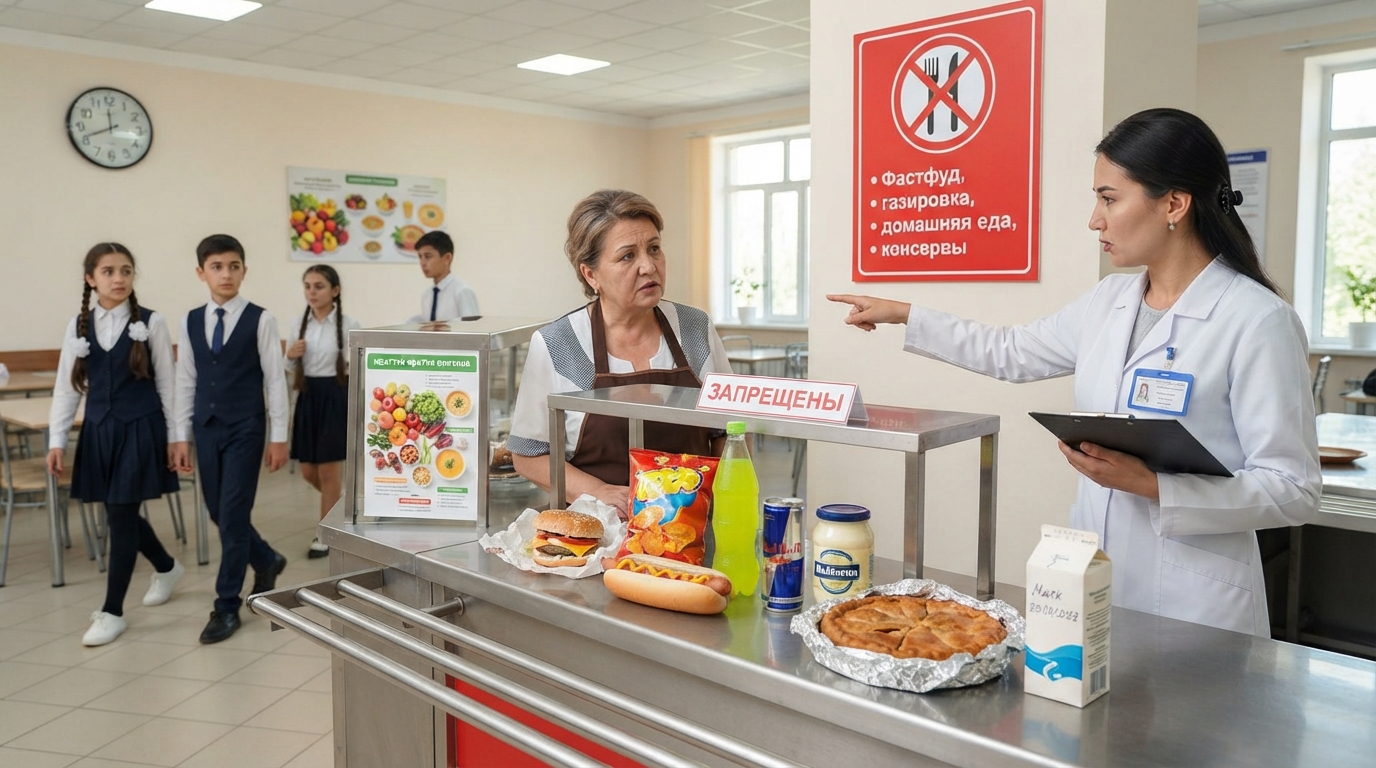
The following are subject to a complete ban on sale in school cafeterias:
Fast food and snacks: hamburgers, cheeseburgers, hot dogs, potato chips, rusks, kirieshki, Khrustyashki, and kurt.
Drinks: energy drinks, carbonated drinks, and sweet colored beverages.
Canned food and sausages: any canned products, dishes with the addition of canned food, as well as sausage products.
Sauces and harmful additives: mayonnaise, ketchup, as well as any products containing artificial colors, flavors, preservatives, and flavor enhancers.
Questionable and homemade products: home-cooked food, homemade cottage cheese and dairy products, unpasteurized milk, products with expiring dates, damaged packaging, or those lacking quality certificates.
Hazardous products: eggs with compromised integrity or risk of salmonella contamination, as well as products damaged by rodents and pests.
Restrictions on homemade food and events
The Sanitary-Epidemiological Committee urges parents to abandon the practice of bringing homemade treats — cakes, pastries, and other dishes — to school for birthdays or school holidays. The sale and bringing of homemade pastries and confectionery products into educational institutions is strictly prohibited by safety standards.
The department emphasized that such bans are related to concern for children's health. Fast food, chips, and soda contain too much fat and carbohydrates in the absence of protein, interfere with its absorption, and also increase the risks of developing obesity and other diseases in schoolchildren.