

What food items should you stock up on in case of an emergency?
Extreme weather may be changing the way we need to shop, with the UK government urging people to stock up on canned goods.
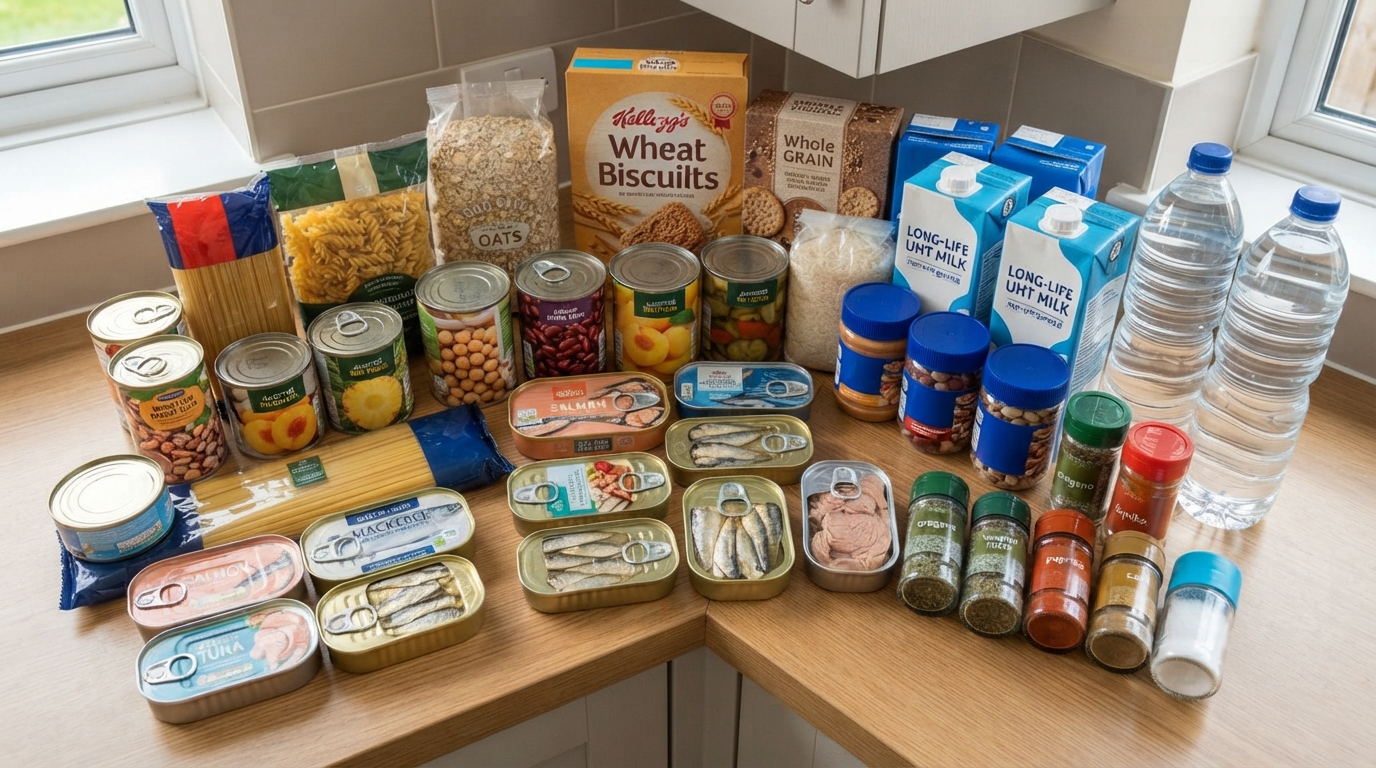
What foods should you keep on hand in an emergency?
Extreme weather could be altering the way we shop.
Earlier this month, the UK government advised people to include a few extra long-life items in their food basket, just in case the food supply chain is disrupted.
Environment Secretary Dame Angela Eagle told the Guardian that the powerful natural climate phenomenon El Niño would bring "more extreme storms in this country".
Climate change, together with cyber-attacks, disease outbreaks and conflicts, can all place pressure on the system that ultimately delivers food to our shops and homes.
Prof Richard Wilding, a supply chain strategy expert, tells me not to be "overly worried" because global shipping professionals are constantly adapting, but says people should be ready to buy different products if necessary.
"Things that were in supermarkets and seen as relatively abundant may all of a sudden be in shortage," he adds.
So how simple is it to stock up, and what should you avoid?
A key item for anyone wanting to build up supplies is tinned oily fish - including salmon, mackerel and brine
Senior nutrition scientist Dr Sammie Gill, from British Nutrition Foundation, says certain food groups should come first:
Complex carbohydrates such as wheat biscuits, wholegrain cereals, crackers and breads plus oats, rice and pasta
Proteins such as canned chickpeas, lentils, kidney beans, unsalted nuts, peanut butter and canned oily fish such as tuna, mackerel and sardines
Rebecca McManamon, a consultant dietitian, lists these essentials:
Tinned fruit, since you can drink the juice for extra fluids, vitamins and fibre
Pickled foods such as vegetables and eggs
Both experts also advise keeping long-life milk from the non-refridgerated aisle for protein, calcium and as a source of fluid
Gill says to check salt and sugar levels when buying tinned goods:
Avoid items tinned in brine or syrups
, water is the healthiest option
Avoid instant noodles and tinned soup because of their high salt content
Avoid breakfast cereals and snack bars with added sugars and limited nutrients
Choose tinned fish rather than tinned meats such as sausages, hot dogs or corned beef, as these are often processed and high in salt and saturated fat
Limit sweet treats such as biscuits and chocolates because they are high in sugar
And how can you make the basics taste better? McManamon says to stock up on nuts as a sweet alternative, but notes that they may have a shorter shelf life.
She also recommends keeping dried herbs, spices and salt available because, she says, tinned food can be a little bland.
McManamon says you should aim for about 1,500-2,500ml of fluid a day, whatever the weather.
That can obviously come from bottled water, but also from what she calls fluid rich tinned foods if supplies are limited.
For anyone wondering whether tinned food is as nutritious as fresh food, Dr Gill says it absolutely can be part of a healthy diet.
"There is little difference nutritionally between canned and fresh food in terms of macronutrients, like carbohydrates, protein, fats, and fibre, as well as fat-soluble vitamins, like vitamin A and E, and minerals," she says.
It may not be as good for other vitamins, such as B and C, because the canning process has been found to reduce vitamin levels, but Gill says these foods can still be a "useful source" of vitamins.