

We're saving £100 a month into pensions for our toddler and baby - here's why
A growing number of parents are opening retirement funds for their children.
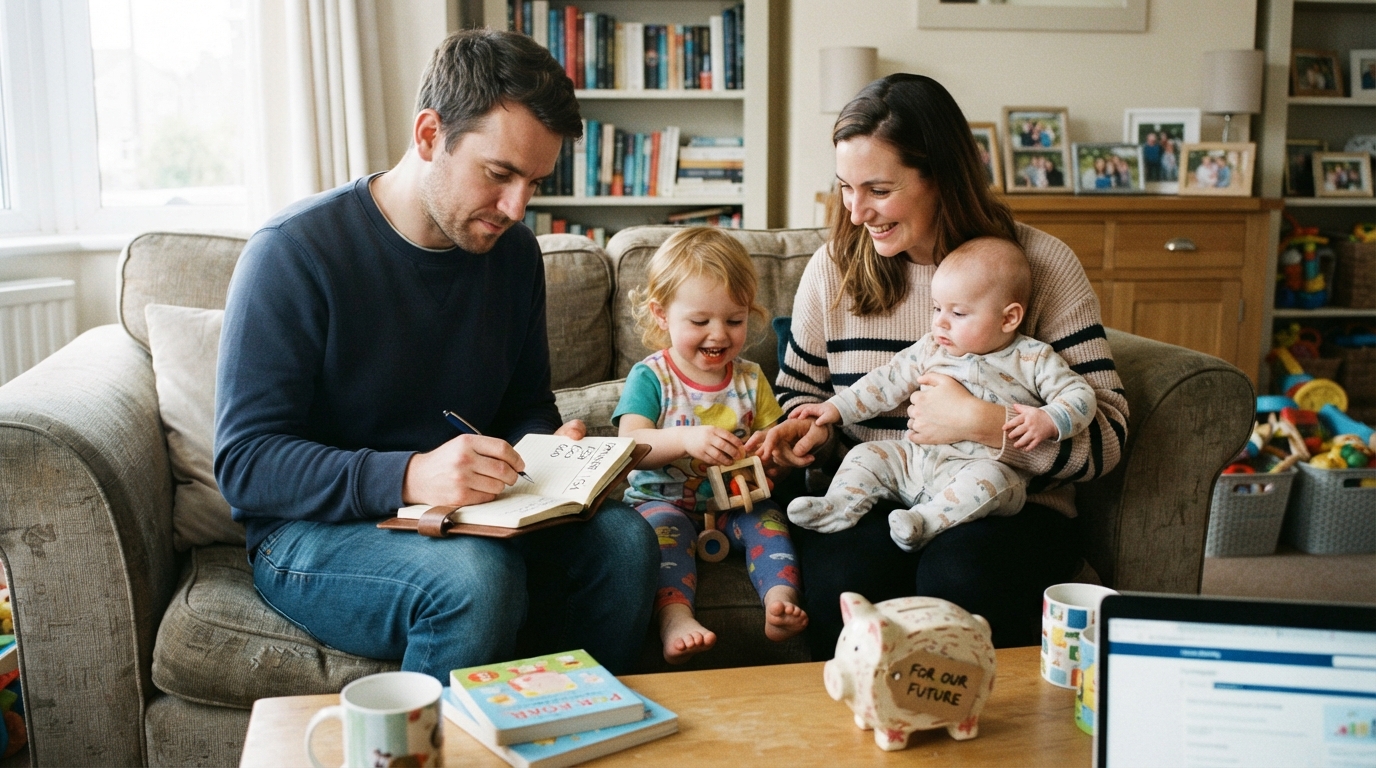
We’re putting £100 a month into pensions for our toddler and baby - here’s why
Richard Brain says opening pensions for his young children means making a few financial sacrifices now.
Richard and Caitlin Brain’s two children are only 20 months and five months old, but their mum and dad have already opened pensions for them.
The couple, who live in Swansea, south Wales, pay £50 a month into each child’s account. Under current UK private pension fund rules, the money won’t be available until they are 57.
That means the eldest will have to wait until 2082, and the youngest until 2083.
Even with that long wait, Richard, 30, says he and Caitlin, 28, are sure they are doing the right thing.
“Paying into their pensions means we can play a part in their future far beyond our own years. And the money has decades to grow.”
Richard’s financial knowledge comes from working for an investment firm. Caitlin is currently on maternity leave from her job with the local council.
He earns less than £90,000 a year, while she currently has no income because she has not yet returned to work after her statutory maternity pay of £194 a week ended.
Alongside the children’s pensions, Richard and Caitlin have also opened Junior ISA savings accounts for them, paying in £60 a month per child - money the children can access at 18.
The couple say this gives them the best of both worlds: the ISAs could help with university costs, starting a business or a house deposit, while the pensions are meant to offer financial security much later in life.
With a combined £220 a month going into their children’s funds, plus £200 into their own private pensions and savings, the couple say they now have to live more frugally than before.
“We’re not on the breadline, but investing this money does mean doing a little less,” says Richard. “We don’t eat out as often as we used to, which as foodies is a pain.
“And we don’t go as big for one another on birthdays and Christmas so that we can still do it for the kids.”
Pensions for children, also known as Junior self-invested personal pensions (SIPPs), were introduced in the UK in 2001. The maximum annual contribution is £2,880, which the government tops up with £720 tax relief to make £3,600 in total.
Industry figures show Junior SIPPs are becoming more popular.
Hargreaves Lansdown says it saw two and a half times as many accounts opened in the 12 months to April 2026.
Fidelity says the number of accounts it has seen has more than tripled since December 2023.
While giving children a pension head start is a strong motivation for some parents, how do the children themselves feel about not being able to touch the money for potentially 50 years or more?
Fifteen-year-old Hugo Thompson from Manchester appears unconcerned. His parents, who work in finance, have been paying the maximum into his Junior SIPP for the past 10 years.
“The money invested means perhaps I’ll be ahead when I’m older,” he says. “So I won’t have to put quite so much of my own money in! I want to retire earlier than the state pension age so this will all help.”
Hugo’s mother Annabel, who also works in finance, saves into a Junior ISA for him too, but says she still invests in her own pension and savings. “For me, Junior SIPPs should only be considered once you feel you have enough money of your own,” she says.
Hugo Thompson is happy to wait until he is at least 57 to access the pension fund.
For parents who can afford it, the money can grow significantly before the child can access it, says Jemma Slingo, a pensions specialist at Fidelity.
“Paying in £50 a month from birth, including tax relief, the family would contribute £10,800 over those 18 years. The pot could grow to around £135,000 by retirement. That’s the real power of starting early - relatively modest amounts can have an exceptionally long time to compound.”
It’s not only British parents who are opening long-term investments for their children.
In July this year, US President Donald Trump launched a new retirement investment scheme for children called Trump Accounts.
Families, friends and employers can contribute up to $5,000 (£3,800) a year per child. The difference in the UK is that children can access the funds from age 18, although withdrawals are subject to taxes and a possible 10% penalty if taken before the age of 59 and a half.
Wally Luckeydoo, a personal finance teacher at Smyrna High School in Tennessee, has opened Trump Accounts for his two children, aged four and three.
Wally Luckeydoo says he is giving his children a “financial head start”.
“My dad passed away when I was very young, and my mom did everything she could to provide for us, often with just the bare minimum,” says Wally.
“For much of my adult life, I have felt like I was trying to catch up financially, particularly because of significant student loan debt.
“I don’t necessarily think of this as specifically saving for my kids’ retirement. I think of it as giving them a head start and helping change the trajectory of our family financially.”