

'It could cost me £10k but I need the money now': Why Gen Z are opting out of pensions
A growing number of people are opting out of these schemes due to cost-of-living pressures.
'It could cost me £10k but I need the money now': Why Gen Z are opting out of pensions
Dr Hassan Nassar is determined to rejoin his pension as soon as he is able
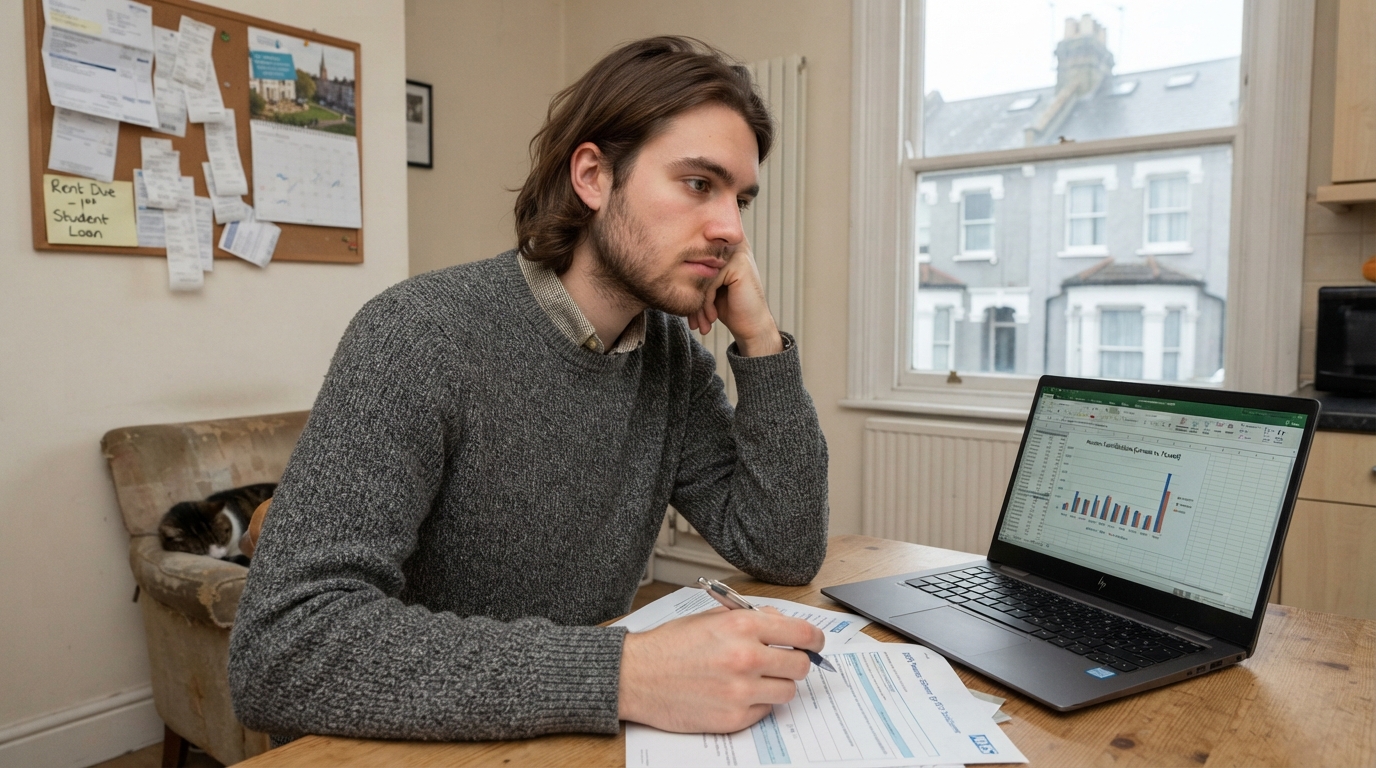
Until early September, Hassan Nassar, 26, was putting about £430 a month into his NHS workplace pension.
But the trainee GP, who works in the West Midlands, says he was "really cash strapped" and chose to stop saving for roughly "six to 12 months".
He needs the money to help care for a sick family member, save for his first home and meet rent and student loan repayments.
He also knows there is a price to opting out, estimating he could lose between "£5,000 and £10,000" in future retirement income because of the decades of compound interest he will miss by not saving now.
"People will say, you're silly, look at what you'll be missing out in the future," he tells the BBC. "But I need to look at what I'd be losing now if I didn't opt out."
But an increasing number of Gen Z and millennials are leaving these schemes because of cost-of-living pressures, and the government has warned they could be heading for lower private pension incomes than people retiring today.
That matters, because although most people in the UK will eventually receive a state pension, it only offers a minimum level of retirement income and many will depend on a private pension to top it up.
Hassan says he was contributing 10.7% of his gross earnings each month to his workplace pension, while the NHS added a substantial amount on top.
But unlike some employers, the NHS does not let staff lower their contributions when money is tight.
Even so, he says he is confident he will have enough to retire on after his "30-40" year career and is determined to opt back in to his pension as soon as he can.
According to the Department for Work and Pensions (DWP), around 22.6 million people, or 90% of those eligible for "automatic enrolment" pensions, are paying into one, while about 2.5 million are not.
However, Pensions Minister Torsten Bell told the BBC that "a rising number of young workers aren't saving, and overall there is a danger tomorrow's retirees are on track for lower private pension incomes than today's".
In the three months to December last year, 11.5% of eligible 22 to 29-year-olds who had recently started a job opted out of their pensions. That compares with 6.6% in the same period of 2020.
For 30 to 39-year-olds, the figure has risen from 7.4% to 12.7%.
Evie, 22, from Cornwall, says she opted out of joining the workplace pension at the London events company where she works.
A recent drama school graduate, she says she would have struggled to cover her expenses, including food, travel and the £800 she pays in rent.
Evie is aware she is missing out on retirement saving, but there are other things she needs money for that make it unrealistic right now.
"How can I save for a house, how can I save for a car and afford my outgoings? I don't want to just work day in, day out to live, I want to work to have a life."
April Leeson, from The Private Office, a chartered financial advice firm, says she would always advise people not to stop paying into their pensions if they can avoid it, even if that means cutting their contributions, which many employers allow.
That is partly because of the free employer contributions they would lose, but also the compound interest they would miss.
"The current minimum pension age is 57, so any money you save in your 20s will have at least 30 years to compound and grow.
"£100 saved now, compounded at 4% a year over 30 years, is going to be worth a lot more than £100 saved in 15 to 20 years' time."
She also urges younger people to plan ahead. "You really need to think of your future self and what that person will need to retire comfortably."
Kharlee, 47, a teacher from South East London, can certainly relate to that. She stopped her workplace pension contributions twice over the past five years for financial reasons.
Kharlee worries she won't have a comfortable retirement
And she thinks she missed out on saving about £5,000 into her pension pot.
She is in a better financial position now, but has recently become self-employed and is no longer in a private pension scheme, something she hopes to change.
"I would like to feel my pension is secure, and I don't feel like that. I worry I'm not going to be able to live comfortably at the age of retirement."