

"Wedding Invitation" – Malicious APK Files are Spreading on Telegram
In Uzbekistan, a large portion of cybercrimes is associated with malicious APK files. In this context, promises of various bonuses and prizes, wedding or holiday invitations, and generally any appeal based on curiosity serve as a trap.
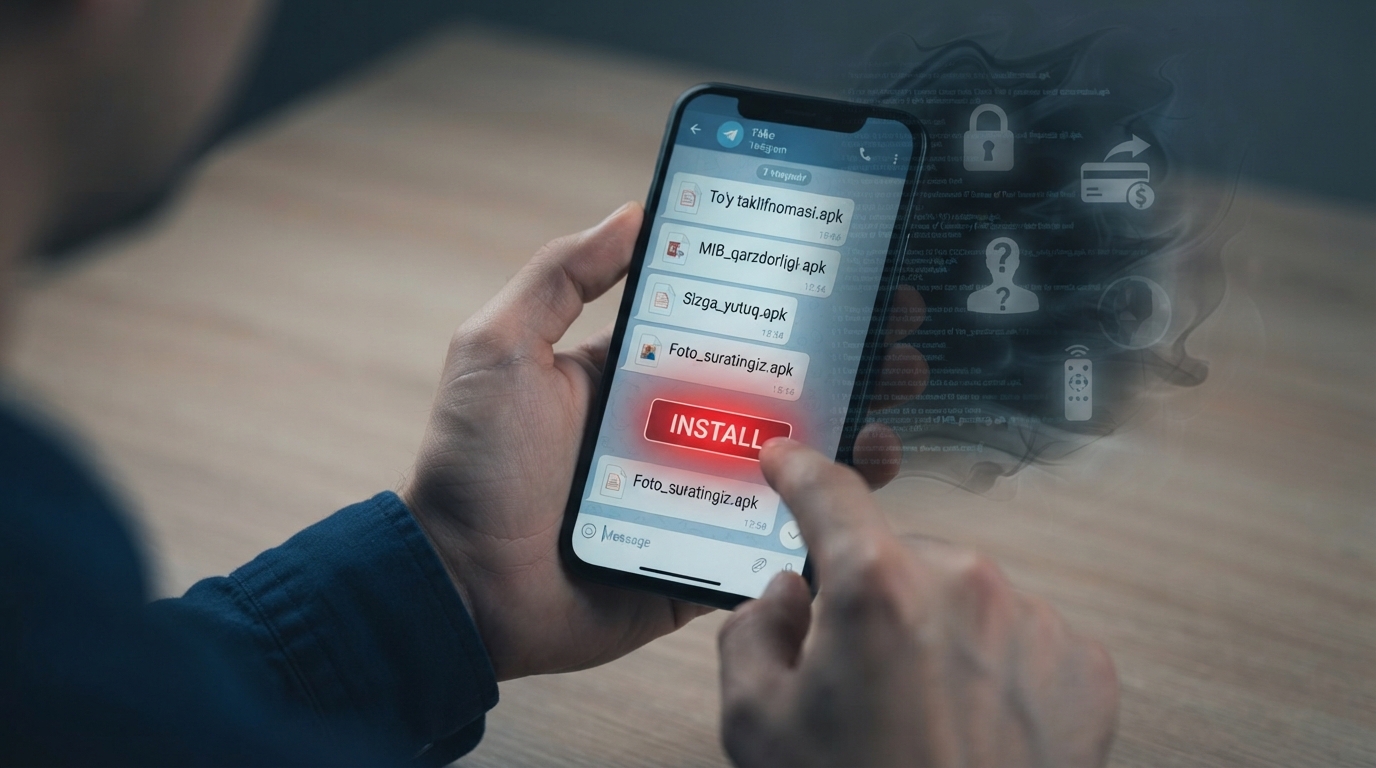
"Wedding Invitation" – Malicious APK files are on the rise on Telegram
The number of APK files under new names is increasing on Telegram. Opening such files or clicking on malicious links leads to serious consequences.
Malicious APK files rely on several psychological attacks that prompt users to open them. Exploiting curiosity, these types of malicious files can come in the form of a wedding or holiday invitation, a Bureau of Compulsory Enforcement (MIB) debt notice, and similar formats. Appearances such as "your photo has been leaked," "you have been summoned to court," and "you are being watched" are more common. They also appear under names like "you won a prize," "claim your bonus," and others.
APK files act as a "key" for cybercriminals to unlock your phone. Therefore, opening such files is equivalent to giving a burglar the key to your house and saying, "take whatever you want." Cybercriminals can commit theft precisely through the user's permission, that is, by opening the file.
The stolen items can be personal data, account or bank card control, and the funds within them.
Opening APK files or clicking on malicious links leads to serious consequences. This is because through this, a cybercriminal can obtain the following: personal data; unauthorized access to the account; remote control of the phone device; stealing money from financial applications on the phone; sending malicious files to the account owner's contacts on their behalf, and others.
If a suspicious application has been opened and installed on the phone device, it is recommended to take the following measures: