

We are not in danger of hunger.
USDA: By 2036, there will be no more people in Uzbekistan who lack food.
Hunger in Uzbekistan: Problem May End by 2036, but Dependence on Imports Will Remain
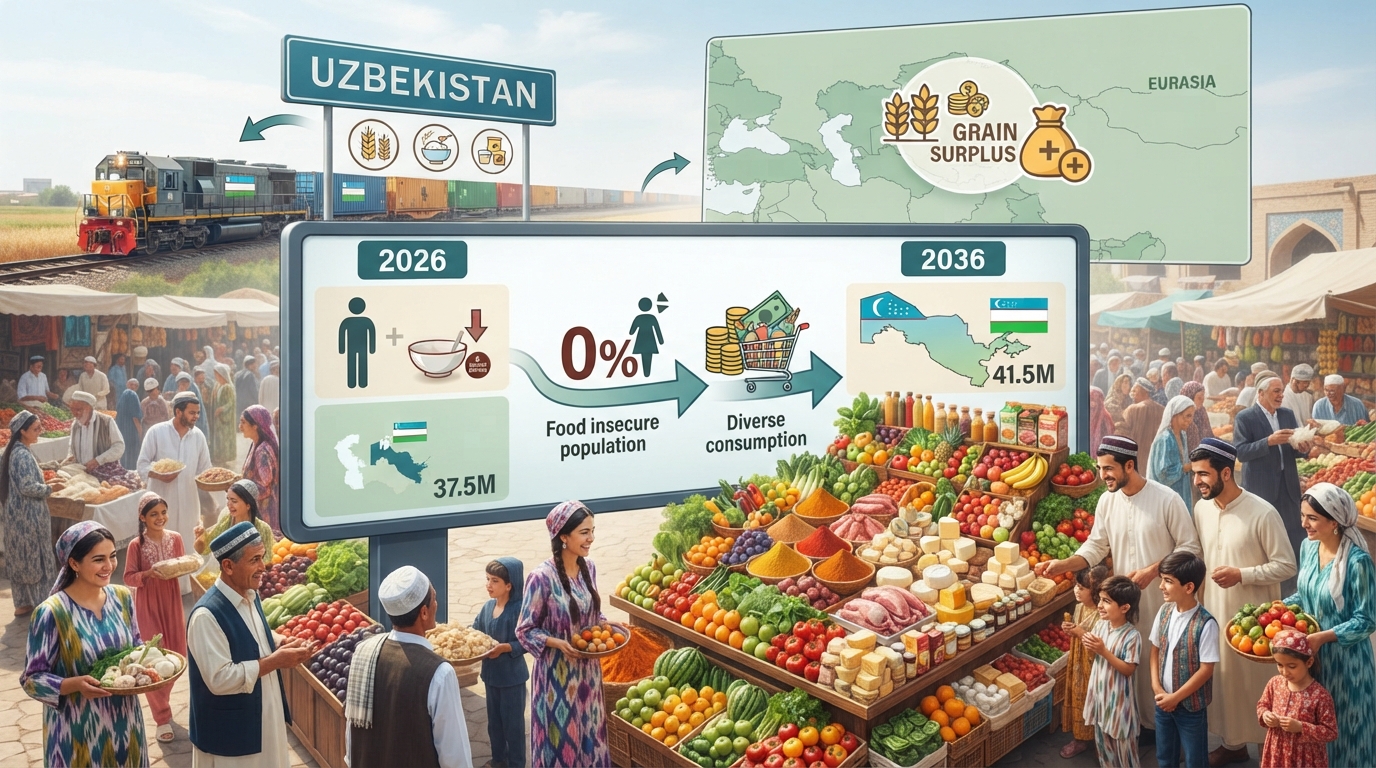
By 2036, Uzbekistan could completely eliminate food insecurity among its population, despite a projected population growth to 41.5 million. However, the country will likely remain dependent on imported foods for some products.
According to the new Global Food Assessment 2026–36 report from the United States Department of Agriculture (USDA), Uzbekistan could almost completely eliminate food insecurity in the next decade.
Uzbekistan performs significantly better than its neighbors. In 2026, the proportion of the population experiencing food insecurity here was 0.7%. For comparison, this figure is 3.5% in Kyrgyzstan, 3.8% in Turkmenistan, and 11% in Tajikistan.
By 2036, the proportion of the population experiencing food insecurity in Uzbekistan is projected to decrease to 0%. The USDA estimates that the per capita calorie deficit in Uzbekistan will decrease from 150 kcal in 2026 to 119 kcal by 2036.
Over the same period, the country's population will increase from 37.5 million to 41.5 million. However, this demographic growth will be accompanied by income growth. The USDA projects that real GDP per capita in Uzbekistan will increase from $3,081 in 2026 to $4,796 in 2036, representing an average annual growth rate of 4.5%.
**Uzbekistan will not achieve full food self-sufficiency**
Reducing food insecurity does not mean that Uzbekistan will completely abandon imports. The USDA notes that domestic production is not yet capable of fully satisfying demand for wheat, rice, and other grains. Furthermore, imports of fruits, vegetables, vegetable oils, and processed foods have increased in recent years.
Thus, Uzbekistan is becoming more food-secure, but remains a major consumer of imported food products and agricultural raw materials.
**Income growth will change consumption patterns in Uzbekistan**
In the former Soviet Union, including Uzbekistan, the main driver of increased food demand will not be demographic growth, but rather increased per capita consumption.
The USDA estimates that 78% of the increase in food demand in the region by 2036 will be driven by increased per capita consumption.
Along with population growth, incomes will also rise, leading to increased demand for higher-priced foods. Consumption will shift from basic calorie needs to higher-priced products and processed foods. This opens new opportunities for the development of the food industry, retail, and importers.
The USDA expects that in the 83 countries included in the study, food demand will grow by nearly 25% by 2036. About 60% of this growth will be due to population growth, and the remaining 40% will be due to increased per capita consumption.
**Former Soviet Union to Increase Grain Surplus**
The USDA forecasts that the former Soviet republics will generally maintain a grain surplus. In 2026, it will be approximately 23.5 million tons, and by 2036, it could increase to 25.6 million tons. Despite growing grain demand in the region, production will grow even faster.
This fundamentally distinguishes the post-Soviet region from most other developing regions. In Asia, the deficit between demand and domestic grain production, according to the USDA, will increase from 151.1 million to 208.4 million tons. In sub-Saharan Africa, the need for additional grain will increase from 77.3 million to 119.6 million tons.
Thus, the growth in domestic food demand in Uzbekistan will occur against the backdrop of a relatively favorable grain supply situation at the regional level.