

Water from air. Russian engineers tested a new development in the Uzbek heat.
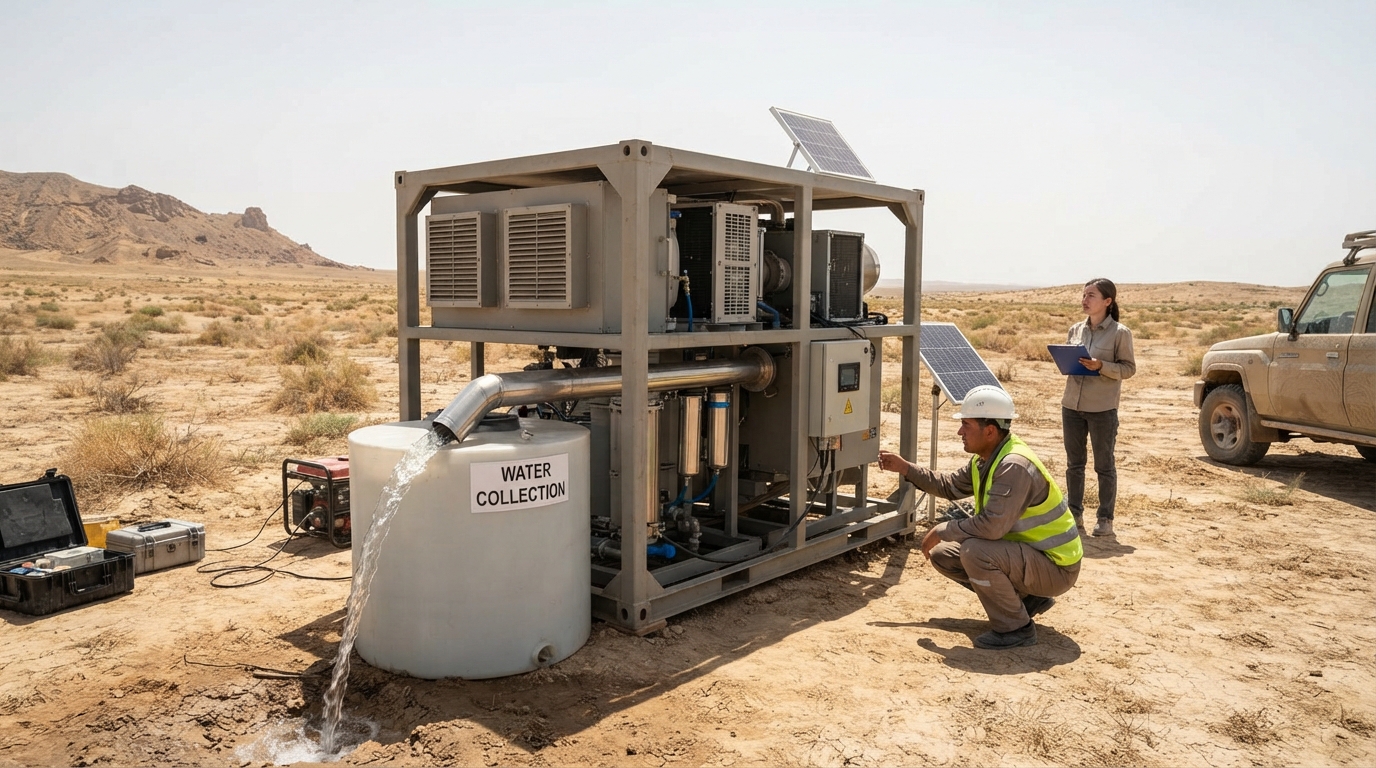
Russian engineers have successfully tested a new system capable of producing up to 1,000 liters of drinking water per day from atmospheric air in the extreme heat of Uzbekistan.
According to the Tashkent-based news agency Podrobno.uz, this development, dubbed "Water in the Desert," was tested in the arid climate of Uzbekistan and then in India. The system is designed to operate in a wide temperature range from 12 to 60 degrees Celsius. According to the developers, one basic system is sufficient to supply water to a small community, a tourist campsite, an industrial facility, or a remote work camp.
Tests conducted in Uzbekistan in 2024 were particularly significant. They verified the system's effectiveness in high temperatures and low humidity, which significantly complicate the extraction of water from air. Testing continued in India in 2025.
The system operates as follows: atmospheric air passes through several stages of preparation and is then directed to cooling plates. When cooled, the water vapor in the air condenses and turns into water.
The exhaust air then passes through a recuperator, which recovers some of the cold and transfers it to the new air flow. The developers note that this design reduces energy consumption to 0.4-0.7 kilowatt-hours per liter of produced water.
A key advantage of the system is its ability to operate even at low humidity levels, starting from 5 grams per cubic meter of air. This makes it effective in arid regions of Central Asia, the Middle East, and Africa, where other systems fail. By comparison, direct-expansion systems, operating like air conditioners, typically require at least 8-10 grams of moisture per cubic meter.
It was previously reported that Central Asia faced unprecedented water shortages due to a five-year drought. The period from 2021 to 2025 was the warmest for the region since 1981, and soil moisture reached historic lows.