

Uzbekistan’s Namangan, Belarus’ Grodno sign interregional cooperation memorandum
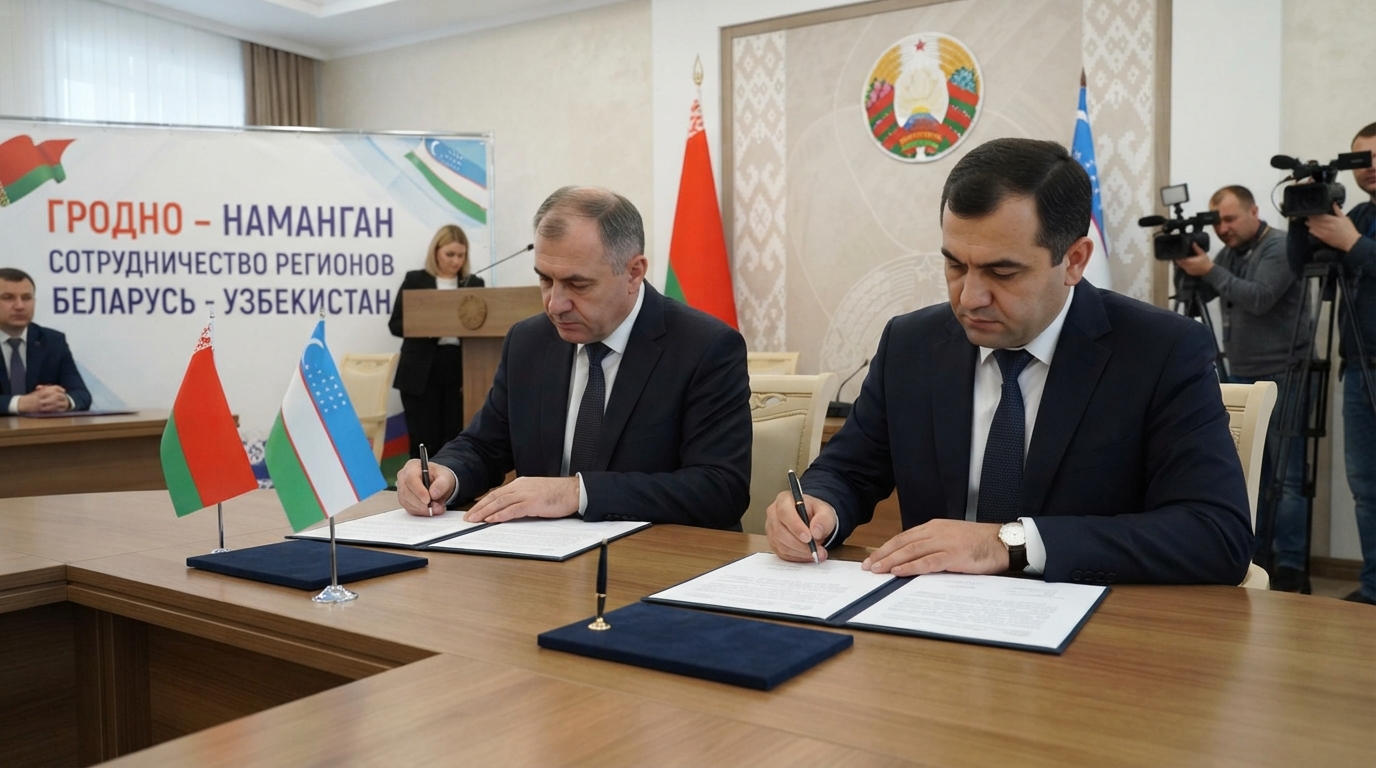
Namangan, a region in Uzbekistan, and Grodno, a region in Belarus, have formalized an agreement to foster interregional cooperation across various sectors, including trade, economics, science, technology, socio-cultural aspects, and humanitarian efforts, as reported by BelTA.
This memorandum was signed during a visit by a Namangan delegation to Grodno. During the visit, Yuri Karayev, Chairman of the Grodno Regional Executive Committee, met with Shavkat Abdurazakov, Governor of the Namangan region, to delineate future collaborative endeavors between their respective regions.
Discussions primarily centered on enhancing industrial and agricultural collaboration, establishing joint ventures, attracting investments, and integrating new technologies. The potential for companies from both regions to work together in penetrating third-country markets was also explored. Karayev highlighted that the Grodno region contributes over 11% of Belarus's industrial output and holds strong positions in agriculture, food exports, and investment, with its businesses engaging in trade with 125 countries.
Karayev emphasized the urgency of regional-level action, stating, "The time has come to act at the regional level, specifically to collaborate in industrial and agricultural cooperation, establish joint ventures, invest in technology, and jointly establish a foothold in third-country markets."
Labor migration was also identified as a prospective area for bilateral cooperation. Agriculture featured prominently in the discussions, with Abdurazakov suggesting that Belarus's agricultural resources could serve as a foundation for joint livestock farming ventures.
Abdurazakov remarked, "The Republic of Belarus is very interesting to us because it has rich soil and can open up opportunities for joint ventures in livestock farming. The global challenge is currently to ensure food security."
Trade in food products was another topic of discussion. Namangan currently imports Belarusian food and other goods, and the Uzbek side expressed a desire to increase the presence of Belarusian products in its regional market. Specific investment figures, potential joint venture participants, or implementation timelines were not disclosed.
The textile industry was identified as another potential area for industrial cooperation. Namangan possesses a well-established textile sector, and its regional administration sees opportunities for partnerships with Belarusian manufacturers in this field. Tourism was also recognized as an area where Namangan and Grodno could forge closer ties.
Beyond commercial activities, the memorandum establishes a framework for scientific, technical, socio-cultural, and humanitarian relations between the two regions. Following the talks, both sides committed to moving forward with the implementation of the identified areas. Abdurazakov confirmed that agreements had been reached on several cooperation areas and that efforts would be made to execute them.
As part of the Namangan delegation's visit to Belarus, Uzbek representatives are also scheduled to attend the fifth national Batskava Bulka festival in Svisloch.