

Uzbekistanis will have to obtain an electronic authorization to travel to Kazakhstan
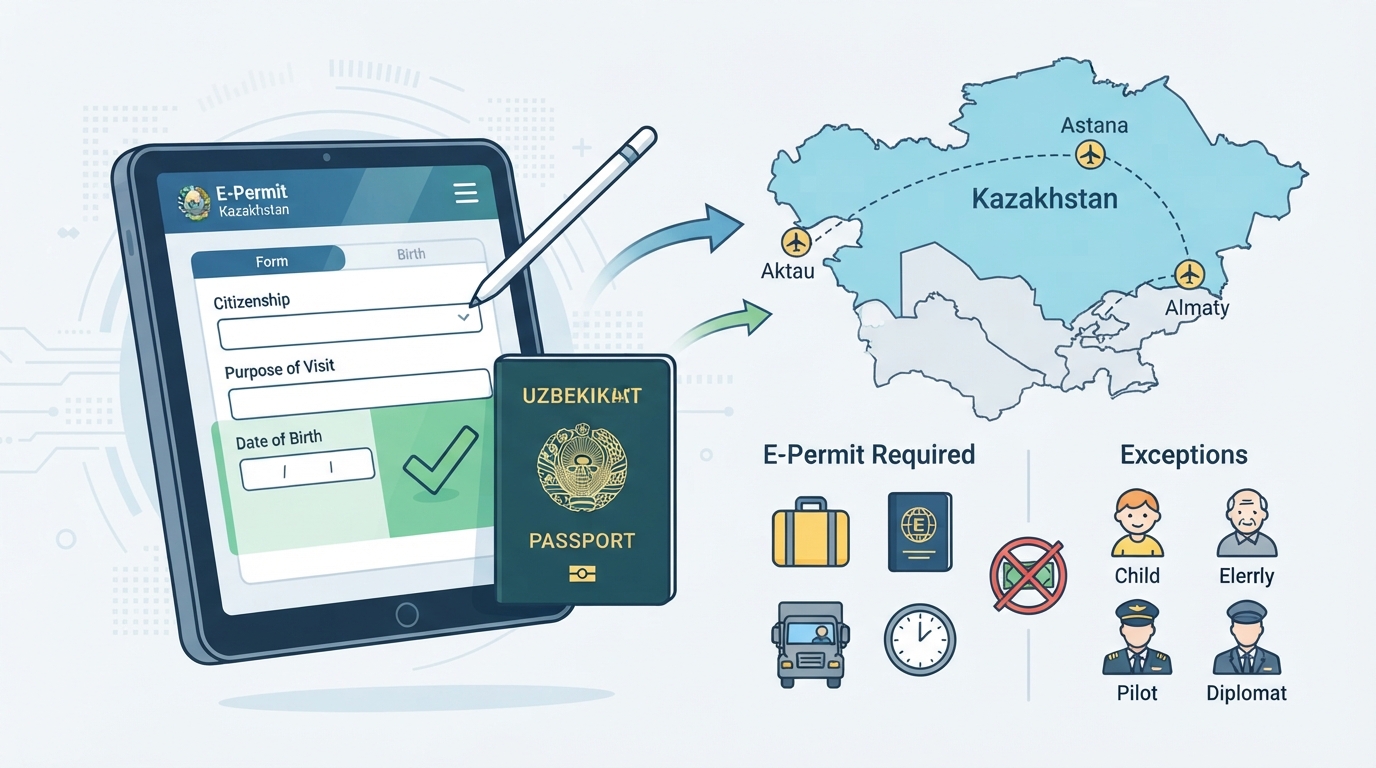
Uzbekistanis will have to obtain an electronic authorization for travel to Kazakhstan
Foreigners, including citizens of Uzbekistan, will be required to obtain an electronic authorization to enter Kazakhstan. The Government of Kazakhstan has approved the procedure for its issuance and set the cost of the document at zero. Previously, the country's Ministry of Internal Affairs proposed charging a fee for issuing such authorizations.
The new rules will be implemented in stages, starting in November 2026. At the first stage, they will come into effect at the Aktau International Airport and at selected road checkpoints. From January 1, 2027, the system will be extended to the airports of Astana and Almaty, and from March 1 — to the remaining checkpoints.
In the first few months, the absence of an authorization will not be grounds for denial of entry. Checkpoint staff will warn travelers of the need to obtain the document. However, from July 1, 2027, its presence will become mandatory, and the lack of an authorization will allow denying a foreigner entry into the country.
An application must be submitted through the digital platform no later than 72 hours before the planned trip. The requirement applies to citizens of countries with which Kazakhstan has concluded agreements on visa-free travel, as well as to member states of the Eurasian Economic Union.
At the same time, exceptions are provided. An authorization will not be required for citizens of visa-free countries under 16 and over 65 years old, drivers of international cargo trucks and buses, crew members of aircraft and water vessels, train crews, as well as certain categories of diplomats and official delegations. Exceptions are also provided for a number of other categories of foreigners.
Earlier, the Ministry of Internal Affairs of Kazakhstan submitted a draft law for public discussion on the "Open NPAs" portal, which proposed levying a state fee for issuing the ETA. The funds received were planned to be allocated to maintaining the digital infrastructure and strengthening personal data protection.
However, following public consultations and interdepartmental coordination, it was decided to abandon the fees in order not to create additional financial barriers for tourists, business trips, and family ties between neighboring states.