

Uzbekistan will borrow $200 million from the ADB to improve electricity supply
Within the framework of the program, 60 substations will be modernized, electricity losses will be reduced, and the opportunity to connect at least 3.3 GW of renewable energy capacity to the grid will be created.
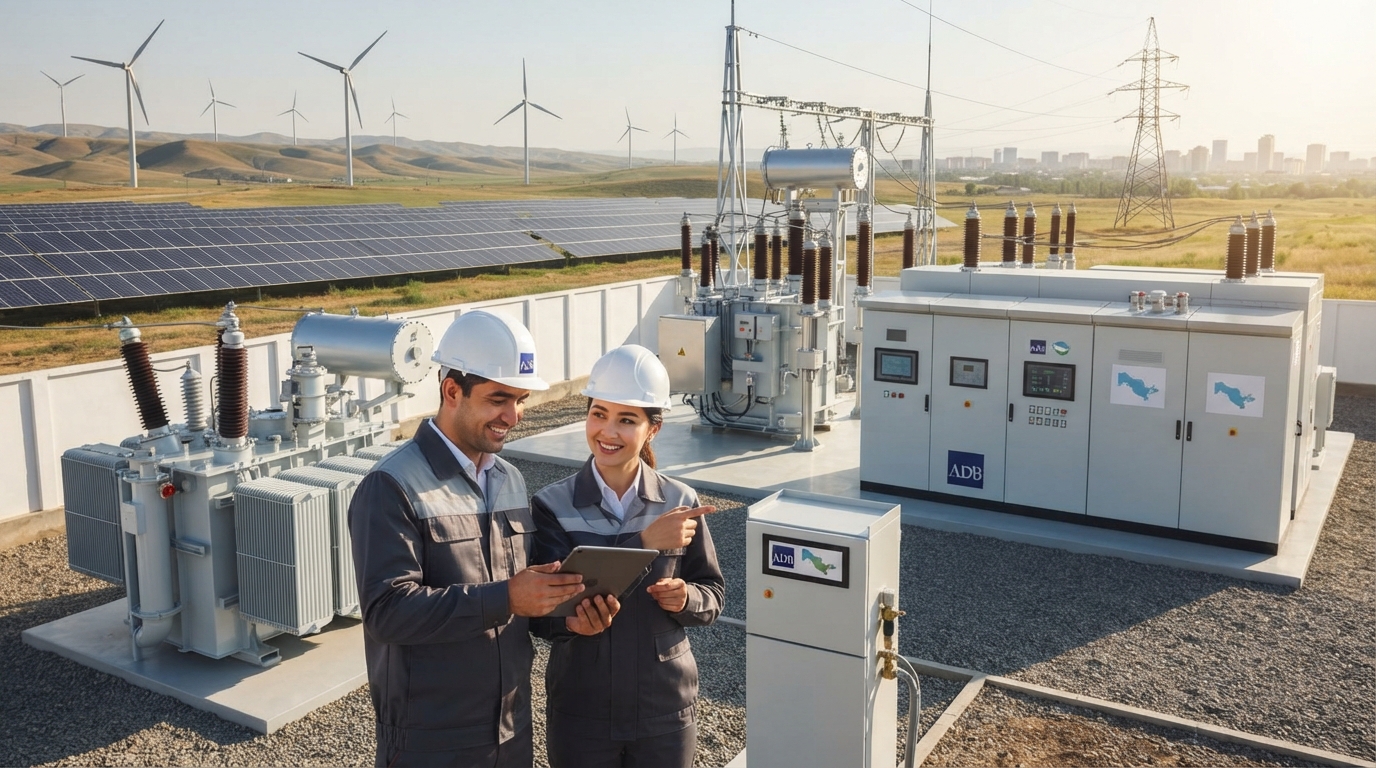
Uzbekistan to borrow $200 million from ADB to improve electricity supply
The Asian Development Bank will provide a $200 million loan to modernize the electricity distribution system in Uzbekistan.
The loan agreement was signed on October 15 in Bangkok, Thailand, by ADB President Masato Kanda and Deputy Prime Minister - Minister of Economy and Finance of Uzbekistan Jamshid Kuchkarov.
Under the program, 60 strategically important power distribution substations across the country will be reconstructed and modernized. Digital systems will also be introduced to improve grid management.
According to the ADB, economic growth, urban expansion, and increasing demand for electricity in Uzbekistan are putting an additional burden on the power grids. Aging infrastructure, electricity losses, and equipment overloads are affecting the reliability of the power supply. This situation also makes it difficult to connect new renewable energy capacities to the grid.
The program is expected to reduce electricity losses, decrease overload on transformers, and increase the stability of the power supply. It will also create conditions for connecting renewable energy sources with a capacity of at least 3.3 GW to the power grid. Greenhouse gas emissions are planned to be reduced by approximately 23 thousand tons of carbon dioxide equivalent per year.
The project is also aimed at enhancing the grid operation and management capacity of "National Electric Grids of Uzbekistan" JSC. Developing the technical skills of personnel, strengthening governance and financial control systems, capacity building, and expanding the participation of women in the energy sector are also among the tasks of the program.
According to the ADB, this is the bank's first program in the energy sector implemented under a mutual reliance mechanism with the World Bank. It is also the first results-based loan program implemented in Uzbekistan's energy sector.
This mechanism allows the ADB and the World Bank to rely on each other's comprehensive assessment results and project implementation procedures. This serves to reduce duplication of effort and transaction-related costs.