

Uzbekistan prepares legal framework for Islamic bonds as Islamic banking takes shape
Uzbekistan is moving from establishing a legal framework for Islamic finance to introducing new financial products, with a 2026–2030 roadmap setting out 39 measures across five priority areas, Central Bank Chairman Timur Ishmetov said at an international Islamic finance forum in Samarkand.
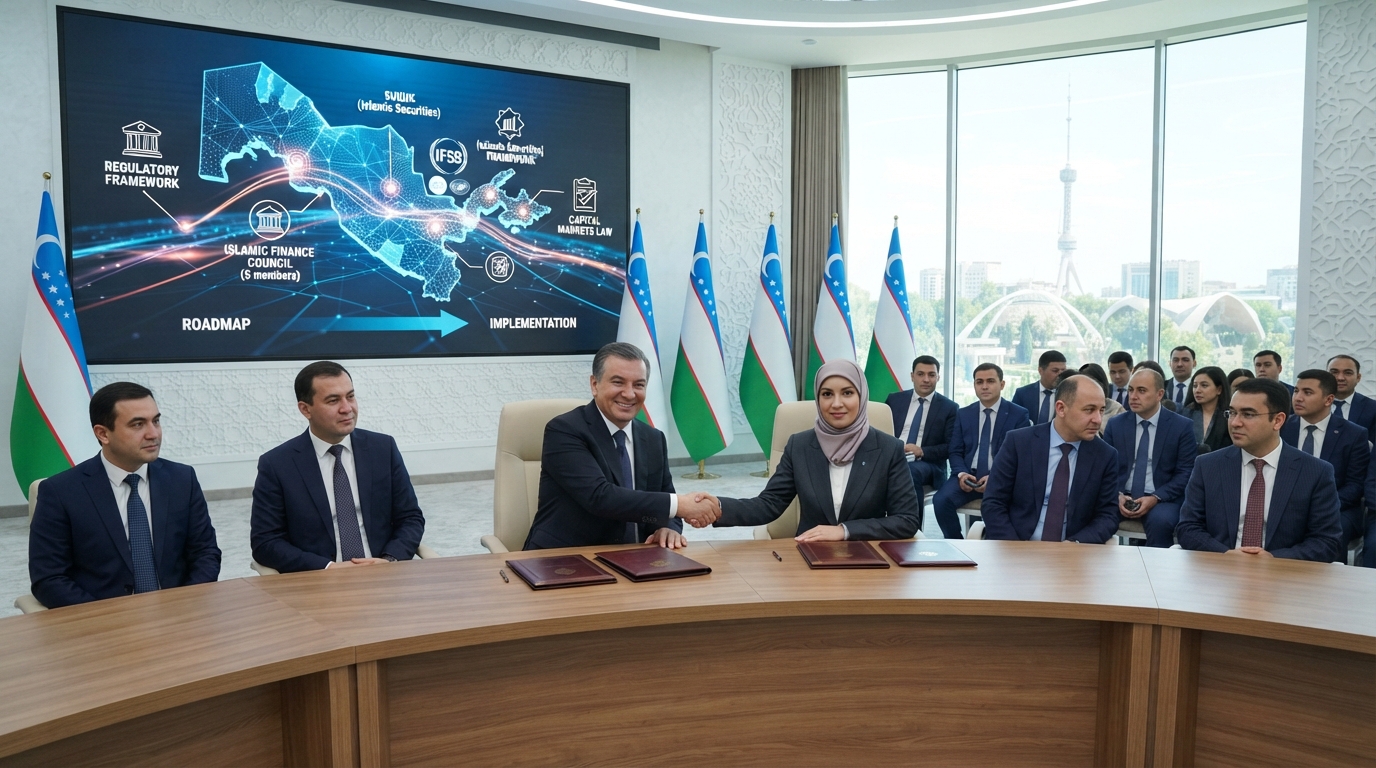
Uzbekistan is laying the legal groundwork for Islamic bonds as Islamic banking begins to take shape
The roadmap includes legislative changes, specialist training, financial literacy, international cooperation and the infrastructure required to support Islamic banking. Its rollout is expected to build on the experience accumulated by nonbank financial institutions while also opening the market to new Islamic banking services.
Eleven microfinance organizations in Uzbekistan are already providing Islamic financial products, including murabaha, ijara, mudaraba and musharaka. Ishmetov said that developing the sector through nonbank institutions has enabled the market to test these instruments and gain practical experience in using them.
A major milestone was reached in 2026, when Uzbekistan passed a law introducing Islamic banking. The law creates a legal foundation for setting up full-scale Islamic banks and dedicated Islamic banking units inside conventional banks.
The Central Bank has also put in place a two-tier governance model for Islamic finance and created a five-member Islamic Finance Council. The council is meant to help ensure compliance with relevant standards, improve decision-making and strengthen risk management.
The legal framework also includes tax-neutrality mechanisms intended to prevent Islamic financial transactions from being treated differently for tax purposes than conventional transactions simply because of structural differences.
The next step is to create a legal framework for Islamic securities, including sukuk, which are structured to comply with Islamic financial principles. The government has prepared a revised draft of the Capital Markets Law with a separate chapter on sukuk. If approved, it would establish the legal basis for issuing sovereign and corporate sukuk, Ishmetov said.
Uzbekistan is also bringing its regulatory framework into line with international Islamic finance standards. The Central Bank joined the Islamic Financial Services Board (IFSB) in 2025 and the Accounting and Auditing Organization for Islamic Financial Institutions (AAOIFI) in 2026. Membership in both organizations is expected to help the country adapt international standards and established practices to its domestic market.
Ishmetov said further progress would depend on coordination among government agencies, international financial institutions, academic experts and market participants. Possible partners include the Islamic Development Bank, the Asian Development Bank, the International Finance Corporation and AAOIFI.
Cooperation with these institutions could help support professional training, the introduction of new financial instruments and the development of practical solutions for the sector. The Central Bank’s immediate priorities are to implement the roadmap on time, coordinate the organizations responsible for its measures and monitor progress regularly.