

Uzbekistan launches new National Curriculum Framework for 7mn learners
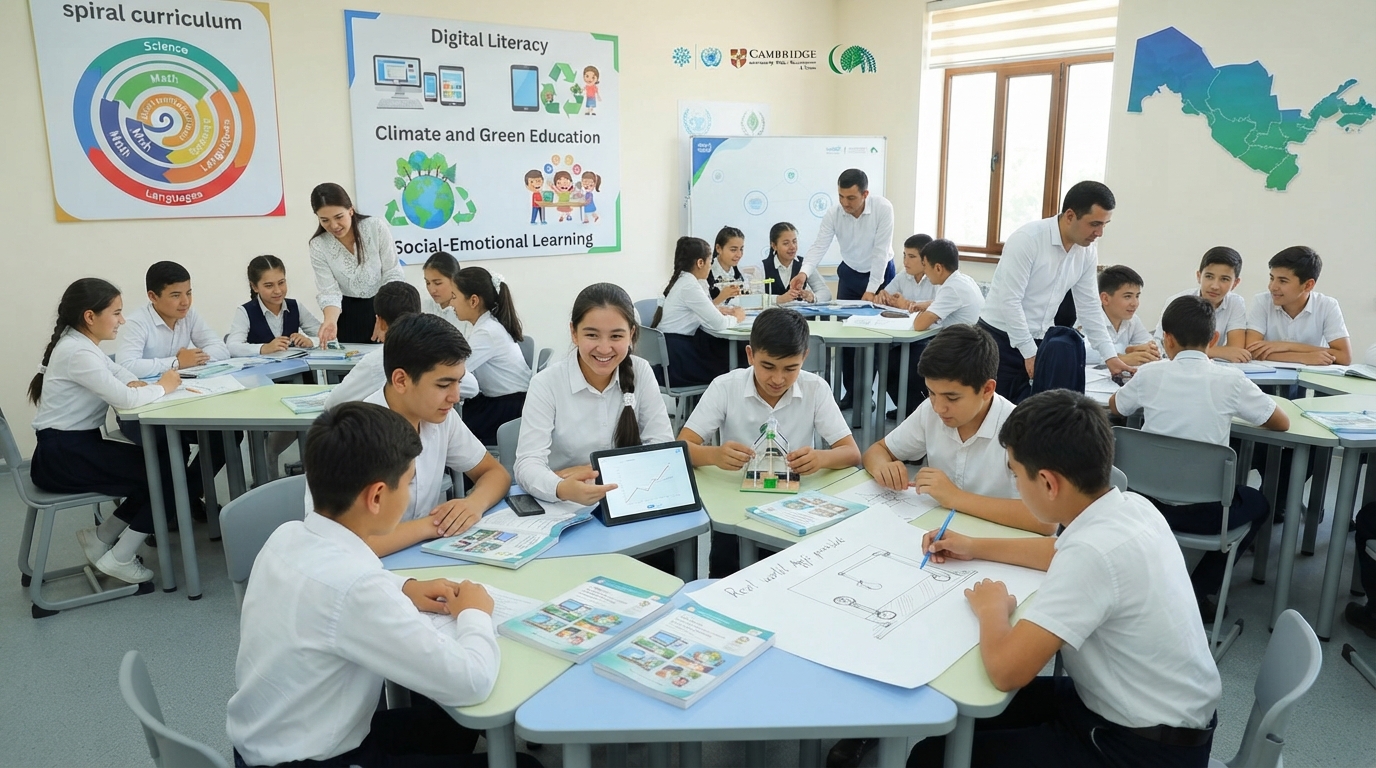
Uzbekistan's Ministry of Preschool and School Education has unveiled a new National Curriculum Framework, a significant educational overhaul aimed at enhancing learning outcomes, bolstering competency-based education, and aligning the nation's school system more closely with global benchmarks. This reform is projected to impact approximately 7 million students.
The development of this framework received backing from UNICEF through the SmartED Project, which was financed by the Islamic Development Bank, the Arab Coordination Group, and the Global Partnership on Education. The project was executed collaboratively with Cambridge University Press and Assessment.
The updated framework establishes explicit learning objectives for all students and seeks to elevate achievement across primary, lower secondary, and upper secondary education. It also endeavors to forge educational pathways that can yield results comparable to internationally recognized Advanced Level (A Level) standards.
The framework's creation spanned nearly two years, involving 147 national and 30 international specialists, and encompassed over 260 working meetings and consultations. Notably, this marks the first instance in Uzbekistan's curriculum review history where every subject team directly collaborated with international subject experts throughout the revision process. These experts engaged with national teams on a weekly basis across all subjects and grades, making this a more extensive co-creation effort than previous curriculum reforms.
Adopting a competency-based approach, the revised curriculum is guided by principles of inclusion and equity. It integrates Universal Design for Learning, a methodology designed to make educational content more accessible to students with diverse learning needs, including those with disabilities and high-achieving students.
Furthermore, the framework introduces a spiral curriculum design, enabling students to progressively build knowledge and skills as they advance through grade levels. This design aims to strengthen progression between grades, improve inter-subject connections, and place a greater emphasis on practical, real-world applications.
New curriculum content will also prioritize digital literacy, climate and green education, and social and emotional competencies, reflecting both the evolving demands on students and Uzbekistan's sustainability objectives.
Sherzod Karimov, First Deputy Minister of Preschool and School Education, stated that this curriculum reform is part of a broader transformation of the education system, which includes modifications to assessment, teaching practices, textbooks, and learning materials. New guidelines for teachers and school leaders will promote effective classroom practices, formative assessment, inclusion, gender equality, and higher expectations for learners.
Regina Castillo, UNICEF Representative in Uzbekistan, characterized the reform as a national undertaking that unites government institutions, national experts, and teachers with international expertise. She noted that the new framework provides a shared vision and a common direction for various education reforms and investments.
Steve King, Head of Education Reform at Cambridge University Press and Assessment, indicated that the process was spearheaded by the Republican Education Centre and subject working groups, with Cambridge and UNICEF contributing international research, evidence, and experience.
Upon full implementation, the reform is anticipated to benefit approximately 7 million learners across Uzbekistan, fostering their cognitive, social, and emotional development and preparing them for a rapidly changing world and evolving labor market demands.
Since gaining independence, Uzbekistan's school network has expanded significantly, reaching 11,118 general secondary education institutions at the start of the 2025/26 academic year, an increase from 8,557 in 1991/92.
Uzbekistan also plans to establish a regional preschool education center in Tashkent, which will focus on preschool education research, teacher training, and international cooperation. This institution is expected to be developed under the auspices of UNESCO.