

Uzbekistan, Kazakhstan and Azerbaijan can influence the formation of a new international order - media
It is noted that Uzbekistan, Kazakhstan, and Azerbaijan have significant influence due to their geographical location, energy resources, and infrastructure.
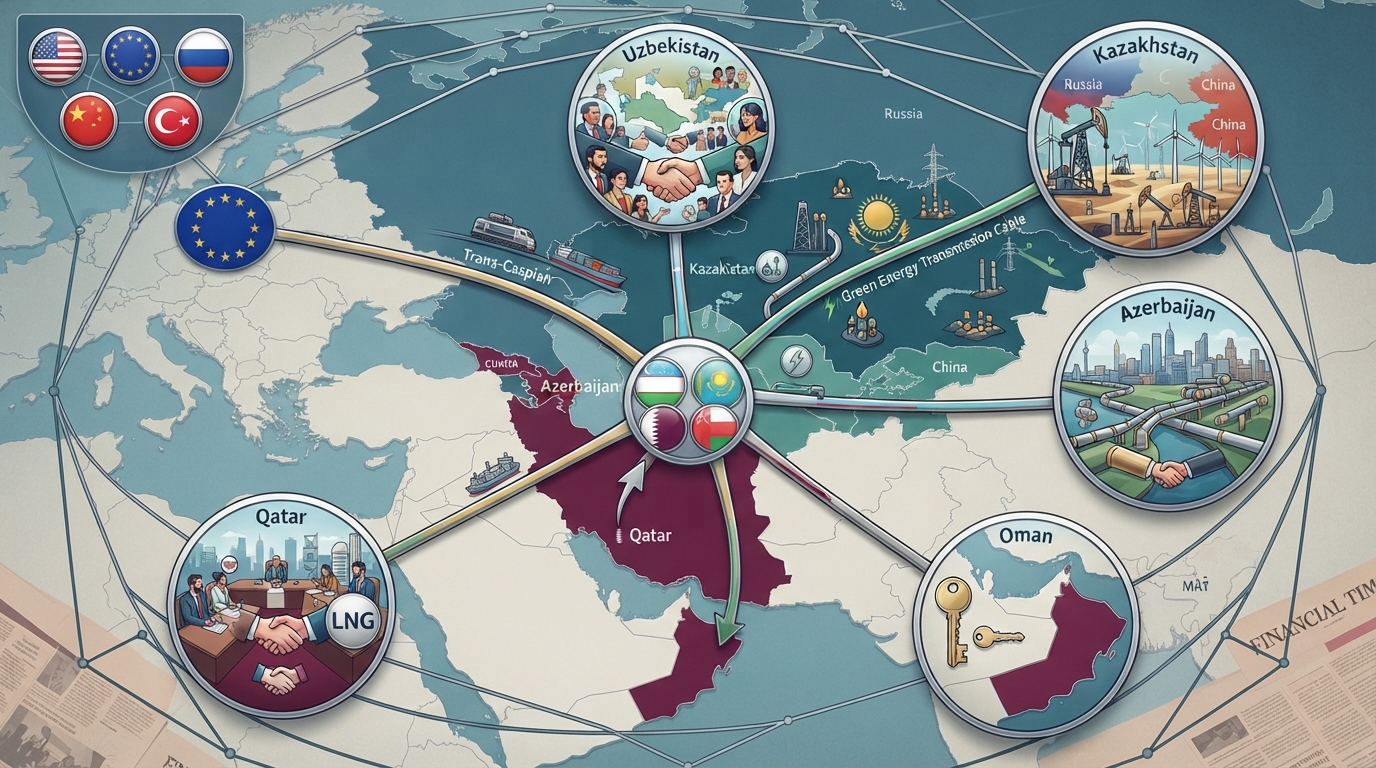
Uzbekistan, Kazakhstan and Azerbaijan could play a significant role in shaping a new global order, writes the Financial Times. The publication notes that countries with limited influence but significant capabilities in certain areas can significantly participate in this process.
The Financial Times calls such countries "mini-middle powers" and includes Uzbekistan, Kazakhstan, Azerbaijan, Qatar and Oman. Unlike large middle powers such as Canada, India, Brazil, South Africa and Mexico, these countries cannot independently set the international agenda. However, they have real means of influence in areas such as energy, transport routes, regional security, mediation, finance, technology and geographical location.
The publication notes that Uzbekistan, Kazakhstan and Azerbaijan have significant influence due to their geographical location, energy resources and infrastructure. Uzbekistan’s demographic potential and geographic location as the most populous country in Central Asia are giving it increasing leverage in regional trade and diplomacy. Kazakhstan has oil and uranium reserves and is located between Russia and China. Azerbaijan exports oil and gas and is a key player in East-West trade routes, as well as in the politics and security of the South Caucasus.
The Middle Corridor provides a clear example of how these countries work. While Azerbaijan and Kazakhstan are key players in this route between Asia and Europe, Uzbekistan is also strengthening its ties with the corridor. While this route is more complex than the northern route through Russia, it offers an alternative route for governments and businesses. They are also developing the Caspian Green Energy Corridor, which would allow renewable energy from Central Asia to be transported through Azerbaijan and connected to a planned Black Sea power cable to Europe.
At the same time, these countries are not seeking to take a complete turn towards any one major power. They are simultaneously developing relations with Russia, China, Turkey, the European Union and the United States. The FT estimates that choosing a single center of power would be risky for them, due to geography, trade and security issues.
After Russian air defense systems shot down an Azerbaijani passenger plane in December 2024, Baku reacted more sharply than usual to Moscow, despite the significant difference in power. Azerbaijan demanded that Russia admit responsibility for the incident, punish the perpetrators and pay compensation, but maintained general relations between the two countries. Russia later admitted that its air defense systems played a role in the plane crash and agreed to pay compensation.
The influence of “mini-middle powers” is strongest when others need something they control. For example, Azerbaijan’s oil and gas have become increasingly important as buyers seek alternative sources of supply. The disruption of commercial shipping via Russia has increased the importance of the Middle Corridor. But countries along this route also know that if Western trade with Russia resumes, some of the cargo could return to the northern route.
Qatar and Oman, on the other hand, primarily use their diplomatic leverage. Qatar has combined gas resources, financial resources, and contacts with parties involved in international conflicts. Oman relies on its strategic location and ability to maintain communication channels between opposing sides. For both countries, mediation has become a source of influence.
These countries also maintain close security ties with the United States, while maintaining channels of communication with Washington's "rivals." This allows them to act as intermediaries and maintain room for maneuver.
The FT notes that countries seeking to influence the formation of a new international order will depend on the resources, transport routes and diplomatic channels of these "mini-middle powers." Without cooperation with them, it will be difficult for major powers to achieve their goals.