

Uzbekistan is studying the possibility of processing hazardous waste in cement kilns
Cement plants in Uzbekistan may be utilized for the disposal of certain types of hazardous waste, including those related to pesticides. FAO, the Waste Management and Circular Economy Development Agency, and industry representatives discussed a potential pilot project.
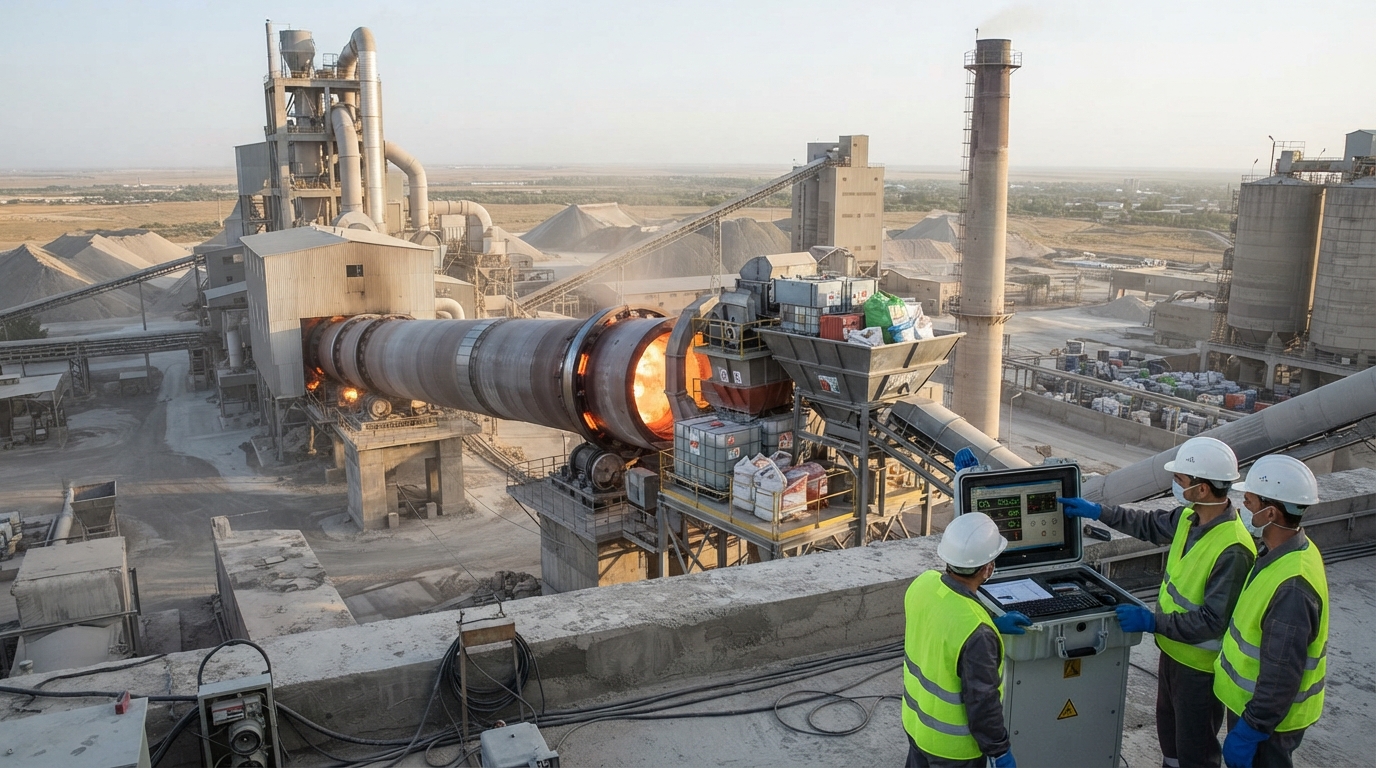
Uzbekistan is considering the possibility of processing hazardous waste in cement kilns
The Food and Agriculture Organization of the United Nations (FAO), the Waste Management and Circular Economy Development Agency, and representatives of Uzbekistan's cement industry discussed the option of processing certain types of hazardous waste in cement kilns.
The round table was held on September 23 in Tashkent, it was reported.
Participants spoke about so-called co-processing, in which waste can be used in cement production as an alternative fuel or raw material. This technology is already used in a number of countries for managing certain types of waste.
According to the organizers, Uzbekistan's capacity for the neutralization and disposal of hazardous waste currently remains limited, which poses risks to the environment and public health.
The meeting participants studied the experience of Azerbaijan, where, with FAO support, controlled trials were conducted on processing pesticide waste containing persistent organic pollutants in cement kilns.
The meeting also discussed regulatory, permitting, infrastructural, and investment issues that need to be resolved before a potential experiment can be conducted. Selected cement enterprises may be chosen for the technical assessment of production sites.
"This round table is the first step to assess feasibility, identify interested cement enterprises, and establish the technical, regulatory, and environmental requirements that will need to be met before considering any pilot operation," said Artur Shamilov, FAO Agricultural Officer and Lead Technical Officer of the project.
The report does not specify which enterprises may participate in the pilot project, what types and volumes of waste are expected to be processed, or how the environmental impact will be monitored.
The discussion took place within the framework of the EU-funded FAO project "Technical Assistance for Sound Management of Hazardous Chemicals" worth 3.9 million euros.
The project was launched in 2024. It provides for assessing the volumes of obsolete pesticides and contaminated soils, improving the chemical management system, and reducing the use of highly hazardous pesticides. By that time, Uzbekistan had sealed eight sites where obsolete or banned pesticides and pesticide containers were buried, and sealing had begun at two more sites.
In addition, in June 2025, Uzbekistan agreed with Saudi Vision International Investment and French Suez on the implementation of a separate project for hazardous industrial waste management worth 78 million dollars. It provides for the creation of specialized landfills, the production of waste-derived fuel, and the construction of a thermal waste processing plant.
The co-processing technology is described, in particular, in the Basel Convention on the Control of Transboundary Movements of Hazardous Wastes and Their Disposal. In co-processing, waste is fed into a cement kiln along with conventional fuel and raw materials. The combustible part of the waste partially replaces coal or other fuel, and the mineral components contained in it can become part of the cement clinker. The flame temperature in the kiln reaches approximately 2000 degrees, and that of the material being processed is about 1450 degrees; prolonged exposure to high temperature allows for the destruction of organic pollutants.
The resulting ash is predominantly incorporated into the clinker, so a separate residue requiring disposal usually does not arise. However, the technology is not suitable for all hazardous waste: a preliminary analysis of its composition, controlled feeding, and continuous monitoring of emissions, including heavy metals, dioxins, and other toxic compounds, are required.